Bengaluru gets 15-year development blueprint: Metro, RRTS, 6.5 lakh homes planned
Synopsis
Karnataka CM D.K. Shivakumar has unveiled one of Bengaluru's most ambitious urban blueprints — a 10-to-15-year plan spanning 312 km of new Metro lines, a 270-km RRTS, nine industrial townships, an AI City modelled on Singapore's Punggol, and 6.5 lakh housing units. The plan is tied directly to Karnataka's $1 trillion economy target by 2047.
Key Takeaways
Shivakumar announced a 10-to-15-year development plan for the Bengaluru Metropolitan Region on 5 October 2026 .
The state targets a $400–420 billion economy by 2037 and a $1 trillion economy by 2047 .
Plans include nine new integrated industrial townships ; 7,900 acres already acquired, 5,600 acres under acquisition.
Metro network to expand by 312 km and a 270-km RRTS corridor is proposed, along with a 210-km circular road .
Government plans to build 6 lakh to 6.5 lakh housing units , including 40,000–50,000 units for industrial workers.
An AI City modelled on Singapore's Punggol and a proposed AI university are part of the blueprint.
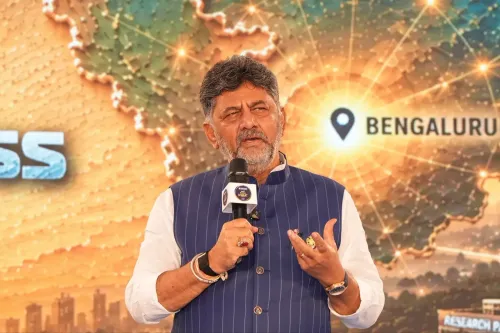
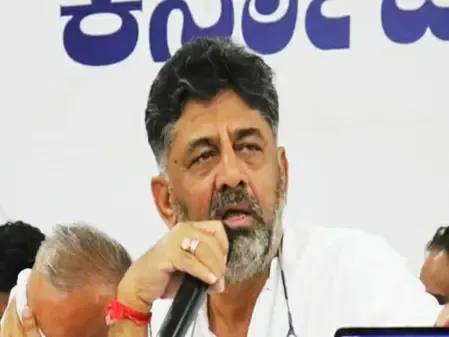
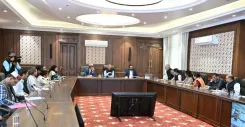
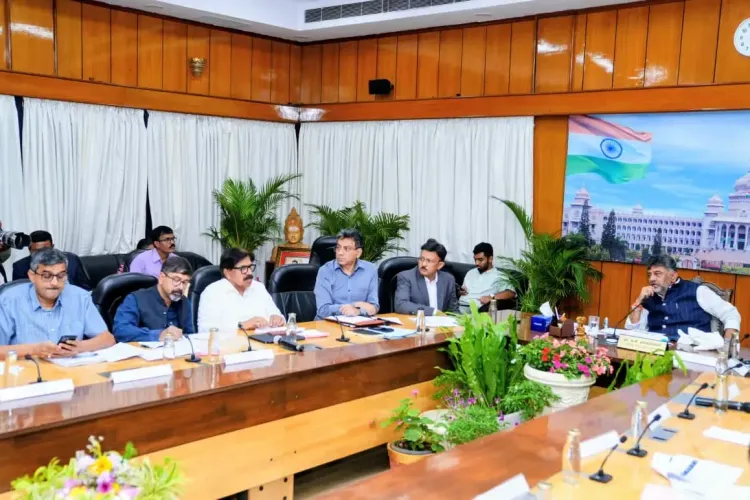
Karnataka Chief Minister D.K. Shivakumar on Monday, 5 October 2026, announced that the state government is preparing a comprehensive 10-to-15-year development plan for the Bengaluru Metropolitan Region (BMR), covering transportation, housing, water supply, and industrial expansion under the Bengaluru Metropolitan Region Development Authority (BMRDA). The announcement came at an advisory committee meeting on BMR's economic development held at the Chief Minister's official residence.
Economic targets driving the blueprint
Shivakumar framed the long-term plan within Karnataka's broader economic ambitions. The state has set a target of scaling its economy to $1 trillion by 2047, with an interim goal of reaching $400–420 billion by 2037. 'In line with this objective, plans are being prepared for smooth transportation, housing and industrial development in the Bengaluru Metropolitan Region,' the Chief Minister said.
Notably, this is one of the most detailed long-term urban planning exercises undertaken for Bengaluru, a city that has grown faster than its civic infrastructure for decades — a pattern that has repeatedly strained roads, water systems, and housing stock.
Industrial townships and AI city
The government plans to establish nine new integrated industrial townships within the BMR to drive industrial growth and employment. Of the land required, 7,900 acres have already been acquired, while the acquisition process for an additional 5,600 acres is under way.
Shivakumar also reaffirmed the state's plans to develop an AI City in the Bengaluru region, directing officials to model it on Punggol in Singapore. An AI university is also proposed as part of this cluster, and officials were directed to identify suitable land for the institution.
Transport expansion: Metro, RRTS, and circular road
The transportation component of the plan is the most expansive. The government intends to expand Bengaluru's Metro network by an additional 312 km by 2037, alongside a proposed 72-km suburban rail network to link the city with its surrounding areas.
A 210-km circular road connecting 10 major hubs around Bengaluru is also under discussion, as is a 270-km Regional Rapid Transit System (RRTS) corridor covering the Bengaluru-Tumakuru, Bengaluru-Mysuru, and Bengaluru-KGF corridors. Officials additionally discussed connecting Phase 2 of the Peripheral Ring Road with the NICE Road to ease traffic congestion. Suggestions were made to extend the proposed Mumbai-Bengaluru high-speed rail corridor up to Mysuru.
Water supply, housing, and civic infrastructure
Revenue Minister Krishna Byre Gowda said the entire Bengaluru Urban district would be brought under the Bengaluru Water Supply and Sewerage Board (BWSSB) in a phased manner. 'This will enable the systematic development of water distribution capacity and sewerage infrastructure across the district,' Byre Gowda said. The BMR is projected to require around 3,600 million litres per day (MLD) of water by 2037, and long-term strategy will include reuse of treated wastewater and lake restoration.
On housing, the government has prepared a plan to construct 6 lakh to 6.5 lakh housing units to address the growing population's needs. Of these, 40,000 to 50,000 units are earmarked for industrial workers. All areas of Bengaluru Urban district are also to be brought under urban local body jurisdiction to ensure planned development and better civic service delivery.
What comes next
Officials were directed to formulate detailed sectoral plans aligned with the advisory committee's inputs. The government is positioning Bengaluru's long-term infrastructure build-out as integral to Karnataka reaching its $1 trillion economy target by 2047. Execution timelines and funding structures for the various components are expected to be detailed in subsequent planning stages.
Point of View
Spanning Metro, RRTS, circular roads, water systems, industrial townships, and an AI City, risks the classic Indian urban planning trap: everything is on the agenda, so nothing gets prioritised. The $1 trillion economy target gives the plan rhetorical force, but the harder question is sequencing — Bengaluru's water crisis and potholed arterials are today's emergencies, not 2037's. Without ring-fenced funding and an independent execution authority, this risks becoming another vision document that outlasts the government that commissioned it.
NationPress
5 Oct 2026
Frequently Asked Questions
What is Karnataka's 15-year development plan for Bengaluru?
It is a comprehensive 10-to-15-year infrastructure and economic blueprint for the Bengaluru Metropolitan Region, announced by Chief Minister D.K. Shivakumar on 5 October 2026. The plan covers Metro expansion, a Regional Rapid Transit System, nine industrial townships, an AI City, 6.5 lakh housing units, and upgraded water and sewerage systems.
How much will Bengaluru's Metro network expand under this plan?
The government plans to expand Bengaluru's Metro network by an additional 312 km by 2037. A 72-km suburban rail network is also proposed to improve connectivity between the city and surrounding areas.
What is the AI City proposed for Bengaluru?
The Karnataka government has announced plans to develop an AI City in the Bengaluru region, modelled on Punggol in Singapore. An AI university is also proposed as part of the cluster, and officials have been directed to identify suitable land for it.
How will water supply be managed for Bengaluru's growing population?
The entire Bengaluru Urban district is to be brought under the Bengaluru Water Supply and Sewerage Board (BWSSB) in a phased manner. The BMR is projected to need around 3,600 MLD of water by 2037, and long-term strategy will include treated wastewater reuse and lake restoration.
How many houses does the Karnataka government plan to build in the Bengaluru region?
The government has prepared a plan to construct 6 lakh to 6.5 lakh housing units in the Bengaluru Metropolitan Region. Of these, 40,000 to 50,000 units are specifically earmarked for workers employed in the planned industrial townships.