CM DK Shivakumar releases Karnataka urbanisation plan for 2047
Synopsis
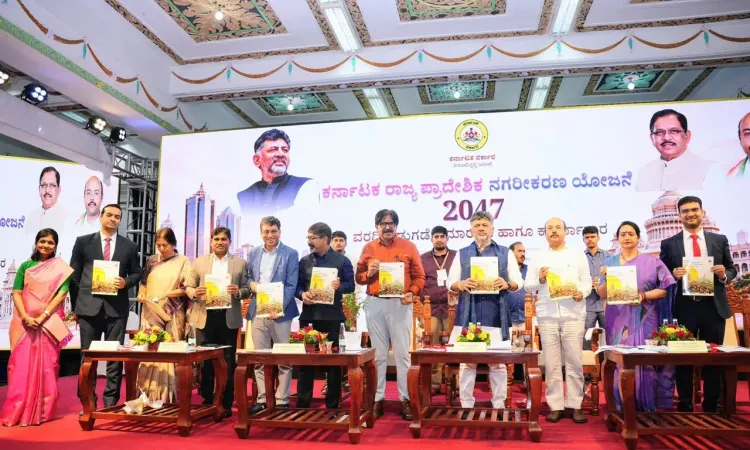
Chief Minister DK Shivakumar released the 'Karnataka State Regional Urbanization Plan-2047' at Vidhana Soudha on 30 October 2026, setting out a long-range regional framework for the state's urban growth, with Urban Development Minister Yatindra Siddaramaiah among those present.
Key Takeaways
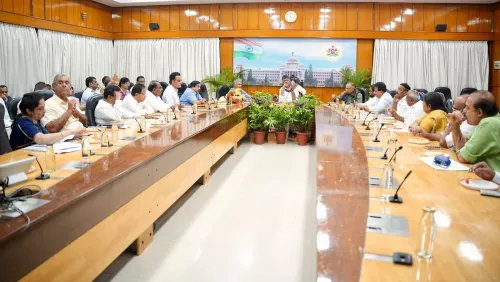
CM DK Shivakumar released the Karnataka State Regional Urbanization Plan-2047 at Vidhana Soudha's Banquet Hall on 30 October 2026 .
The plan is a state-level, long-range framework for managing regional urban growth and infrastructure through 2047 .
Urban Development Minister Yatindra Siddaramaiah was present alongside senior officials and dignitaries.
The plan extends Karnataka's tradition of periodic master-plan updates — including Bengaluru revisions in the 2010s — to a broader regional horizon.
Integration with central schemes such as AMRUT 2.0 and Smart Cities Mission extensions could unlock additional federal funding.
A vision stretching two decades into the future landed on the table at Vidhana Soudha on Friday, 30 October 2026, as the Chief Minister's Office of Karnataka announced the formal release of the 'Karnataka State Regional Urbanization Plan-2047' — a long-range blueprint designed to steer the state's cities and towns through the pressures of accelerating urban growth.
Chief Minister D.K. Shivakumar unveiled the report at the Banquet Hall of Vidhana Soudha, with Urban Development Minister Yatindra Siddaramaiah, senior government officials, and other dignitaries present at the event. The occasion signals a formal pivot in how Karnataka intends to frame its urban future — not city by city, but as a coordinated regional strategy.
What the 2047 plan is meant to do
The Karnataka State Regional Urbanization Plan-2047 is a state-level framework designed to manage regional urban growth and infrastructure demands over the next two decades. Plans of this kind typically integrate land use, transport, housing, and sustainability components under the state's urban development machinery, setting out a coordinated roadmap rather than piecemeal municipal fixes.
Karnataka has periodically updated city and regional master plans — including Bengaluru revisions in the 2010s — to keep pace with rapid urban expansion. The 2047 plan extends that tradition to a broader, regionally integrated horizon, reflecting a nationwide shift among Indian states toward multi-decade urbanisation strategies that can absorb population growth without infrastructure collapse.
Yatindra Siddaramaiah's urban development role at the centre
The presence of Urban Development Minister Yatindra Siddaramaiah at the release underscores that the plan sits squarely within the state's urban development portfolio. His ministry will likely be the nodal authority for translating the document's frameworks into actionable policy — covering everything from urban local body capacity to regional connectivity corridors.
Analysts will now watch for rollout timelines, funding allocations, and how the plan integrates with central government programmes such as AMRUT 2.0 and ongoing Smart Cities Mission extensions — alignments that could unlock significant additional resources for Karnataka's urban centres beyond Bengaluru.
A plan is only as powerful as its implementation architecture. Karnataka has handed itself a 21-year roadmap — the real test begins the moment the ink dries on the first budget line.
Point of View
City-by-city infrastructure fixes toward a structured growth-management framework — a significant shift in ambition. For the Congress-led state government, it also provides a high-visibility policy deliverable that speaks to Bengaluru's chronic urban-stress narrative. The plan's real weight will be determined by how it aligns with central funding streams like AMRUT 2.0 and whether it can bind urban local bodies — historically resistant to top-down mandates — into a coherent regional vision. A long-horizon document released mid-term in a government's tenure also sets a benchmark that future administrations will be measured against.
NationPress
30 Oct 2026
Frequently Asked Questions
What is the Karnataka State Regional Urbanization Plan-2047?
It is a long-range state-level framework released by the Karnataka government on 30 October 2026 to manage regional urban growth, infrastructure, land use, transport, and housing needs across Karnataka through the year 2047.
Who released the Karnataka urbanisation plan 2047?
Chief Minister DK Shivakumar released the report at the Banquet Hall of Vidhana Soudha in Bengaluru on 30 October 2026.
Who is Yatindra Siddaramaiah and what is his role in this plan?
Yatindra Siddaramaiah is Karnataka's Urban Development Minister. He was present at the plan's release and his ministry is the nodal authority for implementing the urbanisation framework.
How does the Karnataka 2047 plan connect to central government schemes?
Analysts expect the plan to be aligned with central programmes such as AMRUT 2.0 and Smart Cities Mission extensions, which could provide significant additional funding for Karnataka's urban infrastructure.
Where was the Karnataka State Regional Urbanization Plan-2047 released?
The plan was released at the Banquet Hall of Vidhana Soudha , the seat of Karnataka's legislature and government offices in Bengaluru .