CM Sukhu Flags MSP Gains for HP Farmers at Tanda Dialogue
Synopsis
At a Kisan Samvad in Tanda on 19 November 2026, CM Sukhvinder Singh Sukhu said Himachal Pradesh's MSP on milk and key crops is channelling income to farmers, while natural farming preserves soil fertility and strengthens the rural economy.
Key Takeaways
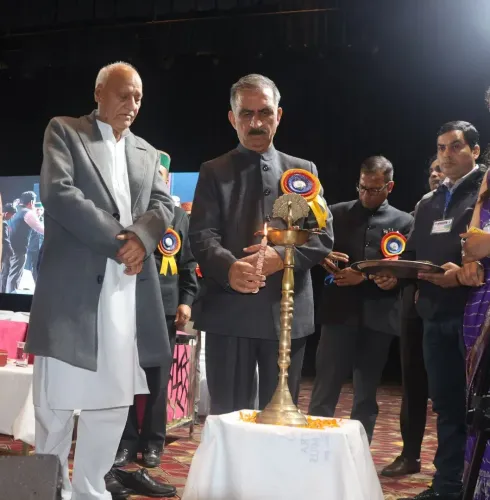
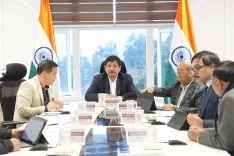
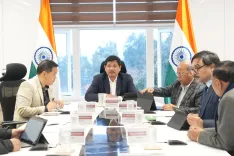
CM Sukhvinder Singh Sukhu addressed the Kisan Samvad Programme in Tanda on 19 November 2026 .
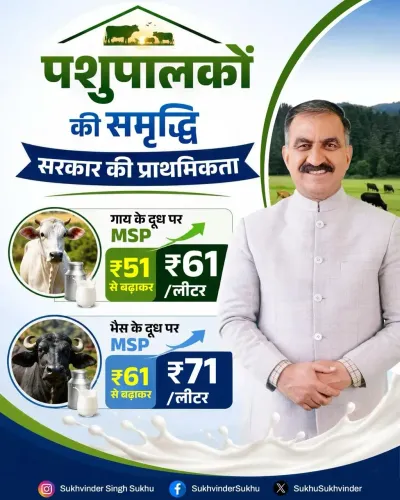
The Himachal Pradesh government provides MSP on milk and major crops to ensure income reaches farming households directly.
Sukhu stated the policy goal is to strengthen the rural economy by increasing purchasing power at the farm level.
Natural farming is being promoted alongside MSP as a soil-health and cost-reduction strategy for cultivators.
Farmer appreciation expressed at the dialogue was described by Sukhu as sambhal — encouragement for the government to continue its agricultural welfare push.
The central government announces MSP for 23 major crops annually; state-level supplements address locally significant gaps such as dairy.
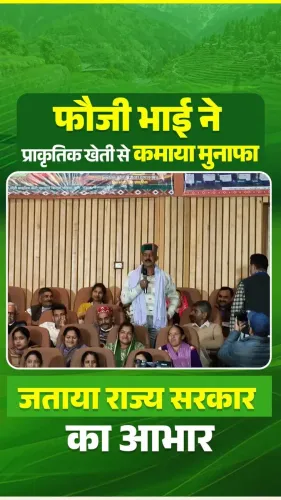
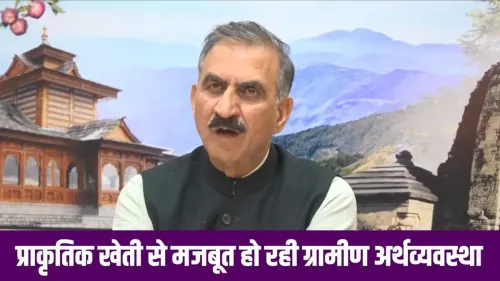
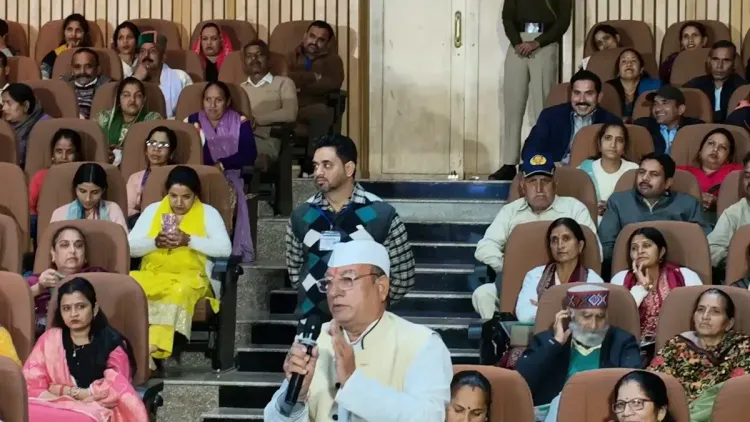
Money in the farmer's hand — that is the stated mission driving Himachal Pradesh Chief Minister Sukhvinder Singh Sukhu's government as it extends Minimum Support Price (MSP) coverage to both milk and major crops across the hill state. Speaking at the Kisan Samvad (Farmer Dialogue) Programme in Tanda on Thursday, 19 November 2026, Sukhu said farmers themselves were expressing gratitude to the state government — a response he described as an encouragement to push further.
What the Tanda Kisan Samvad heard from the ground
Sukhu told the gathering that the dual MSP architecture — covering both dairy produce and staple crops — was designed with a single purpose: ensure rural households see real income gains. 'Kisanon ke haath mein paisa pahunche aur gramin arthvyavastha mazboot bane' ('Money should reach farmers' hands and the rural economy should be strengthened'), he said, framing the policy in terms of household purchasing power, not just procurement statistics. Farmer gratitude at the event, he added, served as 'sambhal' — moral sustenance — for the government to stay the course.
MSP for milk and crops: how Himachal's model works
The Government of India announces MSP annually for 23 major crops under the central agricultural price support framework. State governments in India often layer additional support on top of this for crops or commodities — such as milk — that are locally significant but fall outside the central list. Himachal Pradesh, with its pronounced dairy economy and smallholder-dominated hill agriculture, sits squarely in the category of states where supplementing central MSP with state-level price assurances can close meaningful market gaps for cultivators who would otherwise be price-takers.
Natural farming as a soil-first strategy
Beyond price support, Sukhu underlined the state's push for natural farming, arguing that the practice sustains soil fertility over the long run. The linkage is deliberate: lower input costs from chemical-free cultivation, combined with MSP-backed price assurance, is the government's two-pronged answer to the squeeze most small farmers face. Wider state-level adoption of natural farming in India has also been positioned as a way to reduce dependence on costly synthetic fertilisers — a pressure point that became acute during recent global supply disruptions.
The Kisan Samvad format itself — direct dialogue between the chief minister and farming communities — signals a political calculation: in a state where agriculture and allied activities underpin a large share of rural livelihoods, being seen on the ground in front of farmers carries electoral as much as policy weight. Whether the MSP reach and natural farming uptake translate into measurable income growth will be tested in the state's next agricultural department data cycle.
Point of View
As lower chemical input costs complement price-floor guarantees to widen net margins for smallholders. For the Congress government in Himachal Pradesh, sustaining this narrative heading into the next budget cycle matters, because rural credibility in a hill state is both an electoral and a governance imperative. The harder test is whether procurement infrastructure and payment timelines match the promises voiced at dialogue events.
NationPress
19 Nov 2026
Frequently Asked Questions
What is the MSP policy for farmers in Himachal Pradesh?
The Himachal Pradesh government extends Minimum Support Price (MSP) coverage to milk and major crops, supplementing the central government's annual MSP for 23 crops, to ensure farmers receive guaranteed prices and stable incomes.
What is the Kisan Samvad programme?
Kisan Samvad is a farmer dialogue programme organised by the Himachal Pradesh government where Chief Minister Sukhu and officials interact directly with farming communities to discuss agricultural welfare schemes and receive feedback.
Where is Tanda, the location of the Kisan Samvad event?
Tanda is a town in Himachal Pradesh, India, that hosted the Kisan Samvad farmer dialogue event addressed by CM Sukhvinder Singh Sukhu on 19 November 2026.
How does natural farming help farmers in Himachal Pradesh?
According to CM Sukhu, natural farming maintains soil fertility over the long term and reduces dependence on expensive chemical inputs, thereby lowering cultivation costs for farmers alongside MSP-based price support.
Does Himachal Pradesh give MSP on milk?
Yes. The Himachal Pradesh state government provides MSP on milk in addition to major crops, a state-level measure designed to support dairy farmers whose produce falls outside the central government's crop-focused MSP framework.