Pakistan governance collapse: Interior Minister Naqvi admits system failure

Synopsis
Pakistan's own Interior Minister has declared the country's governance system collapsed — not from the opposition benches, but from inside the cabinet. The Friday Times called it a 'serious contradiction': Naqvi's ministry oversees Balochistan and Khyber Pakhtunkhwa, regions the state still cannot secure. The admission has moved from editorial pages into the power structure itself, and the question it leaves unanswered is the loudest one: why hasn't anyone resigned?
Key Takeaways
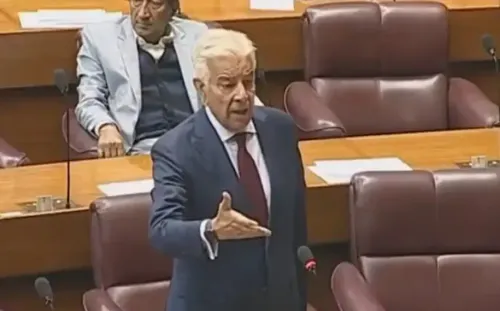
Interior Minister Mohsin Naqvi declared Pakistan's governance system has collapsed at the Pakistan Economic Summit on 30 July .
Naqvi called for cross-party dialogue, new provinces , and administrative reforms — while remaining a central figure in the current arrangement.
Analysts note Naqvi's ministry oversees Balochistan and Khyber Pakhtunkhwa , regions the state has failed to stabilise despite decades of operations.
The Friday Times argued the establishment faces only two credible options: accept accountability or hold a genuine election.
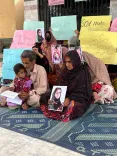
Protests over inflation and fuel price hikes have erupted across Pakistan, including a transgender community demonstration outside Karachi Press Club in July.
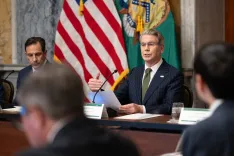
Pakistan's Interior Minister Mohsin Naqvi has publicly declared that the country's governance system has collapsed — a statement analysts say is less a diagnosis and more a self-indictment, given that Naqvi himself sits at the centre of the arrangement he is criticising. The remarks, made at the Pakistan Economic Summit on 30 July in Islamabad, have drawn sharp scrutiny from commentators who question why an admission of state failure has not been followed by accountability or resignation.
What Naqvi Said
Addressing the summit, Naqvi said Pakistan's prevailing governance structure is incapable of resolving the country's mounting crises. 'The system we are living under has collapsed. Problems cannot be solved through it,' the minister was quoted as saying by leading Pakistani daily Dawn. He warned that without a fundamental reset, Pakistan would still be debating the same problems a decade from now.
Naqvi called for cross-party dialogue on governance reforms, proposing the creation of new provinces and a sweeping overhaul of administrative structures. His remarks were framed as a call to action — but critics argue they amount to a confession without consequence.
The Contradiction at the Heart of the Admission
Political commentary publication The Friday Times was pointed in its analysis: 'What matters is not what Naqvi said. It is who said it. He is not a critic outside the system. He is the Interior Minister, a central figure in the hybrid arrangement that has run Pakistan since April 2022.' The report also noted that even the DG ISPR has reportedly conceded that governance has failed — a signal that the admission has migrated from op-ed columns into the power structure itself.
The publication pressed further: 'Naqvi is not observing state failure from a distance. His ministry sits at the centre of it. Balochistan remains a battlefield. Khyber Pakhtunkhwa continues to bleed from militant attacks and cross-border instability. The former tribal districts are still not integrated into the state.' Despite decades of military operations and billions in expenditure, the state reportedly remains unable to secure or administer these regions.
Why Has the Cabinet Not Resigned?
The Friday Times raised what it called the defining question of the moment: 'Why has the cabinet not resigned? Why has Naqvi not resigned?' The report argued that a government which publicly acknowledges the failure of the system it operates — while continuing to draw its benefits — cannot credibly position itself as the vehicle of reform.
According to the analysis, if Pakistan's establishment genuinely believes the governance model has broken down, only two paths remain: accept accountability through direct intervention, or restore genuine democratic agency to voters through a credible election. The report cautioned, however, that a hard authoritarian state lacking a development plan and institutional reform roadmap would be worse than an inefficient elected government.
Protests Over Inflation and Fuel Prices
Naqvi's remarks coincide with a wave of public unrest across Pakistan over the rising cost of living. In Karachi, members of the transgender community staged a protest in July against surging inflation and a recent hike in petroleum prices, gathering outside the Karachi Press Club with placards and slogans directed at Prime Minister Shehbaz Sharif's government.
Protesters called on the government to reduce prices of essential commodities and fuel, warning that continued inaction would disproportionately harm the most vulnerable sections of Pakistani society. The demonstration reflects broader public frustration that has grown alongside the governance crisis Naqvi himself described.
What Comes Next
The admission by a sitting interior minister that the state has failed is, by any measure, an extraordinary moment in Pakistan's political history. Whether it translates into structural reform, fresh elections, or a further entrenchment of the current hybrid arrangement remains to be seen. For now, analysts argue, the gap between the diagnosis and any credible remedy remains as wide as ever.
Point of View
But the Interior Minister of a government that has held power since April 2022. The admission that the system has collapsed is, in effect, an admission of co-authorship of that collapse. What mainstream coverage underplays is the structural bind this creates: the same establishment that cannot reform itself is also the only actor with the institutional weight to initiate reform. Pakistan's governance crisis is not a mystery — it is the predictable output of a hybrid arrangement that insulated decision-makers from electoral accountability. Until that insulation is removed, admissions of failure, however candid, change nothing.
NationPress
4 Aug 2026
Frequently Asked Questions
What did Pakistan Interior Minister Mohsin Naqvi say about the governance system?
At the Pakistan Economic Summit on 30 July, Naqvi publicly stated that Pakistan's governance system has collapsed and is incapable of resolving the country's problems. He called for a fundamental reset, cross-party dialogue, creation of new provinces, and administrative reforms.
Why is Naqvi's admission considered contradictory?
Critics, including The Friday Times, point out that Naqvi is not an outside observer — he is the Interior Minister and a central figure in the hybrid arrangement governing Pakistan since April 2022. His ministry is directly responsible for regions like Balochistan and Khyber Pakhtunkhwa, where the state has failed to establish security and administration despite decades of effort.
What options does Pakistan's establishment have, according to analysts?
According to The Friday Times analysis, if the establishment genuinely believes the governance model has collapsed, it faces two options: accept direct accountability or restore democratic agency to voters through a genuine election. Analysts warn that a hard authoritarian state without institutional reform would be worse than an inefficient elected government.
What protests are happening in Pakistan amid the governance crisis?
Protests over rising inflation and fuel price hikes have broken out across Pakistan. In July, members of the transgender community demonstrated outside the Karachi Press Club, urging Prime Minister Shehbaz Sharif's government to reduce prices of essential commodities and fuel, warning that inaction would worsen conditions for vulnerable communities.
Has any senior Pakistani official previously acknowledged governance failure?
According to The Friday Times, even the DG ISPR has reportedly conceded that governance has failed — a significant development, as such admissions have historically been confined to opposition voices and independent commentators rather than figures within the power structure itself.