Pakistan militant violence up 27% in May as Army's internal security failures mount
Synopsis
Pakistan's militant violence jumped 27% in a single month, yet the Army — now openly running the country under a self-declared hybrid model — has no new answers. With 14 failed operations in KP and a new front opened against Afghanistan to deflect blame, the security establishment's credibility is under its sharpest scrutiny in years.
Key Takeaways
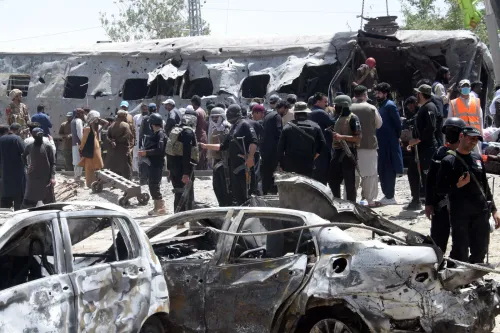
Militant violence in Pakistan rose 27% in May 2025 , according to the Pakistan Institute for Conflict and Security Studies (PICSS) .
Defence Minister Khawaja Asif publicly acknowledged a 'hybrid model of governance' , endorsing the Pakistan Army 's dominant role in civilian affairs.
Pakistan has conducted 14 military operations in Khyber Pakhtunkhwa over two decades without durably suppressing militancy.
A planned operation in KP's Tirah Valley in January 2025 displaced more than 70,000 people, mostly women and children, before the government denied the plan.
Pakistan has blamed the Afghan Taliban for sheltering the TTP ; Kabul called the TTP issue 'an internal matter of Pakistan.' The Special Investment Facilitation Council (SIFC) , Army-led and designed to boost FDI, has reportedly failed to reverse declining foreign investor interest.
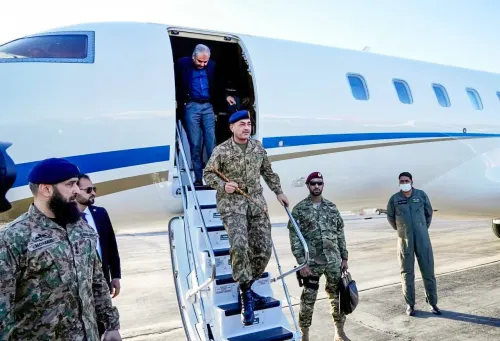
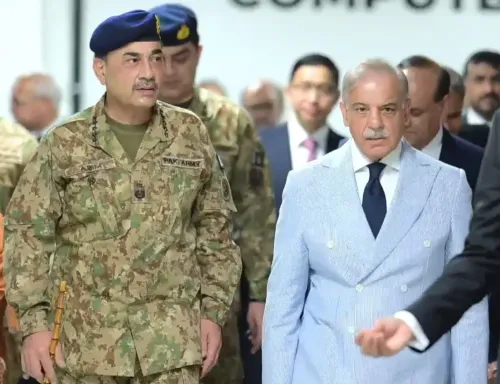
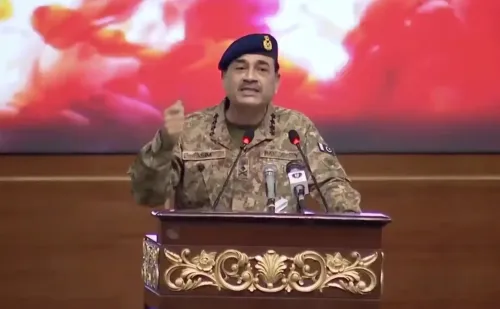
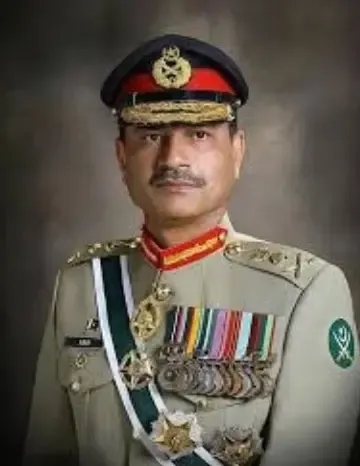
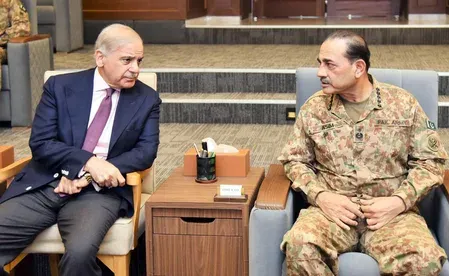
Militant violence across Pakistan surged by 27 per cent in May 2025, according to data from the Pakistan Institute for Conflict and Security Studies (PICSS), exposing deepening cracks in the Pakistan Army's ability to contain armed insurgencies on its own soil. The spike comes at a moment when the military establishment, under Field Marshal Asim Munir, has consolidated near-total control over the country's domestic and foreign policy.
A Security Establishment Under Scrutiny
The Pakistani state now operates, by its own government's admission, as a 'hybrid regime' — a term publicly endorsed by Defence Minister Khawaja Asif, who argued that such an arrangement was necessary for Pakistan to navigate its economic and governance crises. Asif described the model as 'not an ideal democratic government' but claimed it was 'doing wonders' — a claim critics argue is unsupported by evidence on the ground.
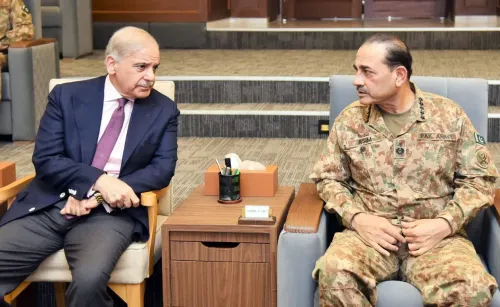
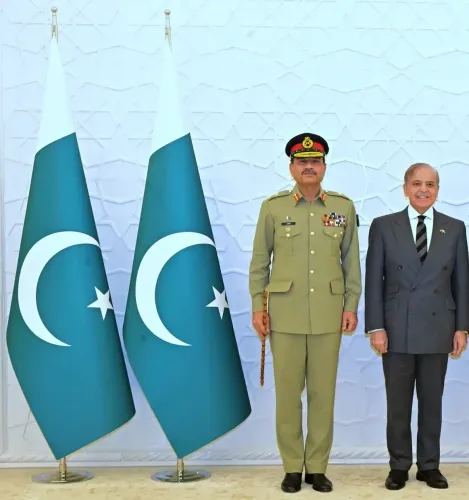
Since Prime Minister Shehbaz Sharif assumed office, the civilian government has largely functioned as a ratifier of military decisions rather than an independent governing authority. Analysts note that this arrangement has blurred accountability, particularly when security policy fails.
Two Decades of Operations, No Resolution
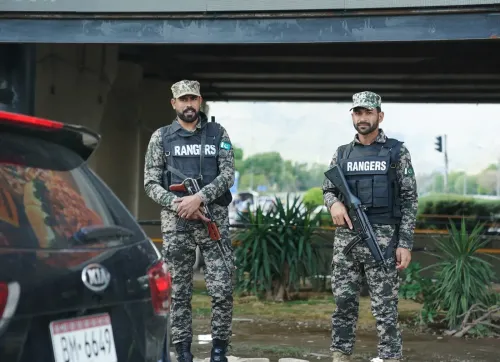
Pakistan has conducted 14 military operations in Khyber Pakhtunkhwa (KP) alone over the past two decades to suppress armed militant groups, in addition to two nationwide campaigns — Operation Radd-ul Fassad in 2014 and Operation Azm-e-Istehkam in 2024. None of these operations has durably neutralised the threat, according to assessments of the security situation.
The operations have also generated significant civilian costs. In August 2025, a military campaign in the northwestern Bajaur district displaced thousands of residents. In January 2025, reports emerged of a planned operation in KP's Tirah Valley, which triggered a mass exodus of more than 70,000 people — mostly women and children — before the government denied any such operation was imminent. The deep distrust between local communities and the security establishment meant official assurances went largely unheeded.
Notably, the very demand for yet another military operation contradicts earlier claims by the Army that previous campaigns had been successful.
Externalising the Crisis: The Afghanistan Dimension
Rather than address internal security failures directly, Defence Minister Asif has consistently sought to attribute the rise in attacks to the Afghan Taliban regime, accusing it of harbouring and enabling the Tehreek-e-Taliban Pakistan (TTP) and acting as a proxy for anti-Pakistan forces. Critics argue this framing is a deliberate deflection from the Army's inability to suppress armed Baloch nationalist groups in Balochistan and religious extremists in KP.
Pakistan subsequently carried out military strikes against Afghanistan — a move that analysts say carries little strategic logic against a weakly governed state still consolidating authority, but serves to redirect domestic criticism. The Islamic Emirate of Afghanistan's Deputy Spokesperson Hamdullah Fitrat stated that the TTP issue is 'an internal matter of Pakistan' and that while Kabul is willing to ensure Afghan soil is not used against any country, 'some of Pakistan's demands are unrealistic and cannot be implemented by Afghanistan.'
Prime Minister Sharif, speaking in Quetta, warned that Pakistan's military action would continue 'with full resolve to defend lives and property of innocent citizens against Afghan Taliban-based terrorist proxies.'
Economic Failures Compound the Security Picture
The hybrid model's record on the economic front is equally contested. Despite the formation of the Special Investment Facilitation Council (SIFC) — with the Army at its core — to attract foreign direct investment, investor interest in Pakistan has reportedly declined rather than grown. The country continues to seek international bailouts and financial assistance, undermining the government's narrative of a stabilising establishment-led recovery.
What Comes Next
The Pakistan-Afghanistan standoff has reached what observers describe as an impasse: Kabul has signalled willingness to cooperate within limits it can realistically enforce, while Islamabad appears committed to a posture of military pressure and coercion. Until Pakistan's security establishment turns its focus inward — addressing the political and socioeconomic drivers of militancy rather than externalising blame — the cycle of violence, displacement, and institutional distrust is unlikely to break.
Point of View
Ironically, made Pakistan look like the less stable actor. The harder question — what political settlement could actually drain the insurgency — remains entirely absent from the Pakistani establishment's public discourse.
NationPress
27 Sept 2026
Frequently Asked Questions
How much did militant violence rise in Pakistan in May 2025?
Militant violence in Pakistan surged by 27% in May 2025, according to data from the Pakistan Institute for Conflict and Security Studies (PICSS). The increase reflects a sustained upward trend in armed attacks across the country, particularly in Khyber Pakhtunkhwa and Balochistan.
What is Pakistan's 'hybrid model of governance'?
The hybrid model refers to a system in which the Pakistan Army effectively dominates key decisions on security, foreign policy, and the economy, with the civilian government ratifying rather than independently directing policy. Defence Minister Khawaja Asif publicly acknowledged and defended this arrangement, calling it necessary for Pakistan to emerge from its crises — while admitting it was 'not an ideal democratic government.'
How many military operations has Pakistan conducted in Khyber Pakhtunkhwa?
Pakistan has conducted 14 military operations in Khyber Pakhtunkhwa alone over the past two decades, in addition to two nationwide campaigns — Operation Radd-ul Fassad in 2014 and Operation Azm-e-Istehkam in 2024. None has achieved a durable reduction in militant activity, and the operations have displaced hundreds of thousands of civilians.
Why is Pakistan blaming Afghanistan for its internal militant attacks?
Pakistani officials, led by Defence Minister Khawaja Asif, have accused the Afghan Taliban of harbouring the Tehreek-e-Taliban Pakistan (TTP) and acting as a proxy for anti-Pakistan powers. Analysts argue this is partly a deflection strategy to shift attention from the Army's failure to suppress Baloch nationalist and religious extremist groups domestically. The Afghan Taliban has denied complicity, calling the TTP issue 'an internal matter of Pakistan.'
What happened during the proposed military operation in KP's Tirah Valley?
Reports in January 2025 indicated the Pakistan Army was planning an operation in KP's Tirah Valley against armed militants. The plan triggered strong opposition from local political and tribal leaders and prompted more than 70,000 people — mostly women and children — to flee the area. The government subsequently denied any operation was planned, but the displacement continued due to deep public distrust rooted in human rights violations during previous military campaigns in the region.