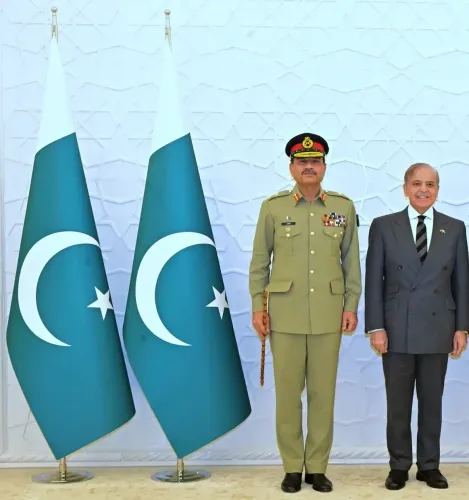
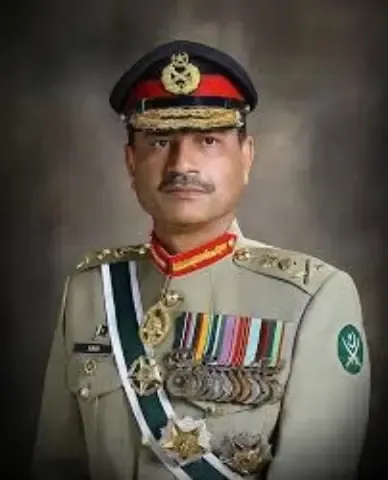
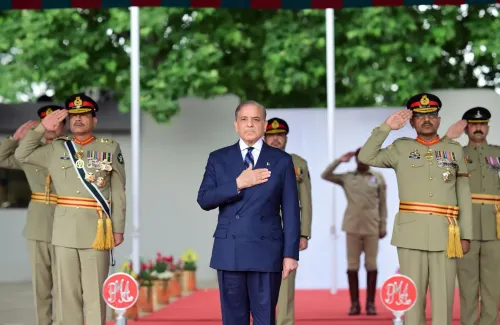
Is Pakistan’s Internal Stability Declining Under Asim Munir?
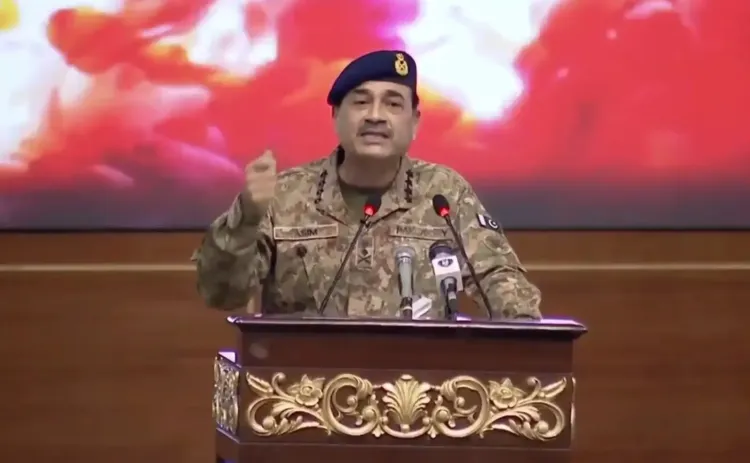
Synopsis
As Pakistan faces escalating militancy, Army Chief Asim Munir's leadership is under scrutiny. With over 5,300 militant attacks reported in 2025, concerns grow about the country's security and the military’s effectiveness. A call for dialogue and reassessment of tactics emerges from national figures and analysts alike. What does this mean for the future of Pakistan?
Key Takeaways
The year 2025 saw over 5,300 militant attacks in Pakistan.
Asim Munir's leadership is under scrutiny, with a significant rise in combat-related deaths.
Experts advocate for a multi-faceted approach to combat militancy.
The military's response has alienated local communities.
Calls for dialogue are intensifying to prevent further bloodshed.
Islamabad, Jan 22 (NationPress) Concerns are mounting among the citizens of Pakistan regarding the ability of Army Chief Asim Munir to protect them from the rising tide of militancy, especially in the regions of Khyber Pakhtunkhwa and Balochistan. A report released on Thursday indicated that the year 2025 witnessed over 5,300 militant attacks in the country, attributed to the operational and tactical failures of the security forces under Munir's leadership.
Despite being promoted to Field Marshal in 2025 for his ‘exemplary leadership’ in bolstering Pakistan’s security, the same year recorded a staggering 74 percent increase in combat-related fatalities, signaling a dramatic decline in internal stability. There seems to be a significant inability to control militant factions, raising questions about Munir's commitment to maintaining domestic order, despite his claims of authority and public assertions of control,” elaborated the European Times.
The report included statements from Tamim Asey, former Deputy Minister of Defence in Afghanistan, who criticized Munir for jeopardizing the lives of Pakistani soldiers engaged in combat with the Taliban along the Afghan border, while also failing to address the militancy in Balochistan.
“Return to dialogue to prevent further bloodshed. Your forces are suffering heavy losses. Each day of conflict brings you closer to a catastrophic error reminiscent of Bangladesh!” Asey cautioned.
Addressing a video where Pakistani soldiers were seen as hostages, Asey remarked: “Someone should inform Asim Munir that he is heading towards a monumental error.”
Furthermore, many citizens hold Munir accountable for escalating violence. “The entire nation is aware that terrorism in the tribal areas is being orchestrated under the leadership of the unstable Asim Munir,” cited Peshawar resident Amin Wazir.
Pearl Pandya, a senior analyst at ACLED, a US-based conflict monitoring organization, noted that the military-centric approach to dissent in Balochistan and Khyber Pakhtunkhwa has alienated local communities. She warned that Munir’s plans to mine copper in Balochistan could further escalate militancy.
“To curb militancy in Pakistan, three factors must converge: consistent military pressure on militants, political dialogue with Baloch and Pashtun factions, and collaboration with Afghanistan. While the first is manageable for Pakistan, both the military and the government remain reluctant regarding the second and have limited capacity to influence the third, which is crucial,” the European Times quoted Pandya.
“This indicates a likely continuation of the current state, with occasional spikes in regional violence in 2026 and, at worst, a further decline in security as militancy spreads to urban areas,” she added.
Point of View
It is crucial to highlight the pressing issues facing our nation. The rise in militancy and the apparent shortcomings in our military leadership must be addressed. As we support our armed forces, we also advocate for political dialogue and engagement with local communities to restore peace and stability across Pakistan.
NationPress
27 Sept 2026
Frequently Asked Questions
What has led to the rise in militancy in Pakistan?
The rise in militancy is attributed to operational shortcomings of the military under Asim Munir's leadership, particularly in Khyber Pakhtunkhwa and Balochistan.
How many militant attacks were recorded in 2025?
More than 5,300 militant attacks were reported in Pakistan in 2025.
What recommendations have been made to improve the security situation?
Experts suggest a combination of military pressure on militants, political engagement with local groups, and cooperation with Afghanistan.
What are the implications of the current military tactics?
The military-centric approach has alienated local populations, potentially exacerbating the situation.
Who has criticized Asim Munir's leadership?
Former Afghan Deputy Minister of Defence Tamim Asey and various Pakistani citizens have voiced strong criticism regarding his leadership.