Pakistan bombs Afghanistan to mask domestic security failures, analyst argues
Synopsis
Despite killing over 2,000 militants and conducting hundreds of operations in 2025, Pakistan recorded its highest attack count since 2014 — while its airstrikes killed 372 Afghan civilians in a single quarter. An Afghan analyst argues the cross-border campaign is less a counter-terrorism strategy and more a way to deflect from the state's failure to address political alienation in Khyber Pakhtunkhwa and Balochistan.
Key Takeaways
Pakistan recorded 1,066 militant attacks in 2025 — the highest since 2014 and 17% more than the previous year, according to PICSS .
Security forces killed 2,138 militants across 482 operations in 2025, yet the attack count still rose.
UNAMA reported 372 Afghan civilians killed and 397 injured in cross-border violence in Q1 2026 , mostly from airstrikes.
No named senior TTP commander has been independently confirmed killed since October 2025 .
Analyst Dawood Safi argues the insurgency persists because of political alienation in Balochistan and Khyber Pakhtunkhwa , not solely Afghan sanctuary.
Baloch rights activist Mahrang Baloch was sentenced to life imprisonment in June , drawing criticism over Islamabad's approach to dissent.
Pakistan has continued to face a worsening internal insurgency despite years of border fencing, crossing closures, and cross-border airstrikes into Afghanistan, according to an analysis published in Tolo News on 15 July 2026. The piece argues that Islamabad's external military campaign serves as a distraction from deep-rooted domestic political failures rather than a genuine counter-terrorism solution.
The insurgency numbers Pakistan cannot explain away
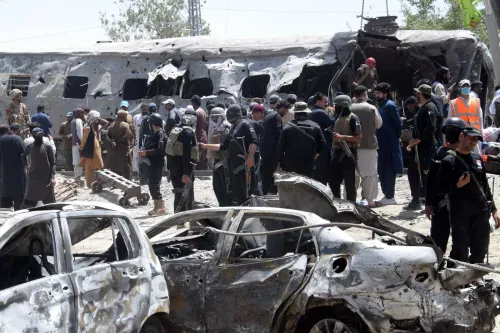
According to the Pakistan Institute for Conflict and Security Studies (PICSS), Pakistan recorded 1,066 militant attacks in 2025 — the highest figure since 2014 and 17 per cent higher than the previous year. Security forces conducted 482 operations and reportedly killed 2,138 militants — more than double the prior year's toll — yet the attack count still rose. The bulk of violence remained concentrated in Khyber Pakhtunkhwa and Balochistan.
What the analyst argues
Dawood Safi, an Afghan researcher and Fulbright scholar, wrote in Tolo News that while Pakistan has genuine security concerns — armed groups have killed civilians, police officers, and soldiers — sanctuary across the border is only part of the picture. 'Sanctuary is only part of the picture. It cannot explain the persistence, geographic concentration and political resilience of militancy within Pakistan itself,' Safi wrote.
He argued that military action can disrupt networks and halt specific attacks but cannot substitute for political legitimacy. In Pashtun areas, he noted, communities have faced what he described as military brutality and state coercion. Pakistani authorities banned the Pashtun Tahafuz Movement (PTM) and arrested several of its activists — a group that had demanded accountability for extrajudicial killings, information on enforced disappearances, landmine removal, and an end to collective suspicion of Pashtun communities.
Balochistan: Resources without representation
The analysis also pointed to Balochistan — a province that supplies gas, minerals, and strategic value to Pakistan — where residents have reportedly remained poor, politically marginalised, and excluded from decisions over their own resources. Enforced disappearances in the province have drawn sustained criticism, and the life sentence handed to Baloch rights activist Mahrang Baloch in June has been cited as emblematic of the state's approach to dissent.
The civilian toll of cross-border strikes
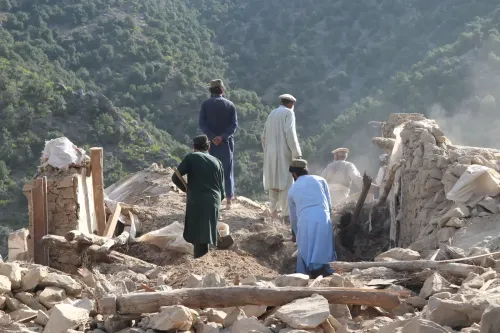
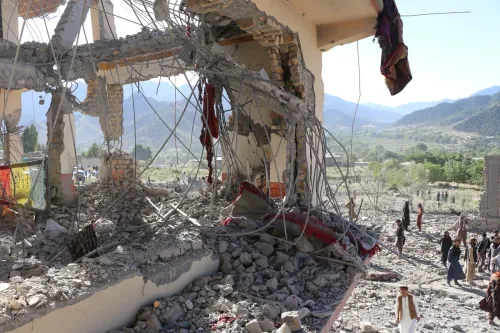
Pakistan has claimed that its airstrikes inside Afghanistan have destroyed militant camps and killed large numbers of fighters. However, no named senior Tehreek-e-Taliban Pakistan (TTP) commander has been independently confirmed killed in the publicly available record since October 2025. Meanwhile, the United Nations Assistance Mission in Afghanistan (UNAMA) reported that 372 Afghan civilians were killed and 397 others injured in cross-border violence during the first quarter of 2026, with airstrikes accounting for the majority of fatalities.
The diagnosis problem
'Bombing Kabul and Kandahar did not resolve Pakistan's strategic problem at home. Closing border crossings, weaponising trade routes and forcibly deporting millions of Afghans neither ended the insurgency inside Pakistan nor forced the Taliban to capitulate,' Safi wrote. He concluded that as long as militancy draws strength from alienation within Pakistan, the insurgency will persist. 'The centre of the crisis is not Kabul. It is the widening distance between the Pakistani state and many of its own citizens,' he added.
The analysis surfaces a structural tension that Islamabad has yet to publicly address: whether its Afghanistan policy is a security strategy or a political deflection — and whether the two can be separated at all.
Point of View
But the geographic concentration of violence in Khyber Pakhtunkhwa and Balochistan — both sites of prolonged political marginalisation — points to domestic roots that airstrikes cannot reach. The banning of the PTM and the life sentence handed to Mahrang Baloch suggest the state is doubling down on coercion precisely where it needs political accommodation. Cross-border operations may be tactically defensible, but when UNAMA counts 372 civilian deaths in a single quarter and no senior TTP commander is confirmed killed, the strategic return looks deeply negative — and the civilian cost is being borne by Afghans, not the militants Pakistan says it is targeting.
NationPress
14 Oct 2026
Frequently Asked Questions
How many militant attacks did Pakistan face in 2025?
Pakistan recorded 1,066 militant attacks in 2025, the highest figure since 2014 and 17 per cent more than the previous year, according to the Pakistan Institute for Conflict and Security Studies (PICSS). This came despite security forces conducting 482 operations and killing more than 2,100 militants.
What does UNAMA say about Afghan civilian casualties from Pakistani airstrikes?
The United Nations Assistance Mission in Afghanistan (UNAMA) reported that 372 Afghan civilians were killed and 397 others were injured in cross-border violence during the first quarter of 2026, with airstrikes accounting for the majority of fatalities.
Why does analyst Dawood Safi argue Pakistan's strategy is failing?
Safi, an Afghan researcher and Fulbright scholar, argues that while Afghan sanctuary contributes to the problem, it cannot explain the persistence and geographic concentration of militancy inside Pakistan. He contends that political alienation in Khyber Pakhtunkhwa and Balochistan — driven by state coercion, enforced disappearances, and exclusion from resource decisions — is the primary driver of the insurgency.
What is the Pashtun Tahafuz Movement and why was it banned?
The Pashtun Tahafuz Movement (PTM) is a Pakistani civil society group that demanded accountability for extrajudicial killings, information on enforced disappearances, landmine removal, and an end to collective suspicion of Pashtun communities. Pakistani authorities banned the movement and arrested several of its activists.
Has Pakistan confirmed killing any senior TTP commanders in its Afghan airstrikes?
No named senior Tehreek-e-Taliban Pakistan (TTP) commander has been independently confirmed killed in the publicly available record since October 2025, despite Pakistan's claims that its strikes have destroyed militant camps and killed large numbers of fighters.