Pakistan security crisis deepens as militant attacks surge in 2025
Synopsis
Pakistan recorded 200 deaths in just 17 days of militant violence in May 2025, with the TTP and Baloch insurgent groups simultaneously expanding their reach — and their theatres of conflict are now converging. A new Stringer Asia report warns this is not a temporary spike but a structural crisis, with Pakistan topping the Global Terrorism Index 2026.
Key Takeaways
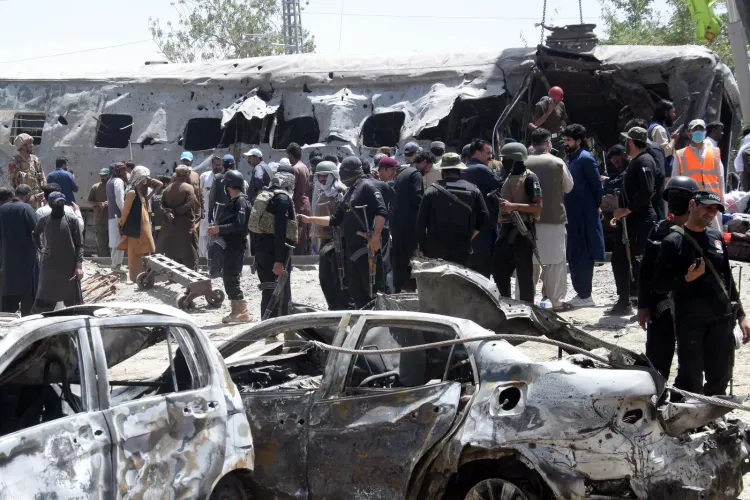
Pakistan recorded 57 militancy-related incidents and 200 fatalities between 1 May and 17 May 2025 , including 85 security force personnel and 47 civilians .
A suicide bombing in Bannu on 10 May killed 15 policemen ; an attack on an Army camp in Bajaur on 14 May killed four security personnel.
BLA cadres killed six security personnel in Dalbandin and three in Mastung on 16 May .
Pakistan has been ranked first on the Global Terrorism Index 2026 , reflecting a convergence of TTP, Baloch insurgent, and IS-linked threats.
The report warns that the boundary between the Khyber Pakhtunkhwa and Balochistan conflict theatres is blurring, with cross-group operational overlap increasing.
Analysts caution that military operations alone cannot resolve the crisis without addressing underlying political and governance failures .
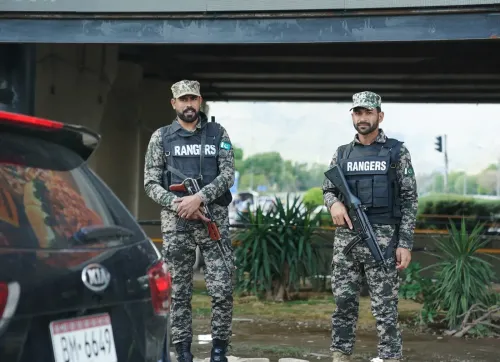
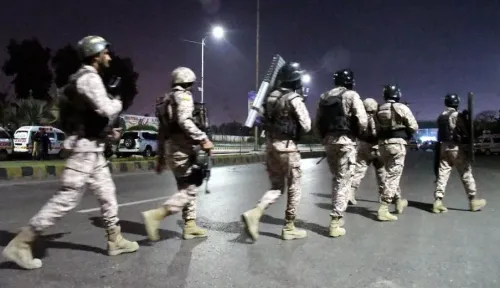
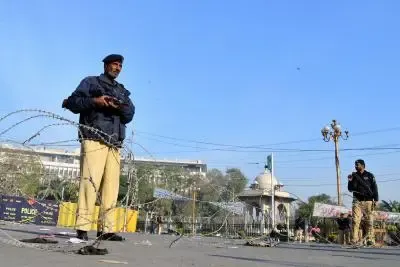
Pakistan's internal security situation is deteriorating sharply, with the country facing a structural crisis that extends well beyond isolated militant incidents, according to a detailed report by Stringer Asia. The analysis warns that unless authorities address both the violent expressions of militancy and the political conditions enabling them, insurgency is likely to intensify — leaving civilians, security personnel, and provincial institutions increasingly exposed.
Scale of the Violence
Between 1 May and 17 May 2025, Pakistan recorded 57 militancy-related incidents resulting in 200 fatalities — comprising 85 security force personnel, 58 militants, and 47 civilians, according to the report. The figures point to a sustained, high-tempo conflict rather than episodic flare-ups.
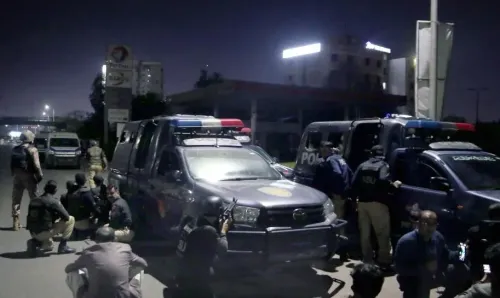
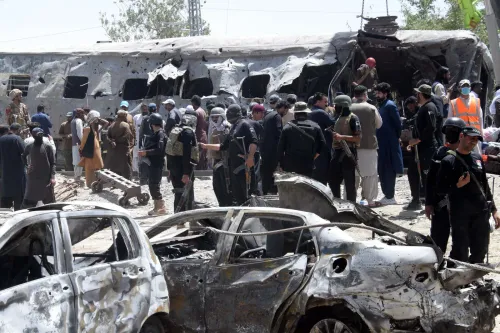
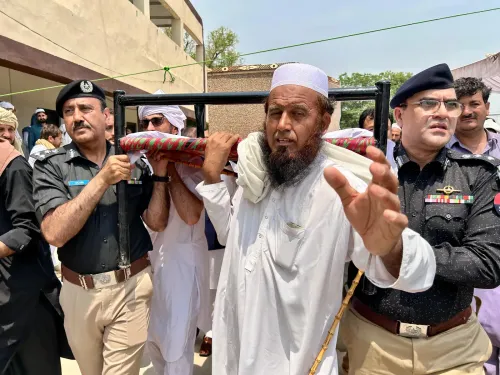
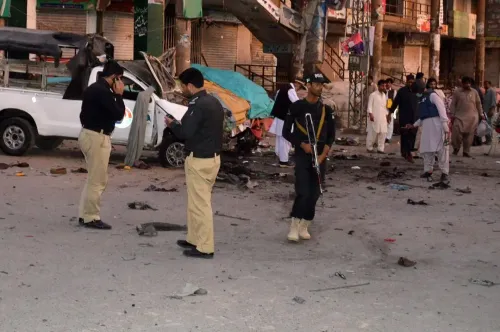
Among the deadliest incidents, a suicide bombing followed by an assault on a police post in Bannu on 10 May killed 15 policemen. On 14 May, an attack on an Army camp in Bajaur left nine Tehreek-e-Taliban Pakistan (TTP) militants and four security force personnel dead. In Balochistan, Baloch Liberation Army (BLA) cadres killed six security personnel in Dalbandin and three others in Mastung on 16 May, while suspected Baloch insurgents killed three military personnel in Kech District on 17 May. Security forces also suffered losses in Barkhan and Noshki on 13 May.
Two Overlapping Theatres of Conflict
The report identifies two distinct but increasingly interlinked arenas of insecurity. Khyber Pakhtunkhwa continues to bear the brunt of a TTP resurgence, while Balochistan is witnessing an escalating Baloch nationalist insurgency driven by groups including the Balochistan Liberation Army (BLA), the Balochistan Liberation Front (BLF), the Baloch Republican Guards (BRG), and the Baluch Raji Ajohi Sangar (BRAS) alliance.
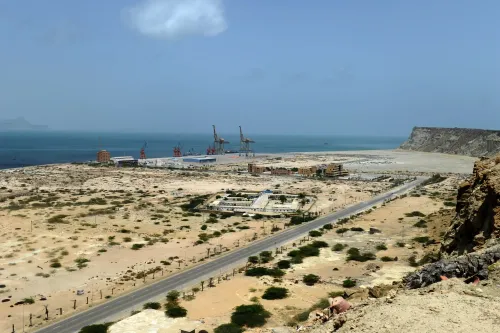
Critically, the boundary between these theatres is blurring. Islamist militant groups — including the TTP and Islamic State (IS)-linked entities — have reportedly exploited the disorder in Balochistan, while Baloch insurgents have demonstrated growing capacity to strike security convoys, mineral transport routes, checkpoints, and highways.
Pakistan Tops Global Terrorism Index 2026
The Stringer Asia report highlights Pakistan's position at the top of the Global Terrorism Index 2026, underscoring the breadth of the threat landscape. The country faces a convergence of the TTP resurgence, Baloch nationalist militancy, IS-linked activity, cross-border violence with Afghanistan, and deepening governance failures in conflict-affected regions.
'Pakistan's internal security environment is deteriorating at a pace that suggests the country is confronting not a temporary spike in violence but a deeper structural crisis,' the report stated. 'The latest incidents in Khyber Pakhtunkhwa and Balochistan show that militant and insurgent groups are expanding both their operational reach and tactical confidence.'
Why Military Action Alone Will Not Suffice
The report stresses that the threats are 'deeply interconnected and cannot be addressed through military measures alone.' It argues that the TTP, Baloch insurgent organisations, cross-border militant networks, and state security forces are now 'locked into an increasingly lethal cycle of violence' — a cycle that military operations have so far failed to break. Analysts note this mirrors the pattern seen during Pakistan's earlier counterinsurgency campaigns in the Federally Administered Tribal Areas, where tactical gains repeatedly gave way to renewed violence in the absence of political settlement.
As Pakistan's civil and military establishment weighs its next steps, the report's central warning remains stark: without addressing the underlying political conditions sustaining militancy, the country's security trajectory is likely to worsen further.
Point of View
The state's ability to play them off against each other — a long-standing Pakistan Army tactic — diminishes sharply. The civilian toll of 47 in just 17 days also points to a protection gap that no counterterrorism operation has yet closed.
NationPress
21 Oct 2026
Frequently Asked Questions
How many people were killed in militant attacks in Pakistan in May 2025?
According to a Stringer Asia report, Pakistan recorded 200 fatalities across 57 militancy-related incidents between 1 May and 17 May 2025. The dead included 85 security force personnel, 58 militants, and 47 civilians.
Which groups are behind the surge in militant violence in Pakistan?
The primary actors are the Tehreek-e-Taliban Pakistan (TTP) in Khyber Pakhtunkhwa and a coalition of Baloch nationalist groups — including the BLA, BLF, BRG, and BRAS alliance — in Balochistan. Islamic State-linked entities have also been active, particularly in Balochistan.
Why is Pakistan ranked first on the Global Terrorism Index 2026?
Pakistan tops the Global Terrorism Index 2026 due to a convergence of threats: TTP resurgence, Baloch nationalist militancy, IS-linked activity, cross-border violence with Afghanistan, and governance failures in conflict zones. The report describes these as deeply interconnected challenges.
What is the significance of the Balochistan insurgency escalating in 2025?
The Balochistan insurgency, led by groups like the BLA and BLF, is escalating in both scale and sophistication — targeting security convoys, mineral transport routes, and military checkpoints. Analysts note that Islamist groups are now exploiting the disorder in the province, blurring the line between two previously distinct conflict theatres.
Can Pakistan resolve its security crisis through military operations alone?
The Stringer Asia report explicitly states that the threats 'cannot be addressed through military measures alone,' arguing that the underlying political conditions sustaining militancy must also be tackled. Without that, insurgency is likely to intensify, the report warns.