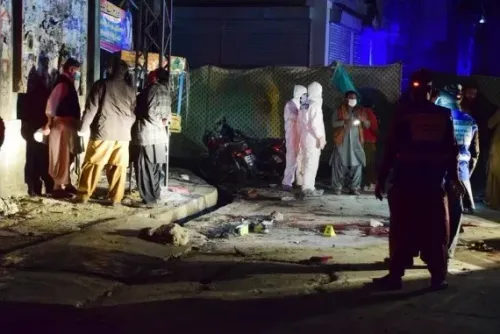
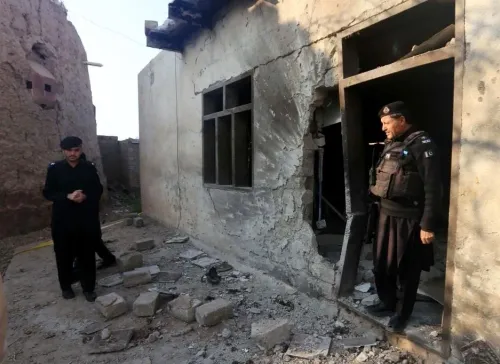
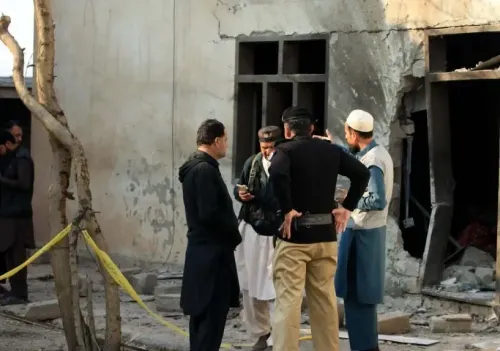
Sindh security crisis 2026: Militants, separatists and surging Karachi crime
Synopsis
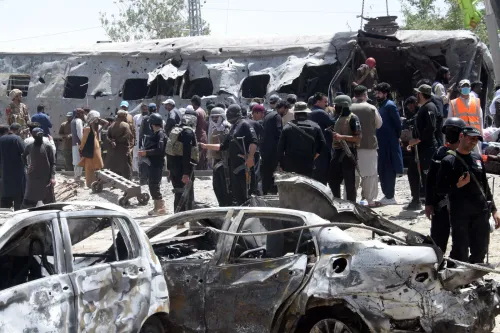
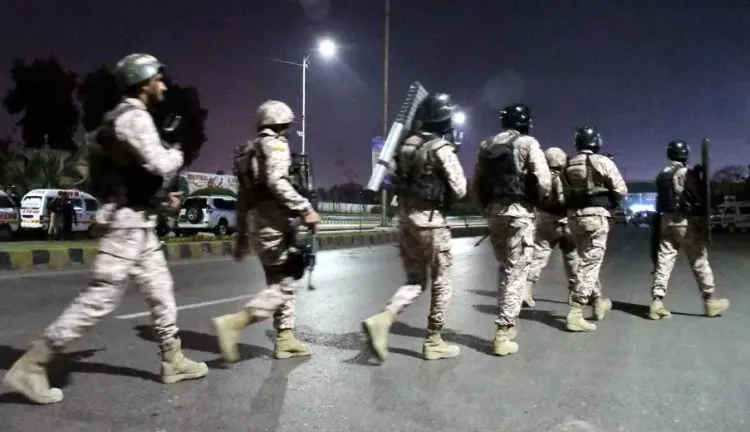
Sindh's security crisis is not a single threat — it is five overlapping ones. Islamist militants, TTP affiliates, Baloch separatists, Sindhi nationalist armed groups, and a brazen street-crime ecosystem have turned Karachi into Pakistan's most volatile urban centre. With terrorism fatalities climbing year-on-year and 176 murder cases in just four months of 2026, the province's crisis is structural, not cyclical.
Key Takeaways
Sindh recorded 10 terrorism-related fatalities between January and 19 April 2026 , per South Asia Terrorism Portal data.
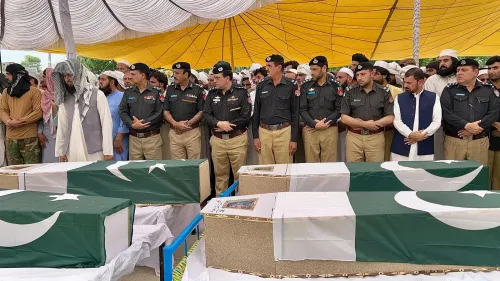
Full-year 2025 saw 49 terrorism deaths in Sindh — up from 38 in 2024 — with Karachi accounting for 31 of those deaths.
Active threats include TTP , sectarian outfits, the Sindhudesh Revolutionary Army , and the Sindhudesh Liberation Army .
Between January and April 2026 , Karachi saw 611 cars , 13,346 motorcycles , and 5,567 mobile phones stolen, per CPLC data.
176 people were killed in murder incidents and 61 extortion cases reported in Karachi during the same four-month period.
Pakistan's Sindh province is grappling with a deepening, multi-layered security crisis in 2026, with Islamist militant groups, sectarian outfits, Baloch and Sindhi separatist formations, and an entrenched criminal ecosystem continuing to destabilise the region — particularly Karachi, according to a report by StringerAsia.
Fatality Trends: A Worrying Trajectory
Sindh recorded 10 terrorism-related fatalities between January and 19 April 2026, comprising eight militants, one civilian, and one security force personnel, according to partial data compiled by the South Asia Terrorism Portal (SATP). During the same period in 2025, the province had logged 12 fatalities — including seven security force personnel, five civilians, and one militant.
While the early-2026 figure is marginally lower, analysts caution against reading it as a sustained improvement. In full-year 2025, Sindh reported 49 terrorism-related deaths — 26 civilians, 16 security personnel, and seven militants — up from 38 fatalities in 2024, which included 15 civilians, 14 security personnel, and nine militants. The year-on-year rise signals a deteriorating baseline, not a stabilising one.
Karachi: The Epicentre of Violence
Of Sindh's 49 terrorism-related deaths in 2025, 31 occurred in Karachi alone. The city similarly accounted for 27 of the 38 fatalities recorded province-wide in 2024. The StringerAsia report attributes Karachi's persistent vulnerability to its dense population, complex ethnic composition, port economy, criminal networks, sectarian histories, and political rivalries.
'The city's dense population, complex ethnic composition, port economy, criminal networks, sectarian histories and political rivalries make it a persistent target for militant and criminal actors alike,' the report noted.
Separatist Groups Add Another Layer
Beyond Islamist militancy and the Tehrik-i-Taliban Pakistan (TTP), Sindh faces active threats from Baloch separatist formations and Sindhi nationalist militant groups. The Sindhudesh Revolutionary Army and the Sindhudesh Liberation Army have continued operations, reportedly framing their violence around opposition to what they describe as Punjabi domination, resource exploitation, and the occupation of Sindh's land and water resources, according to the StringerAsia report.
Street Crime Surge Erodes Public Trust in Karachi
Alongside political violence, Karachi has witnessed a sharp rise in street crime in 2026, according to data released by the Citizens-Police Liaison Committee (CPLC). Between January and April 2026, residents were robbed of 611 cars and 13,346 motorcycles, collectively worth millions of rupees. A further 5,567 mobile phones were stolen during street crime incidents in the same period, according to reports citing Pakistani daily The Express Tribune.
Violence compounded the picture: 176 people were killed in various murder incidents, and 61 extortion cases were reported during the January–April period. In April alone, 22 cars were snatched and 111 stolen, while 469 motorcycles were snatched and 2,723 stolen. During the same 30-day window, 1,624 mobile phones were snatched and 42 people killed in separate incidents.
What This Means Going Forward
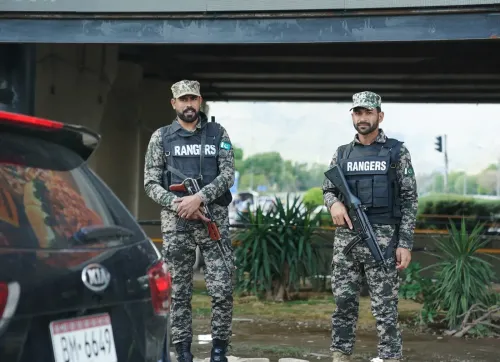
The convergence of Islamist militancy, separatist insurgency, sectarian conflict, and organised street crime in a single province — with Karachi as the pressure point — presents Pakistani authorities with a security challenge that conventional law enforcement responses have so far failed to contain. The rising civilian toll and deteriorating urban safety environment suggest the crisis is structural, not episodic, and is unlikely to ease without coordinated political and security intervention.
Point of View
A separatist insurgency, and a street-crime epidemic — and losing ground on all three. Karachi's outsized share of fatalities year after year is not an anomaly; it reflects the city's structural ungoverned spaces. What is consistently missing from official responses is any credible civilian protection framework that addresses root causes — ethnic marginalisation, resource grievances, and institutional impunity — rather than just body counts.
NationPress
1 Oct 2026
Frequently Asked Questions
How many terrorism-related deaths were reported in Sindh in 2025?
Sindh recorded 49 terrorism-related fatalities in 2025, comprising 26 civilians, 16 security personnel, and seven militants, according to South Asia Terrorism Portal data. This was a rise from 38 fatalities recorded in 2024.
Why is Karachi considered the epicentre of violence in Sindh?
Karachi accounted for 31 of Sindh's 49 terrorism-related deaths in 2025 and 27 of 38 in 2024. Its dense population, ethnic complexity, port economy, criminal networks, and sectarian rivalries make it a persistent target for militant and criminal actors, according to the StringerAsia report.
Which militant and separatist groups are active in Sindh?
Active groups include the Tehrik-i-Taliban Pakistan (TTP), sectarian outfits, Baloch separatist formations, and Sindhi nationalist groups — specifically the Sindhudesh Revolutionary Army and the Sindhudesh Liberation Army. The latter two have framed their violence around opposition to what they describe as Punjabi domination and resource exploitation.
How bad is street crime in Karachi in 2026?
Between January and April 2026, Karachi residents lost 611 cars, 13,346 motorcycles, and 5,567 mobile phones to theft and snatching, per Citizens-Police Liaison Committee (CPLC) data. During the same period, 176 people were killed in murder incidents and 61 extortion cases were registered.
Does the lower early-2026 terrorism figure mean the situation is improving?
Not necessarily. The 10 fatalities recorded between January and 19 April 2026 are slightly lower than the 12 in the same period of 2025, but analysts caution this may reflect a temporary dip. The broader year-on-year trend — from 38 deaths in 2024 to 49 in 2025 — remains a cause for concern.