Supreme Court halts Allahabad HC proceedings in Rahul Gandhi disproportionate assets case
Synopsis
The Supreme Court has stepped in to halt Allahabad High Court proceedings in a disproportionate assets case against Rahul Gandhi, restraining the CBI and ED from filing any report. CJI Surya Kant's bench flagged that courts directing investigative agencies must follow natural justice principles — a pointed procedural rebuke that could reshape how such politically charged petitions are handled.
Key Takeaways
The Supreme Court on 17 August directed the Allahabad High Court to defer proceedings in a disproportionate assets case linked to Rahul Gandhi .
A bench of CJI Surya Kant , Justice Joymalya Bagchi , and Justice V.
Mohana restrained the CBI and ED from submitting any report to the High Court.
The case was initiated by BJP worker S.
Vignesh Shishir from Karnataka , seeking probes into alleged assets disproportionate to Gandhi's income.
The Allahabad HC had in May directed both agencies to verify the allegations in accordance with law.
Senior Advocate Kapil Sibal called the proceedings a 'witch-hunt through a process not recognised by law.' The Supreme Court clarified that the CBI and ED may act independently under existing law, but court-directed actions must follow natural justice principles.
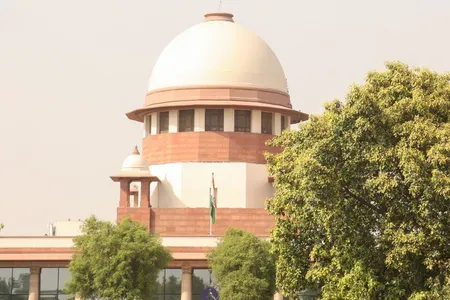
The Supreme Court on Monday, 17 August directed the Allahabad High Court to defer proceedings in a disproportionate assets case linked to Rahul Gandhi, the Leader of Opposition in the Lok Sabha. The bench simultaneously restrained the Central Bureau of Investigation (CBI) and the Enforcement Directorate (ED) from submitting any report to the High Court in connection with the matter.
Background of the Case
The case originates from a petition filed by S. Vignesh Shishir, a Karnataka-based Bharatiya Janata Party (BJP) worker, who sought CBI and ED probes alleging that Gandhi possessed assets disproportionate to his known sources of income. The Allahabad High Court, in an order issued in May, had observed that if the complaint had been received by the concerned agencies, the allegations should be verified in accordance with law — effectively directing the CBI and ED to look into the matter.
What the Supreme Court Said
A bench comprising Chief Justice of India (CJI) Surya Kant and Justices Joymalya Bagchi and V. Mohana took up Gandhi's petition challenging the High Court's directions. The bench noted that the CBI and ED remain at liberty to take appropriate action under the existing legal framework on their own initiative — but stressed that courts issuing such directions must adhere to the principles of natural justice.
CJI Surya Kant remarked from the bench: 'Suppose somebody commits murders, etc., police does not need permission. But what appears to us is, subject to the assistance provided to us from both sides, if the Court wants to issue a direction, the courts are expected to follow the principle of natural justice.'
Gandhi's Legal Challenge
Rahul Gandhi approached the Supreme Court last week, challenging the Allahabad High Court's order. Senior Advocate Kapil Sibal, appearing for Gandhi, argued that the High Court proceedings amounted to a 'witch-hunt through a process not recognised by law.' Sibal also questioned the locus standi and bona fide of the original petitioner before the High Court, pointing out that the same individual has repeatedly filed petitions targeting Gandhi.
Broader Significance
The Supreme Court's intervention underscores a recurring tension in Indian jurisprudence: the extent to which courts can direct investigative agencies to probe individuals without following natural justice norms, including giving the subject an opportunity to be heard. This is not the first time the apex court has had to weigh in on High Court directions to the CBI or ED in politically sensitive matters. The bench's observation that agencies can act independently without court orders — but that court-mandated directions carry due-process obligations — sets a notable procedural marker.
The matter will next be heard after the Allahabad High Court defers its proceedings as directed. All eyes will be on whether the CBI or ED choose to act independently, and on the Supreme Court's eventual ruling on the merits of Gandhi's petition.
Point of View
The bench is signalling that High Courts cannot casually direct the CBI or ED to 'verify allegations' against named individuals without affording them a hearing — a guardrail that has been eroded in several High Court orders in recent years. What mainstream coverage underplays is the locus standi question: the same petitioner has reportedly filed multiple cases against Gandhi, raising questions about whether courts should be more rigorous in screening such repeat filers. The apex court's ruling on merits could set a precedent that affects not just Gandhi but a wide class of politically targeted litigation.
NationPress
17 Aug 2026
Frequently Asked Questions
Why did the Supreme Court intervene in the Rahul Gandhi disproportionate assets case?
The Supreme Court intervened after Rahul Gandhi challenged the Allahabad High Court's May order directing the CBI and ED to verify allegations that he holds assets disproportionate to his income. The bench flagged that courts issuing such directions must follow natural justice principles, including giving the subject an opportunity to be heard.
What did the Supreme Court direct the CBI and ED to do?
The Supreme Court restrained both the CBI and the ED from submitting any report to the Allahabad High Court in connection with the disproportionate assets case. It also directed the High Court to defer its proceedings pending the apex court's hearing.
Who filed the original petition against Rahul Gandhi?
The petition was filed by S. Vignesh Shishir, a BJP worker from Karnataka, who sought CBI and ED probes alleging that Rahul Gandhi possesses assets disproportionate to his known sources of income.
What was Senior Advocate Kapil Sibal's argument before the Supreme Court?
Kapil Sibal, appearing for Rahul Gandhi, argued that the Allahabad High Court proceedings amounted to a 'witch-hunt through a process not recognised by law.' He also questioned the locus standi and bona fide of the original petitioner, noting that the same individual has filed repeated petitions against Gandhi.
Can the CBI or ED still investigate Rahul Gandhi independently?
Yes. The Supreme Court clarified that the CBI and ED remain free to take appropriate action under the existing legal framework on their own initiative. The restraint applies only to filing reports pursuant to the High Court's direction — not to independent action the agencies may choose to take.