ISI shifts West Bengal strategy to targeted killings and fake currency ops
Synopsis
Pakistan's ISI has quietly rewritten its West Bengal playbook — shelving mass infiltration for a more surgical approach: small cells, fake currency pipelines running through Bangladesh, and assassination plots. With the Cooch Behar bust and an earlier plot to kill CM Suvendu Adhikari both traced to ISI handlers, agencies warn the shift makes detection harder, not easier.
Key Takeaways
Pakistan's ISI has shifted its West Bengal strategy from demographic infiltration to targeted killings , counterfeit currency , and surveillance , according to officials.
Active ISI modules now comprise no more than 3 to 4 members — a deliberate tactic to reduce detection risk.
The Malda fake currency module is reportedly on overdrive, coordinating with operatives in Bangladesh and receiving notes from manufacturing units in Pakistan .
The STF arrested three individuals — Nasiruddin , Saiful , and Rashidul — in Cooch Behar last Sunday for fake currency circulation and SIM card procurement for Pakistan.
A separate module plotting blasts and the assassination of CM Suvendu Adhikari was also busted by the STF , allegedly on ISI instructions.
Officials say ISI's current operational focus is weighted toward West Bengal and northeastern states while it reconfigures in Jammu and Kashmir .
Pakistan's Inter-Services Intelligence (ISI) has significantly recalibrated its operations in West Bengal over the past few months, pivoting away from demographic infiltration toward targeted killings, counterfeit currency flooding, and cross-border surveillance networks, according to officials familiar with the intelligence assessments. Multiple terror modules linked to the spy agency have been dismantled in the state in recent weeks, signalling what agencies describe as a sharp uptick in ISI-directed activity.
A Deliberate Strategic Shift
According to intelligence officials, the ISI had long relied on pushing illegal Bangladeshi immigrants into West Bengal and northeastern states as a tool to alter demographics and stoke communal tensions. However, enhanced border surveillance and a renewed push by the West Bengal government against illegal immigration have made large-scale infiltration increasingly difficult.
Officials say the agency has now pivoted its operational focus entirely. 'Illegal immigration will always remain the ISI's top strategy against India,' one official noted, 'but for now, operations have shifted to targeted killings, counterfeiting, and surveillance.' The change reflects a tactical recalibration rather than an abandonment of long-term goals, according to assessments shared with security agencies.
Smaller Modules, Larger Reach
A key feature of the new ISI playbook, officials say, is the deliberate downsizing of module strength. Active cells now reportedly comprise no more than 3 to 4 members — a structural choice designed to reduce exposure and limit the risk of detection. Simultaneously, the ISI is reportedly pushing modules operating inside India and Bangladesh to coordinate more closely, enabling larger-scale operations without increasing individual cell sizes.
An Intelligence Bureau official confirmed that the ISI has already established multiple modules in border areas straddling India and Bangladesh, with cross-border communication lines reportedly active.
Fake Currency Network on Overdrive
Intelligence agencies have flagged a sharp rise in efforts to flood West Bengal with counterfeit Indian currency notes. The Malda-based module, long identified as a key node in the fake currency racket, is reportedly operating at heightened intensity and is in active contact with operatives across the border in Bangladesh.
According to officials, the counterfeit notes destined for circulation in India are not manufactured solely within the country. Production units exist across the border, and the main manufacturing facilities in Pakistan are also channelling fake notes into West Bengal via Bangladesh, officials have learnt.
Recent Module Busts and Arrests
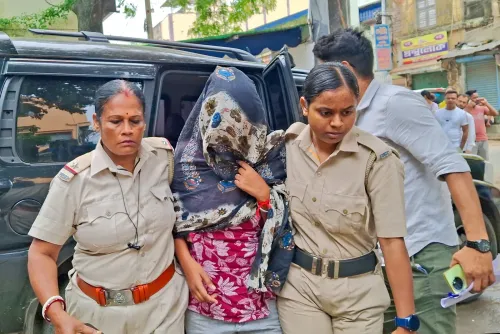
The operational surge has been met with a series of enforcement actions. Last Sunday, the Special Task Force (STF) dismantled a three-member module in Cooch Behar, arresting three individuals identified as Nasiruddin, Saiful, and Rashidul. According to investigators, the trio was engaged in circulating fake currency in the Indian market. Nasiruddin has been specifically accused of procuring Indian SIM cards intended to be sent to Pakistan, where, officials say, handlers typically use such cards to remotely direct terror attacks inside India.
In a separate operation, the STF had earlier busted a module that was reportedly planning bomb blasts and the assassination of West Bengal Chief Minister Suvendu Adhikari. That module too was allegedly operating on instructions from ISI-appointed handlers based in Pakistan, according to officials.
Broader Context: Northeast in the Crosshairs
Officials note that while the ISI is simultaneously reconfiguring its approach in Jammu and Kashmir, its current operational emphasis is weighted heavily toward West Bengal and the northeastern states. This comes amid a broader pattern of cross-border proxy activity that security agencies say has intensified since mid-2025. The concentration of recent busts in West Bengal suggests agencies are tracking a pipeline that remains active despite enforcement pressure.
With several modules neutralised and others reportedly still active, security agencies say the situation in West Bengal warrants sustained vigilance in the months ahead.
Point of View
Surgical cells is not a retreat — it is an upgrade. Smaller modules are exponentially harder to detect, and a fake currency pipeline running through Bangladesh into Malda is a low-cost, high-damage instrument that can destabilise local economies without a single bullet fired. The plot to assassinate CM Suvendu Adhikari, if confirmed, would represent a qualitative escalation beyond anything seen in the state in recent memory. The question mainstream coverage is not asking: how many modules have not yet been found?
NationPress
17 Aug 2026
Frequently Asked Questions
Why has the ISI changed its strategy in West Bengal?
According to intelligence officials, enhanced border surveillance and a government crackdown on illegal immigration have made large-scale infiltration increasingly difficult, prompting the ISI to pivot to targeted killings, fake currency operations, and surveillance as alternative tools of destabilisation.
What is the fake currency racket linked to ISI in West Bengal?
Intelligence agencies have identified a network centred on the Malda district that is flooding West Bengal with counterfeit Indian currency notes. The notes are reportedly manufactured both within India and in facilities across the border in Bangladesh and Pakistan, then channelled into the Indian market through cross-border operatives.
Who was arrested in the Cooch Behar STF operation?
The Special Task Force arrested three individuals — Nasiruddin , Saiful , and Rashidul — in Cooch Behar last Sunday. They were allegedly involved in fake currency circulation, and Nasiruddin is accused of procuring Indian SIM cards for dispatch to Pakistan-based handlers.
Was there a plot to assassinate West Bengal CM Suvendu Adhikari?
Yes, according to officials, the STF busted a module that was reportedly planning bomb blasts and the assassination of Chief Minister Suvendu Adhikari . The module was allegedly operating on instructions from ISI-appointed handlers in Pakistan.
Why are ISI modules now limited to 3-4 members?
Officials say the ISI has deliberately reduced module sizes to minimise the risk of detection and arrest. Smaller cells are harder for intelligence agencies to identify and dismantle, even as cross-module coordination is being ramped up to compensate for the reduced individual cell capacity.