ISI drone plot to flood India with fake currency alarms agencies
Synopsis
Pakistan's ISI is no longer just using couriers — it is reportedly testing drones to drop fake currency into India, with smaller payloads designed to slip past radar. Agencies believe current attempts are dry runs for a much larger operation, and the Malda printing network in West Bengal is seen as the linchpin that must be broken first.
Key Takeaways
Pakistan's ISI is running a two-pronged Fake Indian Currency Notes (FICN) campaign using couriers along the Tripura-Bangladesh border and drones in Punjab .
Current drone attempts are assessed by officials as dry runs to map India's border surveillance systems before a larger operation.
The NIA is probing multiple FICN cases in West Bengal , with Malda identified as a hub for counterfeit printing units.
Officials say shutting down the Malda module is the priority before enforcement focus shifts to border corridors.
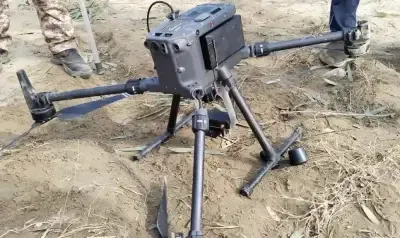
Smaller-payload drones carrying fake notes are harder to detect on radar, posing a new challenge for border forces.
The Dawood Ibrahim syndicate has historically been used by the ISI as a conduit for FICN operations into India, according to officials.
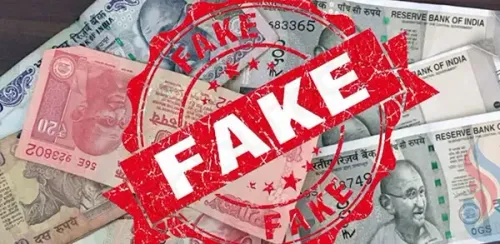
Pakistan's Inter-Services Intelligence (ISI) is orchestrating a coordinated campaign to flood Indian markets with Fake Indian Currency Notes (FICN), deploying a twin-track strategy that combines traditional courier networks along the Tripura-Bangladesh border and an emerging drone-based delivery system across Punjab, according to officials aware of the matter. Security agencies have raised the alarm over what they describe as a deliberate effort at economic sabotage.
The Two-Pronged Strategy
According to officials, the ISI's operation serves a dual purpose: destabilising the Indian economy by injecting counterfeit currency into circulation, and generating funds to finance terror groups operating out of Pakistan. Couriers remain the primary vehicle along the Bangladesh border, where the problem is assessed to be more acute than in Punjab. In Punjab, however, the threat vector is shifting — drones are increasingly being used to ferry fake notes across the international boundary.
An Intelligence Bureau (IB) official said the ISI is expected to pivot further toward drone-based delivery as ground-level courier networks face intensifying scrutiny. Critically, the official cautioned that current drone attempts should not be dismissed — they are likely dry runs designed to map and stress-test India's border surveillance architecture. 'These elements are trying to study the security apparatus and hence are undertaking dry runs,' the official said.
The Malda Connection
The National Investigation Agency (NIA) is at the forefront of countering the FICN menace and has widened its probe beyond border entry points to include operations deep inside the country. A key area of focus is Malda, West Bengal, where investigators say scores of counterfeit currency printing units have come up over the years. Officials believe that dismantling the Malda module is a prerequisite to making a meaningful dent in the overall supply chain. Once those printing hubs are neutralised, enforcement focus can shift to the border corridors through which notes are being smuggled.
Why Drones Pose a Harder Challenge
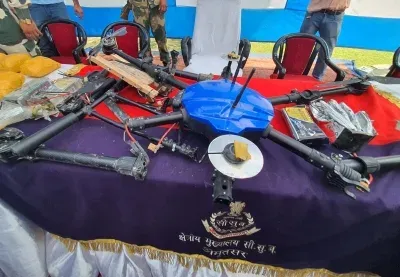
Border forces have had considerable success intercepting drones used to drop drugs, arms, and ammunition. Fake currency, however, presents a qualitatively different challenge. Officials note that smaller payloads of counterfeit notes are significantly harder to detect — such drones can evade radar and dodge conventional surveillance systems. The ISI-backed network is reportedly still in a testing phase, conducting multiple dry runs before scaling up to a larger operation involving multiple drones flying at regular intervals, each carrying smaller loads to reduce detection risk.
Notably, this is not the first time the ISI has leveraged non-state networks for FICN operations. Officials say the agency has long used the Dawood Ibrahim syndicate as a conduit for pushing fake currency into India, with economic disruption and terror financing as twin objectives. The drone module represents an evolution of that playbook — harder to intercept, harder to attribute, and potentially far larger in scale.
What Agencies Are Doing Next
The NIA is simultaneously pursuing active cases in West Bengal while coordinating with border forces to tighten surveillance. The immediate priority, according to officials, is shutting down the Malda printing network. As the NIA escalates pressure on courier-based distribution, officials anticipate the ISI will accelerate its shift toward the drone module. Security agencies are described as actively recalibrating their counter-drone protocols to address the specific challenge of small-payload, low-signature flights. The coming months will be a critical test of whether India's border security architecture can stay ahead of an adversary that is adapting in real time.
Point of View
Which means agencies are winning tactically but the adversary is adapting strategically.
NationPress
3 Oct 2026
Frequently Asked Questions
What is the ISI's fake currency drone operation targeting India?
Pakistan's ISI is reportedly using drones to drop Fake Indian Currency Notes (FICN) across the Punjab border, alongside courier networks along the Tripura-Bangladesh border. Officials believe current drone drops are dry runs to test India's surveillance systems ahead of a larger-scale operation.
Why is Malda in West Bengal significant in the fake currency case?
Malda has been identified by the NIA as a hub where multiple counterfeit currency printing units have been established. Officials say dismantling this network is the top priority, as it forms a critical link in the FICN supply chain inside India.
Why are drone-delivered fake notes harder to detect than courier-based smuggling?
Drones carrying smaller payloads of fake currency can evade radar and dodge conventional surveillance systems more easily than human couriers. Border forces have experience intercepting drones carrying drugs and arms, but low-weight currency bundles present a different and harder detection challenge.
What is the ISI's motive behind flooding India with fake currency?
According to officials, the ISI's fake currency campaign serves two goals: destabilising the Indian economy through counterfeit note injection, and generating funds to finance terror groups operating out of Pakistan. The Dawood Ibrahim syndicate has historically been used as a conduit for this operation.
What steps are Indian agencies taking to counter the FICN threat?
The NIA is actively probing FICN cases in West Bengal and working to shut down Malda-based printing units. Border forces are recalibrating counter-drone protocols, and intelligence agencies are monitoring dry-run drone attempts to pre-empt a larger operation.