ISI targets PM Modi with deepfakes in 3-front war on India

Synopsis
India's security establishment says the ISI has abandoned direct military confrontation in favour of a three-pronged covert war: nurturing home-grown terror cells, flooding borders with drone-delivered narcotics, and running a deepfake-powered disinformation blitz aimed squarely at PM Modi's global image. Officials warn the disinformation front is the hardest to counter — and the most dangerous.
Key Takeaways
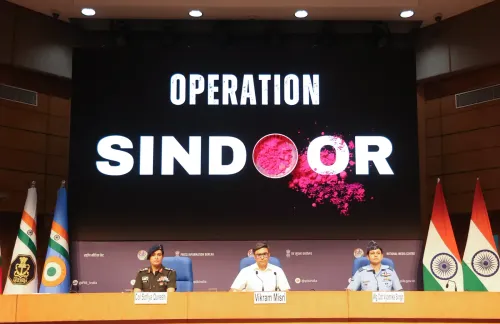
India's security planners have identified a three-front ISI strategy following Operation Sindoor : home-grown terror modules, drone-based narcotics, and disinformation.
The ISI has reportedly concluded that direct military confrontation with India is no longer viable after India's post- Pahalgam doctrinal shift.
A cell linked to the ISI was reportedly busted in Faridabad, Haryana , illustrating the home-grown module threat.
Officials say disinformation campaigns intensify during PM Modi's foreign visits, Indian Army exercises, and high-profile diplomatic engagements.
The ISI is expected to deploy deepfake videos at scale on social media, which officials describe as the hardest threat to counter in real time.
The Khalistan narrative and Kashmir infiltration are assessed as ongoing concerns but also potential smokescreens for the primary three fronts.
India's national security planners have concluded, following a detailed assessment of Inter-Services Intelligence (ISI) strategy after Operation Sindoor, that the threat from Pakistan has evolved into a simultaneous three-front challenge: home-grown terror modules, drone-enabled narcotics smuggling, and a large-scale disinformation campaign targeting Prime Minister Narendra Modi and India's international standing. Officials say this represents the country's most complex security test to date.
A Doctrine Shift That Changed Pakistan's Calculus
The pivot in ISI's approach is directly linked to India's own doctrinal shift following the Pahalgam terror attack. India declared that it would no longer treat terrorism as merely a cross-border security problem but would regard it as an act of war. According to officials, the ISI subsequently concluded that a direct military confrontation with India was no longer a viable option.
While Pakistani politicians periodically issue war threats, officials say these statements are largely rhetorical and do not reflect ground realities. The real contest, security planners argue, has moved to harder-to-trace domains.
The Three Fronts: Modules, Narcotics, and Disinformation
On the first front, the ISI is believed to be actively encouraging the formation of home-grown terror modules inside India — similar to the cell that was reportedly busted in Faridabad, Haryana. On the second, an Intelligence Bureau official said Pakistan intends to ramp up drone-based drug smuggling while continuing to nurture underworld-terror networks.
The third and, according to officials, the most challenging front is disinformation. 'Disinformation campaigns would peak the most when the Indian army undertakes some exercise. It would also go up considerably when Prime Minister Narendra Modi is making a foreign visit and also when some dignitary from abroad visits India,' the official said.
ISI's Deepfake Campaign Targeting PM Modi
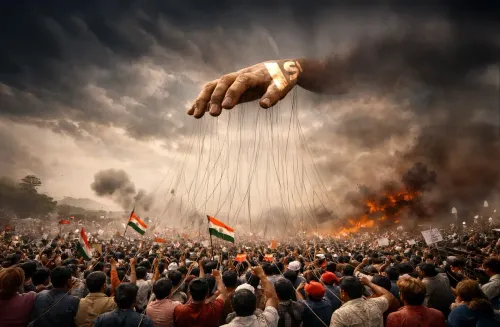
Officials say the ISI's objective is to systematically tarnish the image of Prime Minister Modi through sustained disinformation operations. Whenever Modi appears on the global stage, the agency is alleged to activate a network of operatives and sympathisers in both Pakistan and India to spread false narratives aimed at undermining both the PM and the purpose of his overseas engagements.
'These campaigns would focus largely on the Kashmir issue and the ISI-run social media handles would look to project India as the aggressor in the Valley and how atrocities have only risen under PM Modi,' officials said.
Beyond text-based disinformation, officials warn that the ISI is expected to deploy deepfake videos extensively across social media platforms. The scale of the planned campaign, according to the official, is expected to be significant — making it one of the biggest counter-intelligence challenges Indian agencies have faced.
'This spreads like wildfire, and by the time fact-checkers can do a course correction, the information would have reached millions of people,' the official added.
Khalistan and Kashmir as Tactical Smokescreens
Security analysts caution that the ISI will continue to push for infiltration into Kashmir and periodically amplify the Khalistan narrative. However, officials warn that these developments can at times serve as deliberate diversions — shifting intelligence bandwidth away from the three primary fronts.
Pakistan's broader strategic aim, officials say, is to internationalise the Kashmir issue and shape the global narrative in its favour. India has consistently maintained that Kashmir is an internal matter and has rejected any call for third-party intervention.
What Security Agencies Are Watching
Officials stress that infiltration attempts and the Khalistan movement remain significant concerns requiring constant vigilance. But the consensus within the security establishment is that the disinformation front — amplified by deepfakes and coordinated social media operations — poses the greatest sustained risk, given how rapidly false narratives travel before corrections can be issued. Indian agencies are expected to intensify counter-disinformation capabilities in the months ahead.
Point of View
Which crosses a threshold most state-sponsored influence operations prefer to keep deniable. Indian agencies have historically been reactive on disinformation; the speed at which AI-generated content travels means that reactive is no longer good enough. The harder question is whether India's counter-disinformation architecture — fragmented across the Intelligence Bureau, the Ministry of Information, and platform-level fact-checkers — can move at the pace the threat demands.
NationPress
3 Oct 2026
Frequently Asked Questions
What is ISI's new three-front strategy against India?
According to Indian security officials, the ISI is simultaneously pursuing three lines of effort: encouraging home-grown terror modules inside India, expanding drone-based narcotics smuggling, and running a large-scale disinformation and deepfake campaign targeting PM Modi and India's global image. Officials say this multi-front approach is designed to stretch Indian agencies thin.
Why has Pakistan shifted away from direct military confrontation with India?
Officials say the ISI concluded that direct military confrontation became unviable after India rewrote its security doctrine following the Pahalgam terror attack, declaring that terrorism would henceforth be treated as an act of war. This doctrinal shift, reinforced by Operation Sindoor, is believed to have pushed Pakistan toward covert and information-warfare tactics instead.
How does the ISI's disinformation campaign target PM Modi?
According to officials, the ISI activates networks of operatives and sympathisers whenever PM Modi undertakes a foreign visit or a foreign dignitary visits India, spreading false narratives to undermine his overseas engagements. The campaign focuses heavily on projecting India as an aggressor in Kashmir. Officials add that deepfake videos are expected to be deployed at scale to amplify these narratives.
What role do Khalistan and Kashmir play in Pakistan's strategy?
Security analysts say the ISI continues to push infiltration into Kashmir and periodically amplifies the Khalistan narrative. However, officials warn these can also serve as deliberate smokescreens to divert intelligence attention from the three primary fronts of Pakistan's covert strategy.
Why is the disinformation front considered the hardest to counter?
Officials say disinformation — especially deepfake video — spreads across social media faster than fact-checkers can respond, potentially reaching millions before any correction is issued. Unlike physical threats, which can be interdicted at the border, disinformation operates across open digital networks with near-zero marginal cost for the aggressor.