Is the ISI Intensifying Espionage and Disinformation Operations Against India?

Synopsis
Indian Intelligence agencies warn that the ISI is ramping up efforts to expand its espionage activities and disinformation campaigns against India. Amidst ongoing security challenges, Pakistan aims to undermine trust in the Indian armed forces and instigate local protests. This article delves into the implications of these operations and the measures being taken to counter them.
Key Takeaways
ISI is intensifying espionage efforts in India.
Disinformation campaigns aim to undermine trust in Indian armed forces.
Pakistan seeks to instigate local protests and unrest.
Enhanced security measures are crucial for national defense.
Vulnerable individuals are targeted for espionage recruitment.
New Delhi, Jan 3 (NationPress) Indian Intelligence agencies have alerted that the ISI is set to intensify its efforts to broaden its espionage network within India. Despite numerous cases being uncovered last year, officials assert that the Pakistani intelligence agency is tenaciously working to enhance its operations.
Furthermore, Pakistan intends to launch a significant disinformation campaign against India.
This campaign will focus on disseminating misleading information regarding the Indian armed forces.
Additionally, the ISI aims to engage individuals and organizations to orchestrate protests that challenge government policies, as reported by an official.
This strategy forms part of the broader agenda of the ISI to foster violence and terrorism as locally sourced, thus allowing Pakistan to maintain plausible deniability.
An official highlighted that fabricating false narratives, inciting protests, and establishing deeper espionage networks are integral to a larger scheme, which also encompasses the creation of home-grown terror modules, similar to the one recently dismantled in Faridabad.
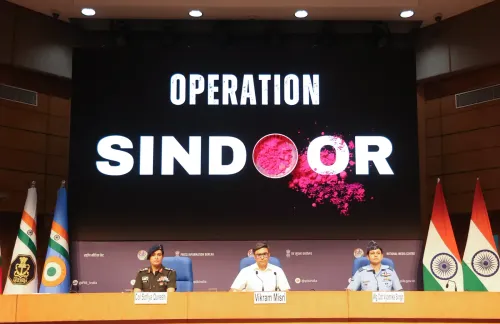
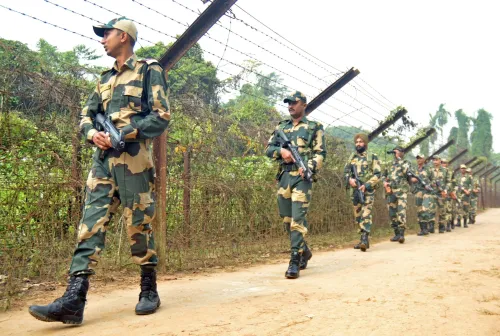
Pakistan is currently not prioritizing the dispatch of its terrorists. Following 'Operation Sindoor', the majority of their terror networks have been significantly weakened. Additionally, further infiltrations are challenging due to heightened security measures.
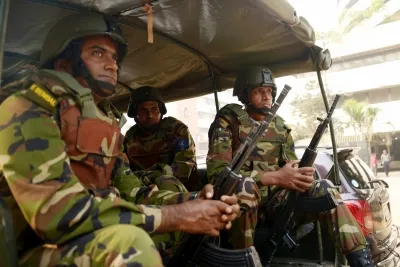
Along with its focus on India, the ISI is placing considerable attention on Bangladesh, where it aims to establish launch pads to target the northeastern states, as conveyed by another official.
A representative from the Intelligence Bureau stated that among all the ISI plans, the two most perilous are the establishment of an espionage network and the execution of a disinformation campaign.
Pakistan seeks to engineer situations akin to those in Bangladesh and Nepal, where protests erupt nationwide demanding regime changes. This campaign aims to tarnish the reputation of the Indian armed forces, thereby diminishing public trust.
They wish to portray the armed forces as weak in the eyes of the Indian populace. The ISI also intends to infiltrate every protest to ensure widespread dissemination and escalation into violence.
Historically, the ISI has executed such operations to a certain extent, but now it aims for a more extensive reach, as per agency reports.
Pakistan is also focused on constructing a vast espionage network. Efforts to gather intelligence—particularly concerning the armed forces—have significantly increased following Operation Sindoor, according to the Intelligence Bureau representative.
While honey-trapping remains a primary tactic for building this network, the ISI is also targeting individuals with ideological affiliations, those experiencing financial difficulties, and individuals with personal issues, as these individuals are more susceptible to recruitment.
The ISI is prepared to invest substantial resources to expand this network. Reports of the espionage network's growth come amidst indications that Pakistan’s army chief, Field Marshal Asim Munir, is eager for military confrontation with India.
For Munir, engaging in conflict is crucial as he seeks to salvage his reputation after the setbacks of Operation Sindoor. He also believes he can rely on U.S. support should a military clash with India arise.
These scenarios present significant challenges, as noted by an official, emphasizing the need for agencies to maintain heightened vigilance.
Recently, the Union Home Ministry introduced the National Counter Terrorism Policy. The National Investigation Agency, which developed a unified ATS structure, has distributed it among state police forces. This framework guarantees consistent readiness at all levels.
Union Home Minister Amit Shah has instructed all police directors to enforce this policy, which is crucial given Pakistan's persistent interference in India’s internal matters and threats to national security, officials assert.
Point of View
It is imperative to recognize the strategic depth of the ISI's operations, which pose a significant threat to India's national security. The government must remain vigilant and proactive in countering these espionage and disinformation tactics to maintain public trust in its armed forces and stability within the region.
NationPress
28 Sept 2026
Frequently Asked Questions
What are the main concerns regarding the ISI's actions?
The primary concerns involve the expansion of its espionage network and the execution of disinformation campaigns aimed at undermining the credibility of India's armed forces.
How is the Indian government responding?
The Indian government has launched the National Counter Terrorism Policy and is enhancing its national security measures to counter such threats.
What tactics is the ISI expected to use?
The ISI is likely to employ tactics such as honey-trapping and leveraging vulnerable individuals to establish its espionage network.
What are the implications of these operations?
The implications could include increased unrest within India, challenges to national security, and potential destabilization of the region.