CM Himanta Calls Out Opposition's 'Double Politics' Over Kaziranga

Synopsis
Assam CM Himanta Biswa Sarma says Kaziranga locals are themselves protesting against the opposition, accusing Congress of ignoring poaching and encroachment while practising hypocrisy over a five-star hotel they personally patronise.
Key Takeaways
Assam CM Himanta Biswa Sarma posted on 18 August 2026 highlighting local protests in Kaziranga directed against the opposition, not the government.
He accused Congress of overseeing poaching and encroachment in Kaziranga's forests during their tenure in power.
Sarma alleged that opposition leaders who publicly oppose a five-star hotel in the Kaziranga zone privately stay in such hotels — calling it 'dohari rajneeti' (double politics).
Kaziranga National Park is a UNESCO World Heritage Site and home to the world's largest population of the Indian one-horned rhinoceros.
The post signals the BJP's intent to use Kaziranga's conservation record as a political weapon ahead of any electoral cycle in Assam.
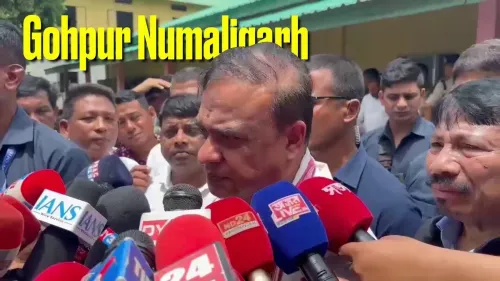
Locals in Kaziranga have taken to the streets — not against the government, but against the opposition. Assam Chief Minister Himanta Biswa Sarma flagged this reversal on 18 August 2026, calling it a moment of genuine surprise and a verdict the public has delivered on its own.
In a pointed post in Hindi, CM Sarma wrote: 'Today I am amazed — the local people of Kaziranga themselves are on the streets against the opposition.' He offered two reasons for this groundswell. First, the public has not forgotten the damage done to Kaziranga's forests through poaching and encroachment during Congress rule. Second, those leading the charge against a proposed five-star hotel in the Kaziranga zone are, by his account, the very people who stay in such hotels themselves.
The Kaziranga Hotel Row
The controversy centres on opposition to luxury hotel development in or near the Kaziranga National Park buffer zone — a UNESCO World Heritage Site and home to the world's largest population of the Indian one-horned rhinoceros. The opposition has framed such development as an ecological threat. CM Sarma is turning that framing on its head, accusing critics of performative environmentalism while personally availing the same amenities they publicly condemn.
His phrase 'dohari rajneeti' — double politics — is the sharpest line in the post, and it is aimed squarely at Congress. The argument is structural: that the party which oversaw decades of poaching and encroachment in Kaziranga now positions itself as the park's guardian. The local protests, in Sarma's telling, are the community's own rejection of that claim.
Congress-Era Poaching and the Memory Politics of Kaziranga
Kaziranga has long been a political flashpoint in Assam. Poaching of rhinoceroses — driven by demand for horn in illegal wildlife markets — was a persistent crisis through multiple administrations. Encroachment on forest land by settlers along the park's fringes has been equally contentious, touching on questions of land rights, ethnicity, and conservation that sit at the heart of Assam's political identity.
By invoking that record now, CM Sarma is doing something deliberate: anchoring today's hotel debate in a longer history of ecological mismanagement he attributes to the opposition. Whether the local protests are as organic and widespread as he suggests is a question the ground will answer — but the political framing is unmistakable.
When the people whose livelihoods depend on Kaziranga's health start marching against the opposition, a politician who has staked his identity on the park's protection will make sure everyone notices.
Point of View
He reclaims the conservation narrative on terrain where Congress once held moral authority. The 'double politics' charge — luxury-hotel critics who are themselves hotel guests — is designed to collapse the opposition's ecological credibility in a single image. Kaziranga has historically been too emotionally charged in Assam for any party to cede without a fight, and Sarma is ensuring the BJP holds the high ground heading into the next political cycle. The absence of verifiable protest numbers, however, leaves the claim open to challenge.
NationPress
18 Aug 2026
Frequently Asked Questions
Why are Kaziranga locals protesting against the opposition?
According to Assam CM Himanta Biswa Sarma, local residents are protesting because they have not forgotten the damage to Kaziranga's forests from poaching and encroachment during Congress rule, and they view the opposition's current environmental stance as hypocritical.
What is the five-star hotel controversy in Kaziranga?
The row involves opposition to proposed luxury hotel development in or near the Kaziranga National Park buffer zone. Critics call it an ecological threat; CM Sarma accuses those critics of staying in such hotels themselves while publicly opposing them.
What is Kaziranga National Park known for?
Kaziranga National Park in Assam is a UNESCO World Heritage Site and hosts the world's largest population of the Indian one-horned rhinoceros. It is one of India's most significant wildlife conservation areas.
What did Himanta Biswa Sarma say about Congress and Kaziranga?
CM Sarma alleged that during Congress rule, poaching and encroachment caused serious damage to Kaziranga's forests, and that the public remembers this record — making the opposition's current pro-environment posturing unconvincing.
What does 'dohari rajneeti' mean in Sarma's Kaziranga post?
'Dohari rajneeti' translates to 'double politics' or political hypocrisy. Sarma used the phrase to describe opposition leaders who oppose five-star hotels near Kaziranga in public while reportedly staying in such hotels privately.