CM Himanta Sets Record Straight on Kaziranga ESZ
Synopsis
Assam Chief Minister Himanta Biswa Sarma has publicly presented what he terms 'the real facts' on the Eco-Sensitive Zone around Kaziranga National Park, reigniting a decade-old dispute over conservation boundaries, land rights, and centre-state negotiations in the Northeast.
Key Takeaways
CM Himanta Biswa Sarma posted on 12 August 2026 presenting his government's position on the Kaziranga National Park Eco-Sensitive Zone .
The ESZ framework, notified by the Union Ministry of Environment, Forest and Climate Change , restricts construction, mining, and certain farming in buffer areas around protected parks.
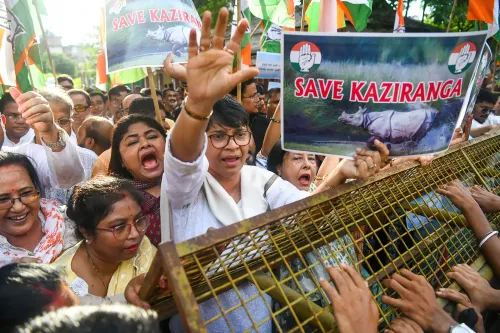
A draft ESZ notification for Kaziranga was first issued in 2016 and triggered protests from local communities over livelihood restrictions.
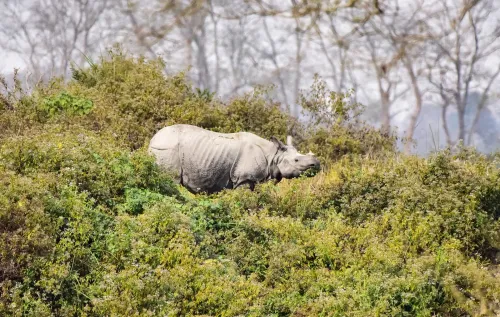
Kaziranga is a UNESCO World Heritage Site and the world's primary habitat for the greater one-horned rhinoceros.
The dispute reflects a wider pattern of Northeast state governments negotiating ESZ boundaries with the central government to balance conservation with community rights.
A revised final ESZ notification from the Union ministry and potential legal challenges remain the key developments to watch.
A decade-long dispute over land, livelihoods, and one of India's most iconic wildlife sanctuaries has a new flashpoint. Assam Chief Minister Himanta Biswa Sarma on Wednesday, 12 August 2026, took to X to present what he called 'the real facts' about the Eco-Sensitive Zone proposed around Kaziranga National Park — a UNESCO World Heritage Site and home to the world's largest population of the greater one-horned rhinoceros.
What the ESZ Debate Is Really About
The Eco-Sensitive Zone (ESZ) framework is a regulatory buffer notified by the Union Ministry of Environment, Forest and Climate Change around protected forests and national parks. Its mandate: curb activities — construction, mining, certain farming practices — that could degrade the core wildlife habitat. The principle is sound. The execution, in Kaziranga's case, has been anything but smooth. A draft ESZ notification for Kaziranga was first floated in 2016 and immediately drew protests from local communities in adjacent districts. Villagers and farmers feared that land-use restrictions would strip them of livelihoods built over generations — the right to build a home, till a field, run a small business — all potentially curtailed by a line drawn on a government map.A Centre-State Fault Line in the Northeast
Kaziranga is not an isolated case. State governments across the Northeast have repeatedly pushed back against ESZ boundaries they consider too sweeping, arguing that conservation cannot come at the cost of communities that have coexisted with these forests for centuries. The negotiation between state capitals and New Delhi over where exactly the buffer ends — and ordinary life begins — has defined wildlife governance in the region for years. Sarma's intervention signals that the Assam government wants to shape the public narrative around the ESZ before a revised final notification lands. By framing his post around 'real facts,' the Chief Minister is implicitly contesting a version of events — likely the conservationist position that stricter buffers are non-negotiable — that has dominated the discourse.Kaziranga's Dual Identity: Heritage Site and Flashpoint
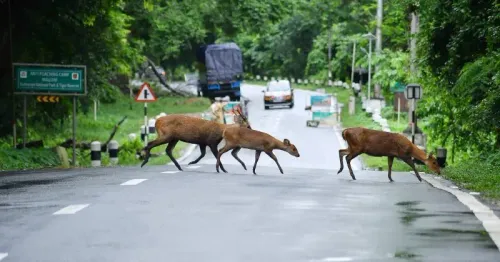
For the outside world, Kaziranga is a conservation triumph: a park that pulled the greater one-horned rhinoceros back from the brink of extinction, a tiger reserve, a flood-plain ecosystem of global significance. For the roughly 200,000 people living in its shadow, it is also a neighbour whose expanding legal perimeter can determine whether a family can build a school or sink a tubewell. That tension — between global biodiversity value and local democratic rights — is precisely what the ESZ debate embodies. Sarma's post, accompanied by two videos, suggests the government is making a detailed, data-led case rather than a political broadside. The next move belongs to the Union environment ministry: whether it revises the ESZ boundary, holds further consultations, or presses ahead with an earlier draft will determine whether this dispute heads to the courts or toward a negotiated settlement. Kaziranga's rhinos aren't going anywhere — but the question of who gets to live alongside them, and on what terms, is very much open.Point of View
On a high-traffic platform — is a calculated move to pre-empt the final notification and anchor public opinion on the state's terms. It fits a broader pattern of BJP-led northeastern governments asserting greater autonomy in forest and land governance, pushing back against what they characterise as ecologically well-meaning but administratively blunt central directives. The Kaziranga ESZ has become a proxy for a deeper argument: whether conservation policy in India can be genuinely participatory, or whether it will continue to be handed down from Delhi. How the Union environment ministry responds — and whether it adjusts the boundary — will signal the health of centre-state environmental federalism ahead of what could become a legal battle.
NationPress
27 Sept 2026
Frequently Asked Questions
What is the Eco-Sensitive Zone around Kaziranga National Park?
The Eco-Sensitive Zone is a regulatory buffer area around Kaziranga notified by the Union Ministry of Environment, Forest and Climate Change to restrict activities like mining, construction, and certain farming that could harm the park's ecosystem. A draft notification was first issued in 2016.
Why are local communities protesting the Kaziranga ESZ?
Villagers and farmers living near Kaziranga fear that ESZ land-use restrictions will prevent them from building homes, cultivating fields, or running small businesses — effectively curtailing livelihoods that have existed for generations alongside the park.
What did CM Himanta Biswa Sarma say about the Kaziranga ESZ?
On 12 August 2026, Sarma posted on X stating he was presenting 'the real facts' about the Eco-Sensitive Zone around Kaziranga, accompanied by two videos, signalling the Assam government's intent to shape the public narrative around the disputed boundary.
Is Kaziranga National Park a UNESCO World Heritage Site?
Yes. Kaziranga National Park in Assam is a UNESCO World Heritage Site and one of the world's most important habitats for the greater one-horned rhinoceros. It is also a designated tiger reserve.
What happens next in the Kaziranga ESZ dispute?
The key development to watch is whether the Union Ministry of Environment, Forest and Climate Change issues a revised final ESZ notification, holds fresh consultations, or proceeds with an earlier draft — any of which could trigger further state government responses or legal challenges.