CM Himanta Clears Air on Kaziranga Eco-Sensitive Zone Rationalisation

Synopsis
Assam Chief Minister Himanta Biswa Sarma pushed back against misinformation on August 17, 2026, clarifying that Kaziranga National Park's core area is unchanged and that only the outer 10-km Eco-Sensitive Zone is under proposed rationalisation, driven by local community livelihood demands.
Key Takeaways
Kaziranga National Park's core area and boundary remain fully intact — no change to the protected zone has been proposed.
The proposed rationalisation concerns only the 10-km Eco-Sensitive Zone that lies outside the Park boundary.
The move is driven by demands from local communities seeking to protect their livelihoods from ESZ-related restrictions.
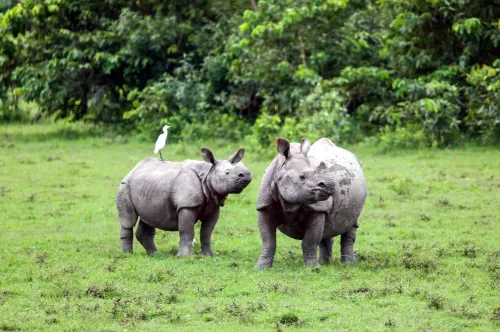
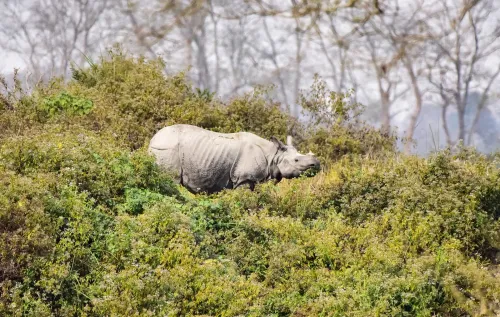
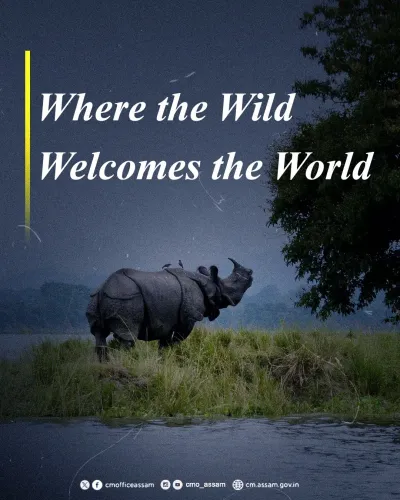
Kaziranga is a UNESCO World Heritage Site and home to the world's largest population of the Indian one-horned rhinoceros, making any policy signal around it highly scrutinised.
ESZ rationalisation is a central government process under the Environment Protection Act, 1986, requiring Ministry approval and public consultation.
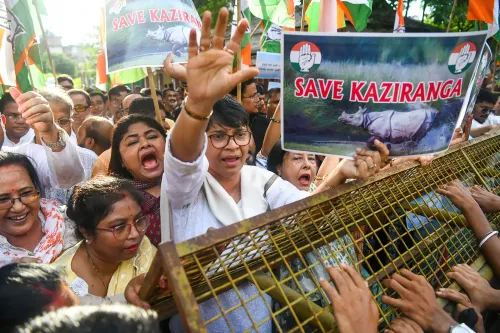
A wave of misinformation about one of India's most iconic wildlife sanctuaries prompted Assam Chief Minister Himanta Biswa Sarma to issue a pointed public clarification on Monday, August 17, 2026 — setting the record straight on what the proposed rationalisation of Kaziranga National Park's Eco-Sensitive Zone actually means, and what it does not.
What the ESZ rationalisation does — and does not — change
The Chief Minister was unambiguous: 'The Park area remains unchanged.' The 10-km Eco-Sensitive Zone exists entirely outside the Park's boundary — it is a buffer layer, not the core protected habitat. What is being proposed is a rationalisation of that outer belt, not a redrawing of Kaziranga's protected core.
Eco-Sensitive Zones around national parks are governed by the Environment Protection Act, 1986 and notified by the Ministry of Environment, Forest and Climate Change. They are designed to act as transition zones between strictly protected areas and human settlements. Rationalising an ESZ typically means adjusting its boundaries or permitted activities — a process that requires central government approval and public consultation, and that communities living on the edge of such zones have long demanded across India.
The community demand behind the move
Sarma explicitly anchored the rationalisation in local voices, stating it 'follows demands from local communities to safeguard their livelihoods.' Villages and agricultural settlements that fall within or abut the 10-km ESZ around Kaziranga face restrictions on construction, industry, and farming activity. For families whose land has been caught inside these boundaries for generations, the zone's current demarcation can mean blocked development permits, constrained agriculture, and limited economic mobility.
The tension between conservation mandates and the livelihood rights of communities living alongside protected areas is one of the defining fault lines of Indian environmental governance. ESZ rationalisation petitions from local bodies and state governments have been filed across multiple states, reflecting a nationwide pressure point — not an Assam-specific anomaly.
Why Kaziranga draws such intense scrutiny
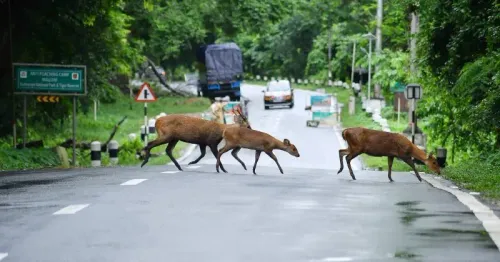
Kaziranga National Park, a UNESCO World Heritage Site since 1985, is home to the world's largest population of the Indian one-horned rhinoceros and supports significant populations of tigers, elephants, and wild water buffalo. Any policy signal touching Kaziranga — however procedural — triggers immediate national and international attention from conservationists, making it a uniquely charged arena for even routine administrative decisions.
That sensitivity, Sarma's post implies, is precisely the soil in which misinformation grows. By drawing a hard line between the Park's inviolate core and the outer ESZ under review, the Chief Minister is attempting to contain a narrative before it hardens into public alarm.
The clarification puts the burden of proof back where it belongs: on those claiming the Park itself is under threat to show which boundary, which hectare, which protected corridor has actually changed. So far, none has.
Point of View
He is attempting to reframe the debate from 'threat to Kaziranga' to 'administrative adjustment for local welfare' — a framing that is both factually defensible and politically safer. The broader pattern is significant: across India, states are increasingly pushing back on ESZ demarcations that they argue were drawn without adequate consultation with border communities, and Assam is positioning itself as a voice for that constituency. Whether the rationalisation ultimately clears central scrutiny will depend on the Ministry of Environment's assessment — but Sarma has clearly decided that controlling the public narrative cannot wait for that outcome.
NationPress
2 Oct 2026
Frequently Asked Questions
Is Kaziranga National Park being reduced or its boundary changed?
No. Assam Chief Minister Himanta Biswa Sarma has explicitly stated that the Park area remains unchanged. Only the 10-km Eco-Sensitive Zone outside the Park boundary is being considered for rationalisation.
What is an Eco-Sensitive Zone and why does it matter?
An Eco-Sensitive Zone (ESZ) is a buffer area declared around national parks and wildlife sanctuaries under the Environment Protection Act, 1986. It regulates activities like construction and industry in a transition belt between the protected area and human settlements.
Why are local communities demanding ESZ rationalisation near Kaziranga?
Villages and agricultural settlements within or bordering the 10-km ESZ face restrictions on construction, farming, and economic activity. Communities have long demanded boundary adjustments to ease these livelihood constraints.
Who has the authority to rationalise the Eco-Sensitive Zone around Kaziranga?
The central government — specifically the Ministry of Environment, Forest and Climate Change — has authority over ESZ notifications. Any rationalisation requires Ministry approval and a formal public consultation process.
Why does any policy change around Kaziranga attract so much attention?
Kaziranga National Park is a UNESCO World Heritage Site and hosts the world's largest population of the Indian one-horned rhinoceros. Its global conservation significance means even procedural administrative decisions draw intense scrutiny from wildlife groups and international bodies.