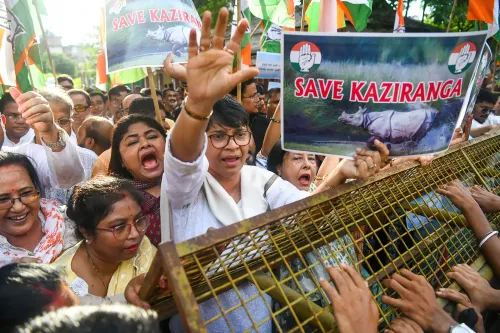
Kaziranga ESZ Plan Wins Villager Support, CM Assam Says
Synopsis
Assam's CMO has announced that villagers are backing a site-specific Eco-Sensitive Zone plan around Kaziranga National Park, marking a shift toward community-inclusive conservation that balances biodiversity protection with rural livelihoods.
Key Takeaways
The Chief Minister's Office of Assam announced on August 19, 2026 that local villagers support a site-specific Eco-Sensitive Zone plan around Kaziranga National Park .
Kaziranga is a UNESCO World Heritage Site and home to the world's largest population of the greater one-horned rhinoceros , designated a national park in 1974 .
ESZs are notified under the Environment (Protection) Act, 1986 ; the Supreme Court mandated all states to notify them around protected areas in 2016 .
The site-specific approach incorporates village-level consultations, distinguishing it from one-size-fits-all ESZ notifications that triggered protests elsewhere in Northeast India .
Final ESZ boundaries require a formal notification from the Central Ministry of Environment, Forest and Climate Change .
A delicate balance between rhino country and rice fields may finally be taking shape. The Chief Minister's Office of Assam announced on Wednesday, August 19, 2026, that local villagers are backing a site-specific Eco-Sensitive Zone (ESZ) plan around Kaziranga National Park — one that promises to protect the landscape without stripping communities of their livelihoods.
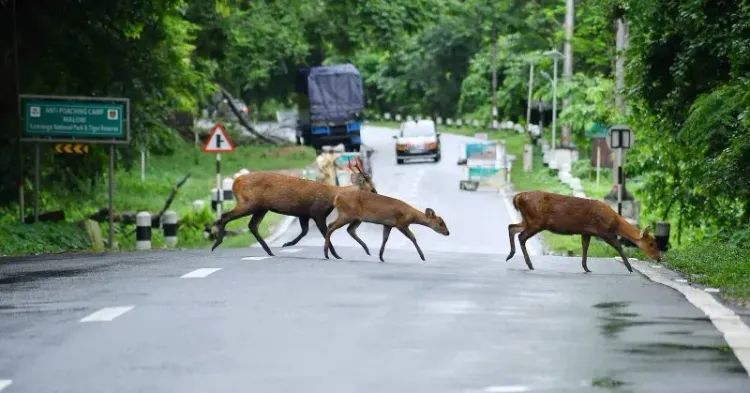
Kaziranga is not just a national park. It is a UNESCO World Heritage Site in Assam, home to the world's largest population of the greater one-horned rhinoceros and formally designated a national park in 1974. Decades of strict conservation have made it a global success story — but that success has come with friction at the fence line, where farming families, fishing communities, and small tourism operators have long chafed against restrictions that limit how they use the land they live on.
Why a Site-Specific ESZ Changes Everything
Eco-Sensitive Zones are notified under the Environment (Protection) Act, 1986, and are designed to create a regulated buffer around protected areas — curbing heavy industry, mining, and other high-impact activity while allowing controlled local use. The Supreme Court of India directed all states in 2016 to notify ESZs around every national park and sanctuary in the country, but the process has been slow, contentious, and — in many cases — one-size-fits-all. The shift now underway at Kaziranga is different. A site-specific plan, shaped through village-level consultations, marks a departure from blanket boundary-drawing that ignores local geography and livelihoods. Across Northeast India, similar adjustments around other protected areas followed protests over restrictions on farming, fishing, and tourism. The Kaziranga process appears to be learning from those conflicts rather than repeating them.Communities at the Table, Not Outside the Gate
The CMO's announcement signals that villagers are not merely being informed of the ESZ — they are endorsing it. That distinction matters enormously. Conservation plans that carry community buy-in are far more durable than those enforced against local resistance. When the people who live alongside a protected area see the plan as fair, they become its most effective guardians. The exact provisions of the site-specific plan and the names of the endorsing villages have not been confirmed from official public records, but the direction of travel is clear: Assam is moving toward an ESZ framework that treats biodiversity protection and rural economic security as compatible goals, not competing ones. The next critical step is a formal notification from the Central Ministry of Environment, Forest and Climate Change finalising the site-specific boundaries, followed by state-level implementation orders. Until that notification lands, the plan remains a framework — promising, but not yet law. Kaziranga's rhinos have waited fifty years for the right boundary; the communities outside its gates deserve one that works for them too.Point of View
Where forest-fringe communities have historically been swing constituencies, a conservation win that also carries a livelihood guarantee is politically useful as well as ecologically sound. The real test will come when the Centre finalises boundary coordinates — that is where competing interests typically collide. If the site-specific model holds through notification, it could become a template for the dozens of pending ESZ disputes across India's protected-area network.
NationPress
3 Oct 2026
Frequently Asked Questions
What is the Eco-Sensitive Zone plan for Kaziranga National Park?
It is a site-specific buffer zone proposed around Kaziranga National Park under the Environment (Protection) Act, 1986 , designed to regulate high-impact activities near the park while allowing regulated local use and protecting community livelihoods.
Why are Kaziranga villagers supporting the ESZ plan?
Villagers are backing the plan because it is being developed through village-level consultations and is designed to address livelihood concerns — such as farming, fishing, and tourism — rather than imposing blanket restrictions.
What is Kaziranga National Park known for?
Kaziranga National Park in Assam is a UNESCO World Heritage Site famous for hosting the world's largest population of the greater one-horned rhinoceros . It was designated a national park in 1974 .
What did the Supreme Court say about Eco-Sensitive Zones?
The Supreme Court of India directed all states in 2016 to notify Eco-Sensitive Zones around every national park and wildlife sanctuary to protect biodiversity from encroachment and high-impact development.
What happens next for the Kaziranga ESZ notification?
The Central Ministry of Environment, Forest and Climate Change must issue a formal notification finalising the site-specific ESZ boundaries, after which state-level implementation orders and monitoring mechanisms would follow.