Tejashwi demands Kacchi Dargah bridge be named 'Akshayvat Setu'
Synopsis
RJD leader Tejashwi Yadav has publicly demanded the Kacchi Dargah-Bidupur Six Lane Bridge be named 'Akshayvat Setu' after freedom fighter late Akshayvat Rai, saying Nitish Kumar had agreed twice — and questioning whether the CM is now in full possession of his senses.
Key Takeaways
Tejashwi Yadav claims Nitish Kumar agreed at the foundation-stone laying (2015–2017 Mahagathbandhan era) to name the bridge 'Akshayvat Setu.' The agreement was allegedly reaffirmed in 2022 at a review meeting when Tejashwi was Deputy Chief Minister for the second time.
The bridge's proposed name honours late Akshayvat Rai , a freedom fighter from Bidupur and close associate of Bharat Ratna late Karpoori Thakur .
The Kacchi Dargah-Bidupur Six Lane Bridge passes through Akshayvat Rai's ancestral village.
Tejashwi publicly questioned whether Nitish Kumar is 'in a conscious state and in his senses,' sharply escalating the political confrontation.
The Bihar government has yet to make an official announcement on the bridge's final name.
A promise made in the presence of Lalu Prasad Yadav, reaffirmed in a review meeting in 2022, and now — apparently — set aside. RJD leader Tejashwi Yadav on Tuesday, November 17 publicly accused Bihar Chief Minister Nitish Kumar of going back on a commitment to name the Kacchi Dargah-Bidupur Six Lane Bridge after freedom fighter late Akshayvat Rai — and couched his sharpest line in a strikingly personal jab at the Bihar CM's mental clarity.
The agreement Tejashwi says was sealed twice
Tejashwi, posting in Hindi, recounted that at the bridge's foundation-stone laying ceremony — during the 2015–2017 Mahagathbandhan government — he had, as the departmental minister and Deputy Chief Minister, held detailed discussions with Nitish Kumar about naming the structure after late Akshayvat Rai. The bridge, he noted, passes directly through Rai's ancestral village in the Bidupur area. Nitish Kumar, in the presence of Lalu Prasad Yadav, had agreed that the bridge would be inaugurated as 'Akshayvat Setu' — the Akshayvat Bridge.
The commitment did not fade with that government. When Tejashwi returned as Deputy Chief Minister in 2022 under a fresh RJD-JD(U) alliance, he convened a review of stalled construction projects. In that meeting, he says, Nitish Kumar again confirmed: the name would be 'Akshayvat Setu'. Two governments, two agreements, one name. And yet, the bridge is apparently heading to inauguration under a different identity.
Who was Akshayvat Rai — and why the name matters
Late Akshayvat Rai was a freedom fighter from the Bidupur region and is described by Tejashwi as the closest and most trusted associate of former Bihar Chief Minister and Bharat Ratna late Karpoori Thakur. Karpoori Thakur — a towering figure in Bihar's backward-class political movement — was awarded the Bharat Ratna posthumously, cementing his legacy in the state's public imagination. Naming a major river-crossing bridge after Rai would, in that context, honour both a local independence-era hero and the broader social-justice legacy that Karpoori Thakur represents — a lineage the RJD has long claimed as its own.
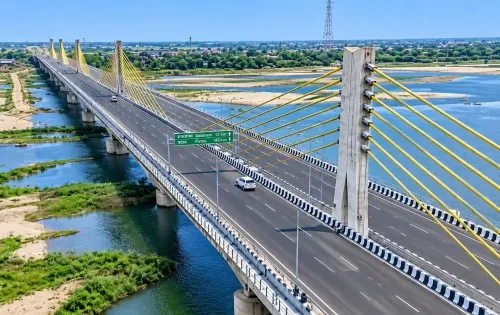
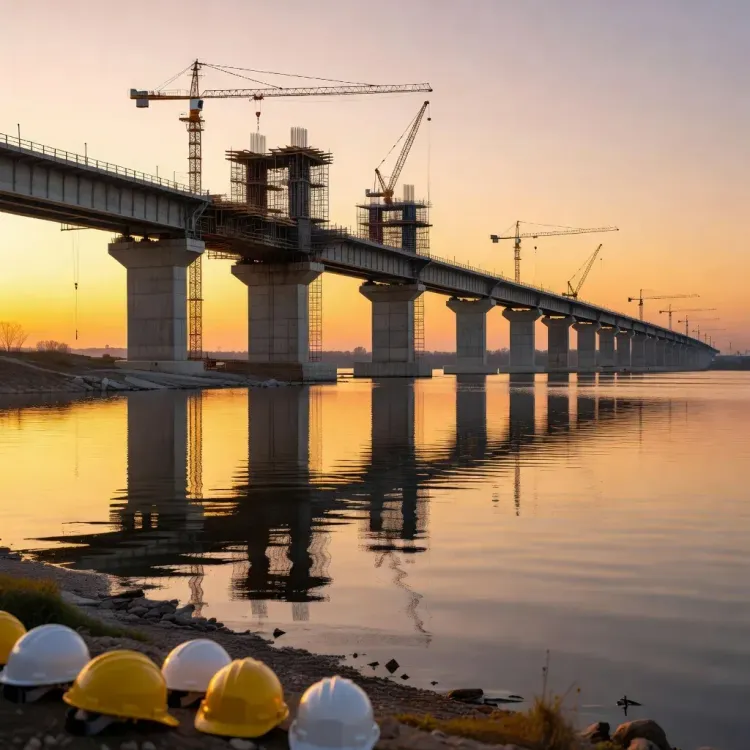
The bridge itself is no minor project. A six-lane crossing linking Kacchi Dargah and Bidupur, it promises to transform connectivity across the Ganga for commuters on one of Bihar's busiest corridors. Infrastructure of that scale becomes a permanent political statement the moment a name is fixed to it.
The sharpest line — and what it signals
Tejashwi closed his post with a sentence that will travel further than any policy argument: 'Meri aisi anubhuti hai ki agar Shri Nitish Kumar ji sachет avastha va hosh-havas mein hote toh is pul ka namkaran 'Akshayvat Setu' hi hota.' — 'My feeling is that if Shri Nitish Kumar were in a conscious state and in his senses, this bridge would indeed have been named Akshayvat Setu.'
The line is not incidental. It is a direct, public question mark over the 75-year-old Chief Minister's cognitive alertness — an escalation that moves the dispute from infrastructure paperwork into the terrain of personal credibility and political fitness. For Tejashwi, the opposition leader, it frames Nitish Kumar not as a wilful promise-breaker but as someone no longer in command of decisions taken in his own name.
Bihar politics has seen Nitish Kumar and the RJD align, break, realign, and break again across nearly two decades. Each rupture tends to surface exactly these kinds of disputes — over who agreed to what, in whose presence, and who conveniently forgot. The naming of a bridge becomes a ledger entry in a much longer accounting of political debts.
The Bihar government has not yet officially announced the bridge's name ahead of its inauguration. That announcement, whenever it comes, will be the real verdict on who was telling the truth.
Point of View
Both during Nitish Kumar's own tenure, he frames the Bihar CM as serially unreliable on commitments made to RJD. The direct insinuation about Nitish Kumar's mental state marks a significant escalation in opposition rhetoric, moving from policy critique to personal fitness, a line Bihar politics has rarely crossed so openly. It also serves a symbolic purpose: tying the bridge-naming to the legacy of Karpoori Thakur — now a Bharat Ratna — reinforces RJD's claim to the OBC social-justice legacy that both parties compete to inherit. The timing, ahead of an anticipated bridge inauguration, suggests Tejashwi is trying to force the government's hand before the ceremony makes the naming irreversible.
NationPress
17 Nov 2026
Frequently Asked Questions
What is the Kacchi Dargah-Bidupur Six Lane Bridge?
It is a major six-lane bridge project in Bihar connecting Kacchi Dargah and Bidupur across the Ganga, whose foundation was laid during the 2015–2017 Mahagathbandhan government of Nitish Kumar and RJD.
Why does Tejashwi Yadav want the bridge named 'Akshayvat Setu'?
Tejashwi says the bridge passes through the ancestral village of late Akshayvat Rai, a freedom fighter from Bidupur and the closest associate of former Bihar CM and Bharat Ratna late Karpoori Thakur, making him an appropriate namesake.
Who was Akshayvat Rai?
Late Akshayvat Rai was a freedom fighter from the Bidupur area in Bihar and is described as the most trusted associate of former Bihar Chief Minister and Bharat Ratna late Karpoori Thakur.
What did Tejashwi say about Nitish Kumar's mental state?
Tejashwi posted that 'if Nitish Kumar were in a conscious state and in his senses,' the bridge would have been named Akshayvat Setu — a direct public insinuation about the Bihar CM's cognitive alertness.
Has the Bihar government officially named the Kacchi Dargah-Bidupur bridge yet?
No official announcement on the bridge's final name has been made public as of November 17, 2026, ahead of its anticipated inauguration.