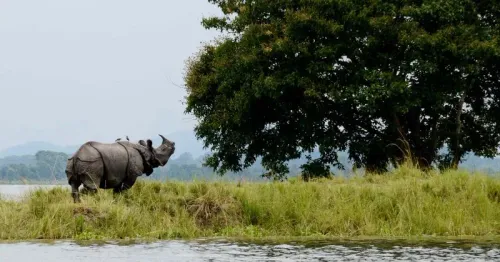
Kaziranga ESZ row: Assam CM Sarma fires back at Congress, backs locals
Synopsis
Assam CM Himanta Biswa Sarma's broadside against Congress over Kaziranga's ESZ isn't just political point-scoring — it reflects a deeper fault line between conservation mandates, community land rights, and electoral arithmetic in a state where wildlife and livelihoods have long collided. With local residents backing the government and Congress widening its agitation statewide, the ESZ battle is fast becoming one of Assam's defining political fights.
Key Takeaways
Assam CM Himanta Biswa Sarma on 2 September attacked Congress over its campaign against the proposed Kaziranga ESZ reduction.
Sarma directly named APCC president Gaurav Gogoi , saying Kaziranga's protection 'will not happen on Instagram.' The Assam government proposes reducing the 10-km ESZ around Kaziranga to a buffer of 1 km to 3 km in different areas.
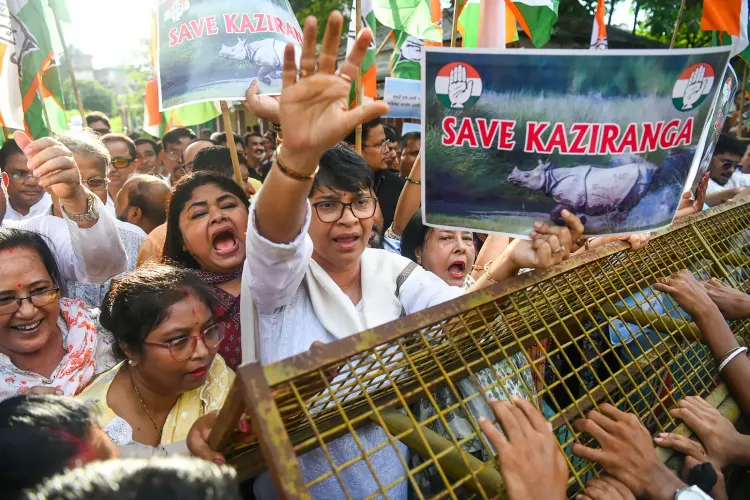
Congress led protests at Kohora in August and statewide padayatras on 29 August across districts including Sonitpur , Lakhimpur , and Golaghat .
Local residents and community groups around Kaziranga have largely backed the government's position, opposing the Congress demand for a wider buffer.
Gogoi has also raised concerns over alleged illegal mining near Kaziranga and the composition of the State Wildlife Board .
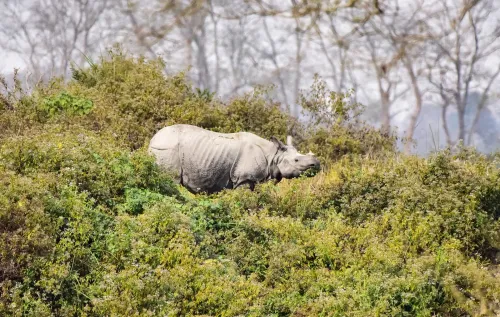
Assam Chief Minister Himanta Biswa Sarma on Wednesday, 2 September launched a blistering counter-offensive against the Congress over its campaign opposing proposed changes to the Eco-Sensitive Zone (ESZ) around Kaziranga National Park, asserting that the protection of the UNESCO World Heritage Site cannot be achieved through social media activism or street protests. The remarks sharply escalated the political standoff between the Bharatiya Janata Party (BJP)-led Assam government and the opposition over one of India's most iconic wildlife sanctuaries.
Sarma's Direct Attack on Gaurav Gogoi
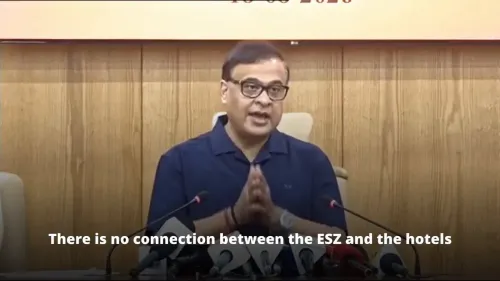
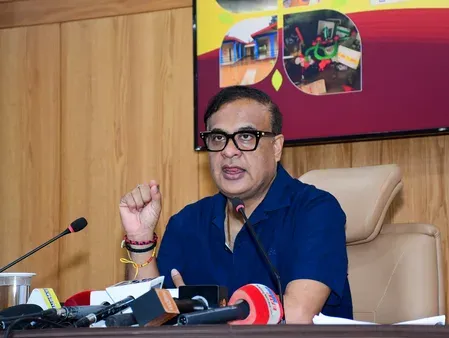
Targeting Assam Pradesh Congress Committee (APCC) president and Congress leader Gaurav Gogoi by name, Sarma was unsparing in his criticism. 'Gaurav Gogoi cannot protect Kaziranga. Kaziranga's protection will not happen on Instagram. The local people will have to protect Kaziranga,' the Chief Minister said, dismissing the Congress MP's campaign as performative.
Sarma went further, arguing that the Congress has no moral standing to raise the Kaziranga issue. 'If there is no shame and no clothes, let Congress speak,' he said in a strongly worded remark, adding that there was no reason for the Congress to feel embarrassed about raising the issue — a pointed, if cryptic, rhetorical flourish aimed at the party's credibility on environmental governance.
What the ESZ Dispute Is About
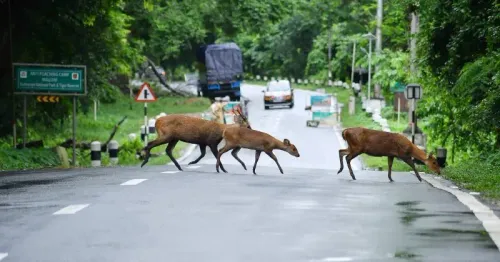
At the heart of the controversy is the Assam government's proposal to reduce the existing 10-km ESZ framework around Kaziranga to a significantly smaller buffer — reportedly ranging from 1 km to 3 km in different areas. The Centre's ESZ guidelines, which apply to protected areas across India, are intended to restrict commercial and developmental activity in zones adjacent to national parks and wildlife sanctuaries.
The Congress has strongly opposed the reduction, arguing it would weaken environmental safeguards and open the surrounding ecosystem to greater developmental and commercial pressure. Gogoi led a protest at Kohora in August, demanding the proposal be withdrawn. He has also raised concerns over alleged illegal mining in areas connected to the Kaziranga landscape and questioned the composition of the State Wildlife Board.
Local Communities Back the Government
Notably, the political battle has a significant community dimension. Several groups and residents living around Kaziranga have backed the state government's position, arguing that communities dependent on land near the national park must have a greater say in determining the ESZ boundary. Residents in the region have held their own meetings and counter-protests opposing the Congress' demand for a wider buffer zone.
Sarma has leaned into this local support, framing the government's position not as an anti-conservation stance but as a community-first approach to wildlife management — a framing the Congress contests.
Congress Widens Its Agitation
The Congress has expanded its campaign beyond Kaziranga. On 29 August, the party organised statewide protests and padayatras across several districts — including Sonitpur, Lakhimpur, Tinsukia, Karbi Anglong, and Golaghat — demanding a rollback of the proposed ESZ reduction. Gogoi has argued that environmental concerns and mining-related issues must be addressed before any boundary changes are made.
The dispute has evolved into a broader political contest over conservation, development rights, and the role of local communities — one that is unlikely to be resolved before the ESZ proposal reaches a formal regulatory stage. Sarma's latest remarks are expected to further harden positions on both sides ahead of any government decision on the matter.
Point of View
Not opposition MPs, are the true custodians of Kaziranga — is politically shrewd but sidesteps the regulatory question entirely. The ESZ framework exists precisely because developmental pressures around protected areas tend to be driven by interests that do not always align with conservation outcomes, regardless of who lives nearby. The Congress, for its part, has yet to articulate a credible alternative boundary proposal, making its agitation look more like electoral positioning than a conservation blueprint. The real arbiter here will be the Supreme Court and the Union Environment Ministry, not the Assam assembly floor — and both sides appear to be playing to the gallery before that reckoning arrives.
NationPress
17 Oct 2026
Frequently Asked Questions
What is the Kaziranga ESZ controversy in Assam?
The controversy centres on the Assam government's proposal to reduce the Eco-Sensitive Zone around Kaziranga National Park from the existing 10-km framework to a smaller buffer of 1 km to 3 km in different areas. The Congress has opposed this, arguing it weakens environmental protections around the UNESCO World Heritage Site.
Why did CM Himanta Biswa Sarma attack Congress over Kaziranga?
Sarma launched the attack in response to Congress protests and social media campaigns against the ESZ reduction proposal. He argued that Kaziranga's protection depends on local communities, not political demonstrations or Instagram posts, and questioned the Congress's credibility on the issue.
What has Gaurav Gogoi demanded regarding Kaziranga?
APCC president Gaurav Gogoi led a protest at Kohora in August demanding the ESZ reduction proposal be withdrawn. He has also raised concerns about alleged illegal mining near the Kaziranga landscape and questioned the appointment of certain members to the State Wildlife Board.
How have local residents responded to the Kaziranga ESZ dispute?
Several community groups and residents living around Kaziranga have backed the Assam government's position, arguing that people dependent on land near the national park should have a greater say in setting the ESZ boundary. They have held counter-protests opposing the Congress demand for a wider buffer zone.
How far has Congress expanded its Kaziranga agitation?
Congress organised statewide protests and padayatras on 29 August across multiple districts including Sonitpur, Lakhimpur, Tinsukia, Karbi Anglong, and Golaghat, demanding the government withdraw the proposed ESZ reduction around Kaziranga National Park.