Emergence of New Entry Points in Pan-India Counterfeit Currency Network
Synopsis
Indian security agencies are alarmed by the rise of counterfeit currency entry points. Initially infiltrating through Nepal, operations have shifted to West Bengal as vigilance increases. This extensive network, controlled by the Dawood syndicate, has adopted advanced technologies and social media for distribution, posing serious economic threats.
Key Takeaways
Counterfeit currency entry points have expanded across India.
Key regions include **West Bengal**, **Andhra Pradesh**, and **Maharashtra**.
The use of **AI** and social media is prevalent in the operations.
The **Dawood Ibrahim syndicate** remains a central figure in this network.
The ISI's strategy aims to economically destabilize India.
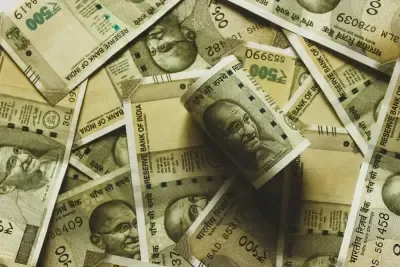
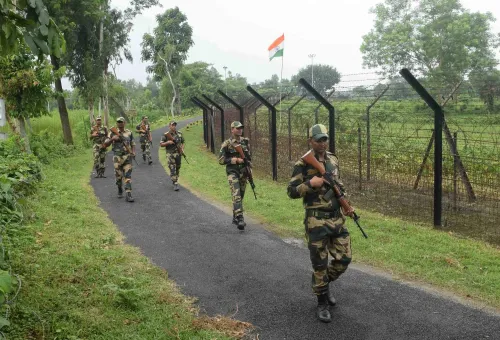
New Delhi, March 27 (NationPress) Indian security authorities have raised alarms regarding the growing number of entry points facilitating the flow of counterfeit currency in the marketplace. Initially, fake notes were trafficked into India via Nepal from Pakistan. However, enhanced surveillance by Indian agencies at the Nepal border has redirected these activities to Malda in West Bengal.
The National Investigation Agency (NIA), which is investigating numerous cases of counterfeit currency, discovered that Malda possesses advanced printing facilities. These units source materials from Pakistan through the border with Bangladesh, subsequently producing and distributing counterfeit notes.
An official from the Intelligence Bureau reported that the scope of operations for this racket has expanded significantly. Areas such as Murshidabad and Nadia in West Bengal have also emerged as significant hotspots, according to the official.
Additionally, the primary regions where this counterfeit operation is thriving include Coastal Andhra, Tamil Nadu, Kerala, Gujarat, Delhi, and Maharashtra.
While West Bengal serves as a major source of counterfeit notes, officials noted that these fake bills are also emerging from Dubai before reaching South India.
Another official indicated that the network is predominantly controlled by the Dawood Ibrahim syndicate across India.
The ISI has directed the syndicate to increase production and adopt a nationwide strategy in their operations, which accounts for the frequent busts of counterfeit currency networks across the country.
In addition to the rising number of entry points, the syndicate has heavily leveraged social media for their operations. For example, in Malkapur, Maharashtra, transactions involving counterfeit currency have been facilitated through social media platforms.
Besides Malkapur, Pune and Bhiwandi have also become significant venues for this illicit trade, as reported by an official.
The official further elaborated that these operatives are employing technology extensively to advance their activities. They have been utilizing Artificial Intelligence (AI) to enhance the authenticity of the counterfeit notes.
AI has been deployed to seek guidance on proper printing techniques and ways to evade law enforcement detection. Most of the raw materials for producing these fake notes are sourced from Pakistan.
The primary supplier for the syndicate has been the Pakistan Security Printing Corporation (PSPC) located in Karachi.
Currently, the syndicate has started procuring paper from China, which poses an additional challenge for law enforcement agencies.
The printing and distribution of counterfeit currency form part of an ISI strategy aimed at undermining India's economy. An official suggested that the ISI appears to be intent on expanding this enterprise, potentially establishing printing units in every state.
At this moment, the routes for distribution have proliferated. The official added that in addition to West Bengal, West Godavari and East Godavari in Andhra Pradesh have become critical hubs for the circulation of counterfeit currency. The notes that reach these regions are predominantly circulated within the southern states.
This underscores the syndicate's regional strategy. They are establishing similar distribution points in various areas, which minimizes the risk of detection due to shorter transportation routes. Moreover, the syndicate aims to limit interactions between their units across different regions, as increased contact elevates the chances of being uncovered.
Point of View
The expanding counterfeit currency network poses a formidable challenge to India's security and economy. The involvement of sophisticated technology and foreign connections underscores the urgent need for enhanced vigilance and robust countermeasures. A nation-first approach is essential to combat this insidious threat.
NationPress
2 Oct 2026
Frequently Asked Questions
What regions are now hotspots for counterfeit currency?
Regions such as **Murshidabad**, **Nadia**, **Coastal Andhra**, **Tamil Nadu**, **Kerala**, **Gujarat**, **Delhi**, and **Maharashtra** have become significant hotspots for counterfeit currency operations.
How is technology being used in the counterfeit currency trade?
The syndicate is utilizing **Artificial Intelligence (AI)** to enhance the authenticity of counterfeit notes and evade detection by law enforcement.
Who controls the counterfeit currency network in India?
The counterfeit currency network is primarily controlled by the **Dawood Ibrahim syndicate**, which operates across the country.
What is the role of the ISI in this counterfeit currency operation?
The **ISI** has instructed the Dawood syndicate to increase production and adopt a pan-India strategy for distributing counterfeit currency.
Where do the materials for printing counterfeit notes come from?
Most materials for printing counterfeit notes are sourced from **Pakistan**, with some paper also procured from **China**.