Unveiling ISI's Covert Micro-Module Strategy Targeting Indian Railways
Synopsis
Discover how Indian security agencies uncovered the ISI's chilling plan to disrupt railway operations through small, covert modules. This article explores the implications of such attacks on the nation's vital transportation network.
Key Takeaways
ISI's micro modules pose a new threat to national security.
Railway stations are primary targets due to high passenger volumes.
Historical attacks underline the need for vigilance.
Enhanced surveillance is critical to prevent potential disasters.
Security agencies are adapting strategies to counteract these covert operations.
New Delhi, April 4 (NationPress) Indian security agencies have uncovered a dangerous plot involving planned explosions at railway stations nationwide. They discovered that the ISI has established numerous micro modules throughout the country to execute these attacks.
These small groups typically consist of just four to five members, according to an official.
These modules are similar to those set up by the Indian Mujahideen under Yasin Bhatkal. The original Indian Mujahideen group included over 20 members, and their extensive communication led to their detection by security agencies. However, the Indian Mujahideen 2.0, led by Bhatkal, operated with only five members, which made it much harder for authorities to track their movements. This smaller group successfully carried out a number of significant attacks across the nation.
An official from the Intelligence Bureau indicated that the ISI is planning a series of attacks targeting railway stations, aiming to disrupt railway services and create widespread fear among the populace.
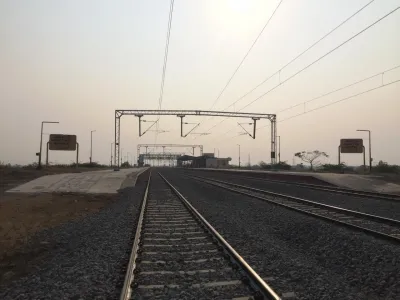
Since 2014, the Indian Railways has experienced considerable growth, laying over 31,000 kilometers of new tracks and upgrading routes for speeds between 130 and 160 kilometers per hour. The introduction of indigenous Vande Bharat trains has further bolstered this success.
The ISI understands that targeting railway stations, along with trains and tracks, could severely impact the transportation sector. As the most utilized form of travel, inflicting damage here would convey a powerful message.
Furthermore, the ISI has been plotting these attacks in advance of the anniversary of the Pahalgam attack, which takes place on April 22.
In recent months, police forces have dismantled several modules, revealing plans to detonate explosives at railway stations. The ISI reportedly instructed members of these smaller groups to install CCTV cameras at railway stations to monitor logistics via live feeds. Recently, the Ghaziabad police uncovered a case involving the installation of CCTV cameras at a railway station for reconnaissance purposes.
Another official noted that the objective is not to execute a single large-scale attack but rather a series of smaller strikes at multiple railway stations. This tactic allows micro modules to operate without drawing attention, the official explained.
This week, the Uttar Pradesh Anti-Terrorist Squad (ATS) dismantled a module and arrested four suspected operatives in Lucknow. Saquib, Arbab, Vikas Gehlawar, and Lokesh were apprehended on Thursday, with plans to attack railway signal boxes—critical control centers that oversee train movements, signals, and track switches to guarantee passenger safety.
The suspects also aimed to target crowded railway stations, with the Lucknow railway station being their primary target, according to an ATS official.
Authorities report that the ISI has devised plans for attacks across the country, with an initial focus on North India, particularly Uttar Pradesh, where passenger traffic is significantly higher, making it a prime target.
Historically, ISI-backed modules have orchestrated train bombings, including the devastating Mumbai train bombings of 2006, which resulted in over 100 fatalities. An assault on a railway station leaves a lasting impact on the public, who rely heavily on this mode of transportation, the official emphasized.
Point of View
The emergence of ISI's micro-module strategy poses a significant threat to public safety and national security. It highlights the urgent need for enhanced surveillance and proactive measures to protect critical infrastructure.
NationPress
15 Oct 2026
Frequently Asked Questions
What is the ISI's micro-module strategy?
The ISI's micro-module strategy involves setting up small groups of operatives to carry out discreet attacks, making them harder to detect by security agencies.
How has the Indian Railways improved since 2014?
Since 2014, the Indian Railways has expanded by over 31,000 kilometers of new tracks and upgraded routes for higher speeds, boosting overall efficiency.
What historical attacks have involved the ISI?
The ISI has been linked to several major attacks, including the infamous Mumbai train bombings in 2006, which claimed over 100 lives.
Why are railway stations a target for attacks?
Railway stations are targeted due to their high footfall and significance in public transport, making attacks there impactful and fear-inducing.
What measures are being taken by security agencies?
Security agencies are actively dismantling terror modules and enhancing surveillance, including monitoring installations at railway stations to thwart potential attacks.