Exploiting Social Media: The Rising Threat of Radicalization in the Indian Subcontinent
Synopsis
A disturbing new report reveals how terrorist groups are weaponizing social media to radicalize individuals across the Indian subcontinent. With chilling examples like the Red Fort and Bondi Beach attacks, this analysis sheds light on the dangerous intersection of technology and extremism.
Key Takeaways
Terrorist organizations are exploiting social media for radicalization.
Recent attacks highlight the systematic use of social media in orchestrating violence.
Digital propaganda and narrative warfare are powerful tools of manipulation.
Governments are responding with stricter regulations and cybersecurity measures.
Regional and global cooperation is essential to combat online extremism.
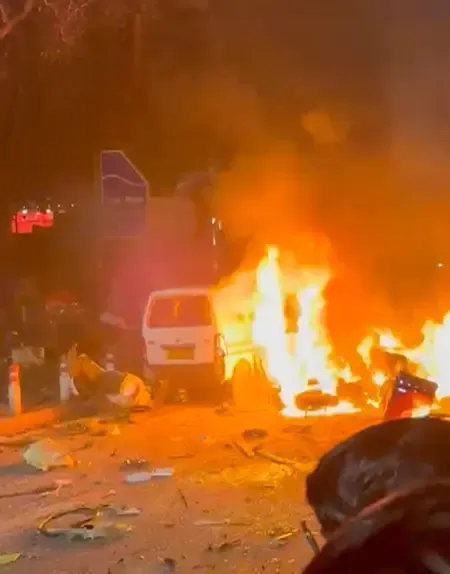
New Delhi, March 8 (NationPress) - A recent report by Eurasia Review reveals that terrorist organizations are increasingly exploiting social media platforms to radicalize individuals and coordinate attacks across the Indian subcontinent and beyond. The report, titled 'Weaponization of Social Media Platforms for Radicalization: A Growing Threat in the Indian Subcontinent,' highlights incidents such as the Red Fort attack on November 10, 2025, and the Bondi Beach attack on December 14, 2025, which illustrate how extremist networks leverage social media to incite violence. It underscores the role of digital propaganda, encrypted messaging, and online psychological manipulation in recruiting and mobilizing susceptible individuals.
The report states that the attacks at the Red Fort and Bondi Beach demonstrate the systematic use of social media for radicalization, contradicting the portrayal of these incidents as lone-wolf attacks. Instead, it argues that such acts are often concealed as individual efforts but are meticulously organized.
Furthermore, the report elaborates on how terrorist organizations utilize fake news, propaganda, and narrative warfare to manipulate online audiences. It emphasizes that these tactics serve as powerful instruments to influence vulnerable or disenfranchised individuals under the guise of religion, state, or a dystopian agenda.
Modern terror groups are adept at merging ideology with technology, leveraging advanced digital tools to enhance their operations. The study notes that the unique attributes of social media—such as low costs, decentralization, rapid dissemination, and global connectivity—make it an effective medium for extremist propaganda, recruitment, and mobilization of attacks. Although social media is characterized as an enabler rather than a primary driver of terrorism, its significance in the current terror landscape is undeniable.
The report identifies the Islamic State (IS) and its affiliates as leading these online initiatives. Despite suffering territorial setbacks in Iraq and Syria, IS has intensified its digital operations, focusing on spreading its ideological influence via online propaganda channels.
South Asia is witnessing a surge in extremist activity, with IS expanding its online networks into countries like India and Bangladesh by 2024, targeting vulnerable populations through secure communication platforms. This expansion has significantly impacted India, where radicalization has escalated.
Additionally, the report mentions Pakistan-based groups like The Resistance Front and People’s Anti-Fascist Front that are actively utilizing social media for propaganda. It also cites the Jamaat-e-Islami in Bangladesh as having deep-rooted ties to alleged support networks associated with Pakistan’s Inter-Services Intelligence.
Investigators noted that the perpetrators of the Red Fort attack were radicalized online, coining the term “white-collar terrorism” due to the attackers’ educated backgrounds. Terrorists are reportedly using encrypted platforms like Threema, which provides end-to-end encryption and makes forensic tracking exceedingly challenging.
The rise of cyber-enabled terrorism is particularly notable in regions such as Jammu and Kashmir, where online recruitment and encrypted messaging have effectively linked youths to extremist factions.
Governments in the region are beginning to respond with stronger regulations. Countries such as Australia, Malaysia, Singapore, and Indonesia have enacted laws to combat online extremism, while India has blocked 9,845 URLs associated with radicalization and terrorist propaganda in 2025 alone.
The report concludes that addressing this escalating threat requires both regional and global cooperation. Enhanced cybersecurity frameworks and closer intelligence collaboration are essential for combating cross-border digital radicalization and online terror networks.
Point of View
It is crucial to acknowledge the alarming rise of digital radicalization in the Indian subcontinent. The report underscores a pressing need for both regional and global action against the misuse of social media for extremist purposes, emphasizing the importance of a united front in safeguarding our communities.
NationPress
30 Sept 2026
Frequently Asked Questions
How are terrorist organizations using social media?
Terrorist organizations are weaponizing social media to radicalize individuals, spread propaganda, and coordinate attacks. They utilize tactics such as fake news, narrative warfare, and encrypted messaging to manipulate vulnerable audiences.
What incidents highlight the weaponization of social media?
Notable incidents include the Red Fort attack in India and the Bondi Beach attack in Australia, both of which demonstrate how extremist networks utilize social media to incite violence.
What is the role of the Islamic State in online radicalization?
The Islamic State has been at the forefront of online radicalization efforts, strengthening its digital operations and expanding its ideological influence despite territorial losses in Iraq and Syria.
What measures are governments taking to combat online extremism?
Governments, including Australia and India, have implemented laws and regulations to counter online extremism, such as blocking URLs promoting radicalization and enhancing cybersecurity frameworks.
What is 'white collar terrorism'?
'White collar terrorism' refers to the phenomenon where well-educated individuals become radicalized online, as seen in cases like the Red Fort attack.