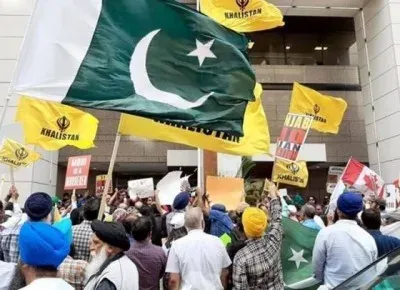
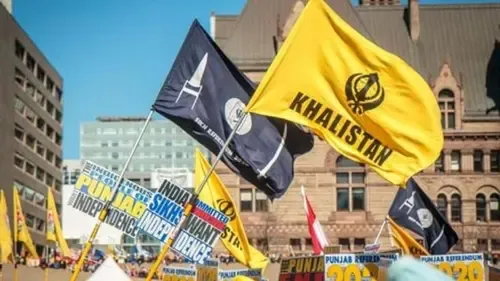
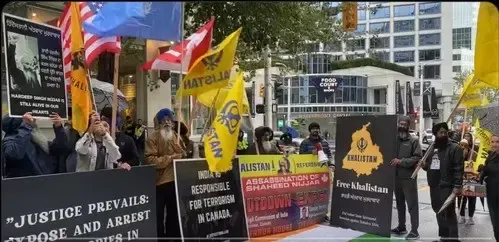
Khalistani Camps in Kot Lakhpat and Attock Revived for Narco Funding Plans
Synopsis
Indian security agencies have issued a warning regarding the resurgence of Khalistani training camps in Pakistan, aimed at narcotics smuggling into India. With over 300 recruits, these factions are now focusing on generating funds through drug trafficking.
Key Takeaways
Khalistani training camps have resumed operations in Pakistan.
Focus on narcotics smuggling as a primary funding source.
Collaboration with the ISI and Jaish-e-Mohammad.
Over 300 recruits are currently being trained.
International cooperation from countries like Canada and the UK to combat these threats.
New Delhi, March 12 (NationPress) Indian security agencies have raised a warning that Khalistani factions operating from Pakistan are poised to make numerous attempts to smuggle narcotics into the nation in significant quantities in the forthcoming months.
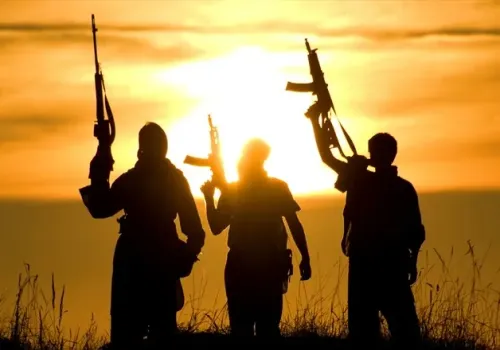
Furthermore, it has come to light that four training camps, which previously exhibited minimal activity, have abruptly resumed operations. An official report estimates that approximately 300 individuals affiliated with the Khalistan movement are currently undergoing training at these facilities.
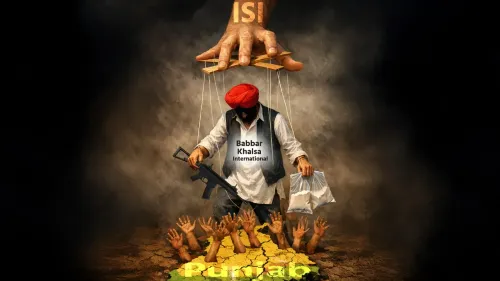
The networks associated with the Khalistani movement are reportedly collaborating with the ISI and Jaish-e-Mohammad, successfully recruiting numerous individuals to join their ranks.
The camps located in Kot Lakhpat and Attock are reportedly being utilized to train operatives involved in the narcotics smuggling operations. Additionally, facilities in Chakwal and Gujranwala are dedicated to training terrorists in the use of weapons, explosives, and bomb-making techniques. An official also indicated that Khalistani operatives are attempting to form death squads for deployment in Punjab.
The immediate focus appears to be on drug trafficking, as the ISI has directed these terror groups to prioritize fundraising efforts. New smuggling routes are being explored to facilitate the influx of drugs and generate substantial financial resources.
This surge in activity is attributed to the intensified crackdowns on Khalistani elements in nations such as Canada and the United Kingdom, which have pledged to cooperate with India on this issue due to its dual internal and external threats.
As international scrutiny intensifies, the ISI has resolved to bolster operations within Pakistan and subsequently target Punjab. The Khalistani factions are clearly in urgent need of funds, prompting them to escalate their narcotics smuggling efforts, according to another official.
Leadership of the Khalistan movement is reportedly concentrated in the hands of five key individuals who have found refuge in Pakistan. These leaders oversee a network that spans multiple countries.
A dossier indicates that the primary leader remains Wadhwa Singh Babbar, the chief of Babbar Khalsa International (BKI). Operating from the Gulbarg area in Lahore, he enjoys the full protection of the Pakistani establishment. The ISI has tasked him with amplifying activities at training camps and orchestrating high-profile assassinations and terror strikes in Punjab.
Another notable operative involved in these efforts is Harwinder Singh Sandhu, also known as Rinda, who has gained prominence in recent months and collaborates with Babbar on the ongoing operations.
Among the other significant leaders within Khalistani terror groups are Gajinder Singh, the founder of Dal Khalsa, Lakhbhir Singh Rode, who headed the International Sikh Federation (ISYF), and Paramjit Singh Panjwar, the leader of the Khalistan Commando Force. Singh is reported to have died of a heart attack in 2024, Rode's death was noted in 2023, and Panjwar was shot dead in Lahore in May 2023.
About six months prior, the ISI instructed these factions to function under a unified command to minimize internal conflicts and ensure cohesive operations. Presently, according to an official from the Intelligence Bureau, the leader of this syndicate is Wadhwa Singh Babbar. The official remarked that the BKI is among the most dangerous groups, spearheading operations from Pakistan.
Officials believe that these factions will wait for the right moment to escalate drug trafficking activities. The BKI is expected to utilize both drones and foot soldiers to enhance narcotics smuggling into Punjab.
Frequently Asked Questions
What are the recent activities of Khalistani groups?
Khalistani groups based in Pakistan have reactivated their training camps and are focusing on narcotics smuggling to fund their operations.
How many recruits are currently being trained?
Approximately 300 individuals are being trained at various Khalistani camps.
What is the role of ISI in this context?
The ISI is reportedly aiding Khalistani groups by providing training and resources for narcotics smuggling.
What actions have been taken by other countries?
Countries like Canada and the UK are cooperating with India to curb the activities of Khalistani elements.
Who are the key leaders of the Khalistan movement?
Key leaders include Wadhwa Singh Babbar, Harwinder Singh Sandhu, and others who have been given shelter in Pakistan.