Warning Issued: 1,500 Terrorists Poised for Infiltration Amid Taliban-Pakistan Conflict
Synopsis
Intelligence agencies have raised alarms over the potential infiltration of up to 1,500 terrorists from Pakistan into India, as the conflict between Pakistan and Afghanistan escalates, posing a significant threat to national security.
Key Takeaways
1,000 to 1,500 terrorists are estimated to be ready for infiltration into India.
Indian borders are on high alert due to escalating tensions.
The Taliban prefers dialogue, while Pakistan seeks to prolong the conflict.
Groups like Lashkar-e-Tayyiba and Jaish-e-Mohammad are reviving operations.
Pakistan's ISI is actively involved in supporting infiltration efforts.
New Delhi, March 5 (NationPress) Intelligence agencies have issued a stark warning regarding the potential spillover of the conflict between Pakistan and Afghanistan into Indian territory. As tensions rise, the borders have been put on high alert due to the likelihood that disturbances in these neighboring countries could affect India.
While the Afghan Taliban has expressed a preference for dialogue to resolve the ongoing crisis, Islamabad remains resolute in its intent to extend the conflict.
This turmoil coincides with a resurgence of terrorist groups such as Lashkar-e-Tayyiba and Jaish-e-Mohammad, both of which are desperate to launch significant attacks against India following their losses in 'Operation Sindoor,' which severely damaged their manpower and infrastructure.
These organizations are banking on the hope that the Indian security apparatus will weaken as tensions escalate in the region.
Launching points in Pakistan-occupied-Kashmir (PoK) have been activated, with the ISI instructing waiting terrorists to prepare for mass infiltration attempts. Indian intelligence estimates that approximately 1,000 to 1,500 terrorists are poised to enter India via the Jammu and Kashmir border.
An official noted that although Pakistan is embroiled in a conflict with Afghanistan, numerous ISI-affiliated elements remain present in the country.
Indian agencies are closely monitoring these individuals, many of whom have ties to Jaish-e-Mohammad. Their objective is to infiltrate India and execute attacks in Jammu and Kashmir.
Another official remarked on the perilous nature of the current situation. As terror organizations grow increasingly desperate, they may resort to extreme measures, posing significant risks that our security forces must be vigilant against.
Relations between Afghanistan and India have considerably improved, making the resolution of the Pakistan-Afghanistan war critical for India.
However, there is currently no mediator available to facilitate peace talks between the two warring nations.
Meanwhile, West Asia remains preoccupied with the ongoing Israel-Iran conflict. Although the United States has indicated a willingness to intervene, it is unlikely to do so while grappling with the situation in Iran, which shows no signs of abating.
Indian agencies have reported that the situation at the Jammu and Kashmir border is not the only area of concern; the Punjab border is also highly volatile as Khalistani elements have intensified their operations.
Pakistan's strategy appears to be aimed at stretching the Indian security apparatus across multiple fronts. ISI-backed operatives are very active along both the Punjab and Jammu and Kashmir borders.
According to another official, Pakistan’s conflict with Afghanistan has proven to be challenging. The Taliban shows no inclination to surrender, and there is little indication that this situation will change soon. While some factions within Pakistan oppose the war, the military under Field Marshal Asim Munir remains steadfast.
The Pakistan establishment is currently facing embarrassment due to various setbacks, including losses inflicted by the Balochistan Liberation Army (BLA) and the Tehreek-e-Taliban Pakistan (TTP).
For the establishment, diverting attention from these issues through a significant action against India is imperative. Analysts suggest that this is why the ISI and armed forces are likely to intensify efforts to push terrorists into Indian territory to orchestrate an attack.
While Jaish-e-Mohammad and Lashkar-e-Tayyiba are already strategizing major operations in North India, they are also focused on rebuilding their bases in Jammu and Kashmir, as the Kashmir issue resonates deeply with the Pakistani populace, making attacks in the Union Territory essential for the establishment.
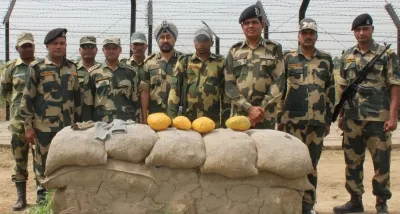
Officials maintain that although Pakistan is planning extensive operations, Indian borders are on high alert, and security forces are well-equipped to thwart any infiltration attempts.
Simultaneously, the Jammu and Kashmir Police remain vigilant, closely monitoring the overground worker network, which has been directed by Pakistan to amplify efforts to revive terror modules.
Point of View
The current situation underscores the urgent need for vigilance and preparedness in the face of potential terrorist threats, as regional conflicts spill over into India, threatening national security.
NationPress
17 Sept 2026
Frequently Asked Questions
What is the current threat level to India from the Taliban-Pakistan conflict?
Intelligence agencies warn of a potential infiltration of 1,000 to 1,500 terrorists into India as tensions rise between Pakistan and Afghanistan, placing borders on high alert.
What actions are being taken by Indian agencies in response?
Indian agencies are closely monitoring the borders, particularly in Jammu and Kashmir, and are prepared to thwart any infiltration attempts.
How are terrorist groups responding to the current situation?
Groups like Lashkar-e-Tayyiba and Jaish-e-Mohammad are attempting to revive operations and may consider launching attacks in India.
What is the role of Pakistan's ISI in this conflict?
The ISI is actively facilitating and supporting terrorist infiltration efforts into India amid ongoing conflicts with Afghanistan.
Are there any regional implications of the Taliban-Pakistan conflict?
Yes, the conflict not only poses a threat to India but also impacts regional stability, with potential repercussions for neighboring countries.