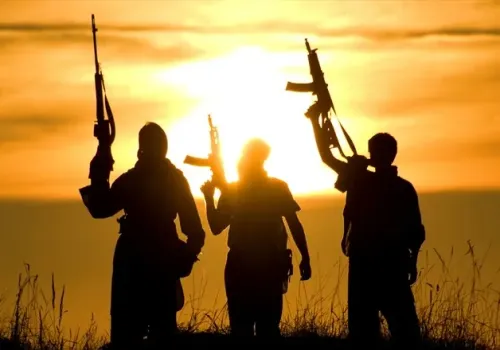
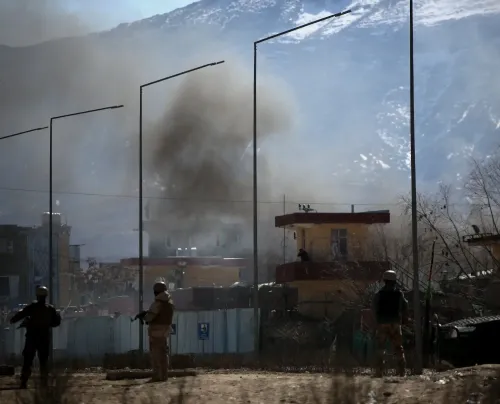
Pakistan's Alarming Rise in Global Terrorism Index Amid Global Decline: A Report
Synopsis
The 2026 Global Terrorism Index reveals Pakistan's distressing position as the world's most affected nation by terrorism, highlighting significant internal challenges. This report underscores the persistent violence despite a worldwide decrease, demanding urgent attention to structural and policy failures.
Key Takeaways
Pakistan ranks as the most affected country by terrorism in the 2026 Global Terrorism Index.
In 2025, there were 1,139 deaths due to terrorism in Pakistan.
Khyber Pakhtunkhwa and Balochistan are the most impacted regions.
The rise in violence is attributed to long-standing structural issues.
The findings indicate an urgent need for policy reform to address these challenges.
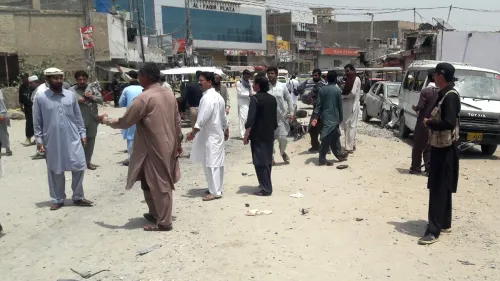
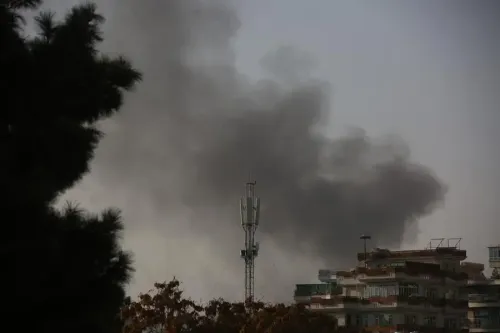
Athens, March 28 (NationPress) The 2026 Global Terrorism Index highlights Pakistan’s alarming status as the most affected nation by terrorism, revealing significant internal issues despite a global downturn in violent incidents. This index data reflects not only the immediate consequences of violence but also the long-lasting effects of strategic and structural policy decisions, as noted in a recent report.
As reported by Greek City Times, this positioning places Pakistan at the epicenter of the international terrorism narrative, influenced by evolving patterns that have persisted over the years.
“While many countries globally have seen a decline in terrorism, Pakistan's trajectory has sharply diverged. The Global Terrorism Index 2026 paints a troubling picture: Pakistan is now recognized as the most impacted nation by terrorism worldwide. The statistics are anything but abstract,” the report elaborated.
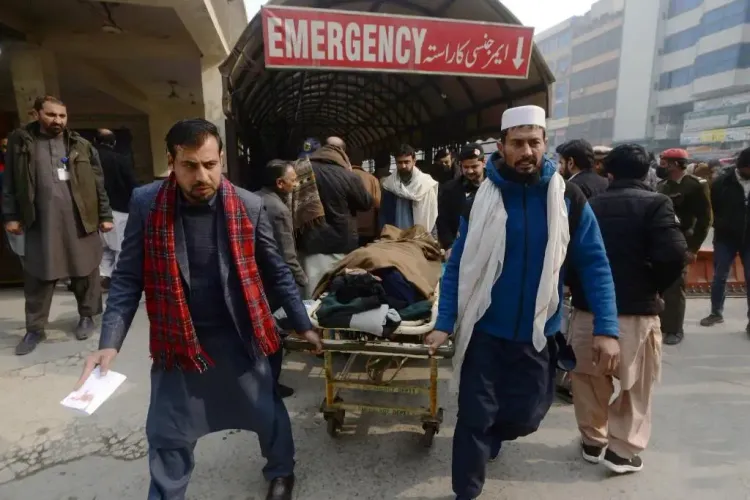
In 2025, Pakistan experienced 1,139 fatalities, 1,045 violent attacks, 1,595 injuries, and 655 individuals taken hostage. With a score of 8.574, Pakistan surpasses all other countries on the index, marking its most lethal year since 2013. This alarming trend starkly contrasts the overall global improvements.
The report emphasizes that violence in Pakistan is largely geographically concentrated, with Khyber Pakhtunkhwa and Balochistan accounting for 74% of all attacks and 67% of the total fatalities in 2025.
These regions, characterized by ongoing instability and limited governmental influence, remain the hotspots for militant operations.
Analyzing the border areas, the report attributes this pattern to decades of lenient conditions along the Afghanistan-Pakistan border.
The tribal regions of Pakistan, traditionally semi-autonomous, have provided refuge for terrorist organizations, including al-Qaeda and the Haqqani Network, as well as various local factions.
“The continuity of ethnic and social networks across the Durand Line has facilitated cross-border movements, complicating law enforcement and surveillance efforts. These structural issues, highlighted in the index, reveal an enduring challenge: militant networks thrive in environments where governance is fragmented and contested,” the report stated.
The Global Terrorism Index portrays Pakistan's current state as a culmination of long-standing structural and policy-related decisions.
Identified contributors—including permissive border areas, ideological networks, and evolving militant ecosystems—illustrate patterns developed over decades.
The findings are based on consistent trends rather than isolated events, indicating, “The increase in attacks, violence concentration in specific areas, and the prominence of certain groups suggest a system under continuous strain. Pakistan’s position at the top of the index is not a mere anomaly but a result of an extended trajectory. The data indicates that the driving factors behind this trend remain active, continuing to influence the nation's security landscape.”
Point of View
It is crucial to present these findings with an unbiased perspective. The stark data in the Global Terrorism Index reflects not only Pakistan's internal struggles but also a complex interplay of historical and geopolitical factors. It is imperative to adopt a nation-first approach to address these challenges constructively.
NationPress
10 Oct 2026
Frequently Asked Questions
What does the Global Terrorism Index indicate for Pakistan?
The Global Terrorism Index identifies Pakistan as the most affected country by terrorism, highlighting significant internal challenges despite a global decline in terrorism.
Which regions in Pakistan are most affected by terrorism?
The provinces of Khyber Pakhtunkhwa and Balochistan account for the majority of attacks and fatalities in Pakistan.
What are the primary factors contributing to Pakistan's terrorism situation?
Key factors include permissive border areas, ideological networks, and the ongoing influence of militant ecosystems.
How many deaths were recorded in Pakistan due to terrorism in 2025?
Pakistan recorded 1,139 deaths due to terrorism in 2025, marking a significant increase.
What is the significance of Pakistan's score on the Global Terrorism Index?
Pakistan's score of 8.574 places it above all other nations, indicating a severe level of terrorism impact.