Pakistan's ISI Faces Overhaul Amid Intelligence Failures, Munir Issues Stark Warning
Synopsis
Tensions rise within Pakistan's establishment as Field Marshal Asim Munir calls for a significant ISI reshuffle following severe intelligence failures. This crisis has resulted in considerable military casualties, revealing a troubling disconnect between the army and ISI.
Key Takeaways
Significant tension within Pakistan’s establishment.
Potential reshuffle in the ISI due to intelligence failures.
Field Marshal Asim Munir's stern directive: 'perform or perish.' Continued conflict with TTP and Balochi forces exacerbates the crisis.
Challenges in gathering reliable intelligence complicate military operations.
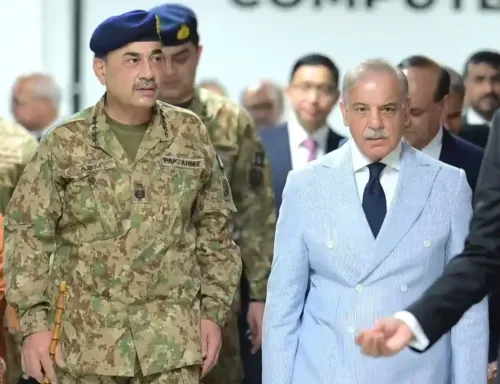
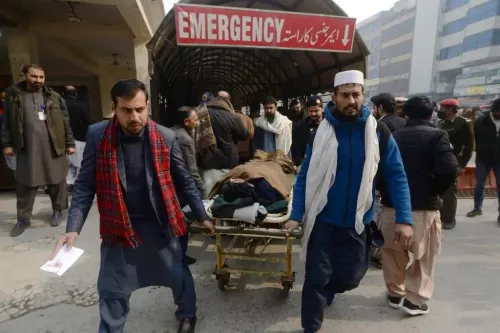
New Delhi, March 19 (NationPress) Tensions are escalating within the Pakistani establishment, indicating a potential major overhaul within the ISI. This situation has arisen due to a series of intelligence failures that resulted in significant casualties among the Pakistani military. Field Marshal Asim Munir has expressed strong dissatisfaction towards the ISI, suggesting a disconnect between the two entities.
Sources monitoring the dynamics in Pakistan report that the army and ISI are currently experiencing a lack of alignment.
Traditionally, these two branches of the establishment operated cohesively, but recent months have seen a divergence in their strategies, according to officials.
The security forces have found themselves vulnerable in various scenarios, particularly at home, which has provoked the army's ire.
The rift surfaced following India's 'Operation Sindoor,' during which the Pakistani intelligence agencies failed to provide any actionable insights. An official from the Intelligence Bureau noted their lack of awareness regarding the operation.
Since then, Pakistan has been engaged in conflicts with Balochi forces and the Tehreek-e-Taliban Pakistan (TTP), resulting in heavy losses for their military.
In Khyber Pakhtunkhwa (KP), the TTP has established a de facto government. They have erected checkpoints to restrict access to Pakistan Army and ISI personnel.
Moreover, in many regions of Balochistan and KP, security forces are hesitant to launch full-scale operations, citing weak or nonexistent intelligence, which makes them easy targets.
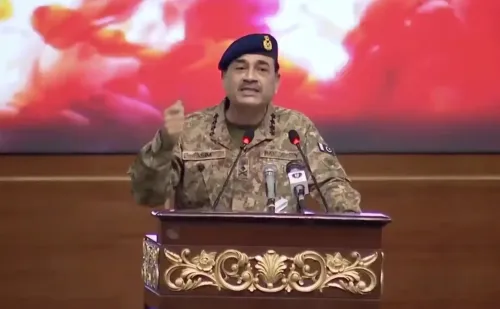
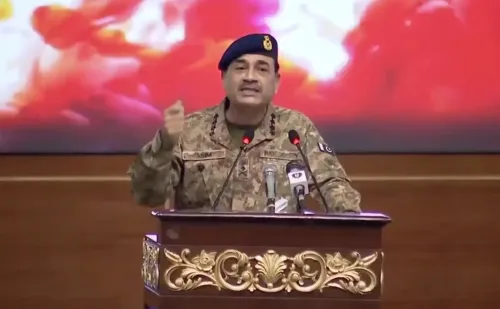
Earlier this week, Field Marshal Munir convened a meeting with senior officials from both the army and ISI, delivering a stern message aimed at the ISI.
His directive to ‘perform or perish’ has not been well received by the upper echelons of the ISI.
Additionally, there is unrest within the ISI regarding Munir's plans for a major organizational shake-up, which could see many senior officials reassigned.
Munir has criticized the ISI for its failure to provide critical intelligence on domestic threats.
About three months ago, the army chief had tasked the ISI with obtaining Grade A, actionable intelligence on key figures within the Balochistan National Army (BLA) and TTP.
He specifically emphasized the need to eliminate TTP leader Noor Wali Mehsud at all costs.
Another official remarked that the army chief is equally displeased with the Military Intelligence Wing, which has also faltered in delivering accurate information about top Taliban leaders.
Field Marshal Munir has asserted that without the eradication of the Taliban leadership, victory in Afghanistan remains elusive.
The Pakistan military has successfully targeted several locations in Afghanistan, primarily through airstrikes, but these operations have often resulted in civilian casualties rather than striking key leaders.
This ineffectiveness has prolonged the conflict, causing dissatisfaction among military leadership, especially since they had anticipated concluding the Afghanistan operation within a week.
However, repeated intelligence failures have allowed the Afghan Taliban to regroup and retaliate.
An official noted that within Pakistani intelligence circles, there’s a consensus that the army chief may be overextending himself.
Following the setback from 'Operation Sindoor,' many expected a period for regrouping before launching new operations. Yet, Munir has opted to engage on multiple fronts.
Pakistan finds itself contending with Balochistan’s populace, the TTP, and an ongoing war in Afghanistan. Managing intelligence across these numerous fronts has placed immense strain on the intelligence community.
This ongoing struggle to gather reliable intelligence, coupled with the army chief's ultimatum, risks further demoralizing the ISI, potentially leading to more losses for Islamabad, officials warned.
Point of View
The current turmoil within Pakistan's military establishment highlights significant operational challenges. The disconnect between the army and ISI poses serious implications for national security, and the potential reshuffle could reshape the intelligence landscape in Pakistan. This situation warrants close monitoring as it unfolds.
NationPress
23 Sept 2026
Frequently Asked Questions
What prompted the potential reshuffle within the ISI?
The reshuffle is largely a response to multiple intelligence failures that have led to significant military casualties in Pakistan.
Who is Field Marshal Asim Munir?
Field Marshal Asim Munir is the current Chief of Army Staff of Pakistan, responsible for overseeing military operations and intelligence.
What is 'Operation Sindoor'?
'Operation Sindoor' refers to a military operation undertaken by India, which caught Pakistani intelligence off-guard.
What challenges is the TTP posing to Pakistan?
The TTP has established a parallel authority in Khyber Pakhtunkhwa, creating significant operational challenges for Pakistani security forces.
How does this situation affect Pakistan's military strategy in Afghanistan?
The intelligence failures have prolonged military engagements in Afghanistan, leading to increased civilian casualties and allowing the Taliban to regroup.