What New Insights Emerge from the Lahore Meeting on ISI's Strategy: Drug Trafficking, Armament Supply, and Khalistan Movement?
Synopsis
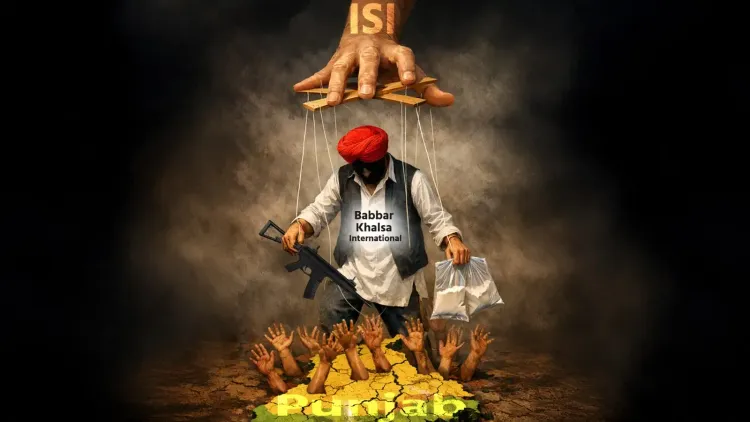
In a recent Lahore meeting, intelligence reveals a renewed ISI plan to flood Punjab with drugs and arms led by Babbar Khalsa International (BKI) to support the Khalistan movement. The strategy aims to recruit disillusioned youth through financial incentives amidst tightened security in Jammu and Kashmir.
Key Takeaways
Pakistan-based actors are attempting to flood Punjab with drugs and arms.
The Babbar Khalsa International is leading this operation.
Financial incentives are being used to recruit youth into the Khalistan movement .
The ISI is under pressure due to failed plans from Khalistani elements abroad.
Collaboration among Khalistani factions is being emphasized by the ISI.
New Delhi, Jan 16 (NationPress) Recent intelligence reports indicate that actors based in Pakistan are attempting to inundate the Punjab region with narcotics, weapons, and munitions. During a recent gathering in Lahore, it was resolved that the Babbar Khalsa International (BKI) would spearhead this initiative. The strategy revolves around saturating Punjab with drugs, arms, and ammunition.
This operation aims to bolster the ISI's objectives regarding the Khalistan movement within the state, while the remaining contraband is intended for transport into Jammu and Kashmir.
Officials from the Intelligence Bureau report that the ISI is facing pressure from Khalistani factions operating from Canada and beyond, as their plans for Punjab have not gained traction.
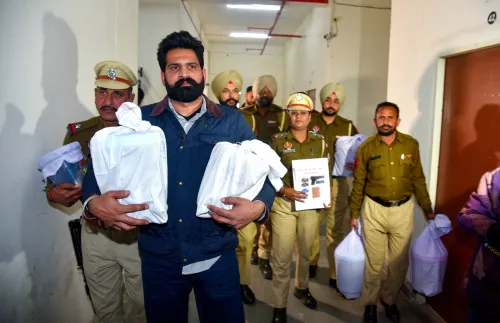
The central government agencies, alongside the Punjab Police, have effectively kept these factions at bay within Punjab.
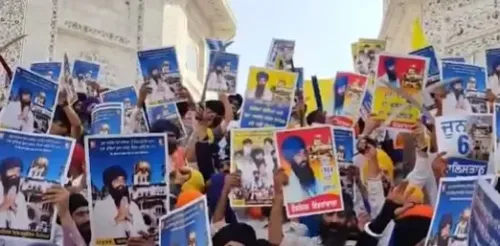
Sources indicate that the youth in the region are largely uninterested in the idea of a separate Khalistan state. Efforts to radicalize them have largely failed, primarily due to the influence of elder community members who discuss the detrimental effects of such a movement.
In response to the lack of ideological appeal, the BKI is now focusing on using financial incentives to recruit young individuals in Punjab.
The Lahore meeting, held in the Gulbarg area, deliberated extensively on the necessity for a renewed push in Punjab.
The drug crisis in the state has been severe. It was concluded that enticing youth into the Khalistan movement would require both drugs and money, as the ideological approach has evidently faltered.
Intelligence agencies have discovered that the BKI has amassed significant stocks of drugs, arms, and ammunition in warehouses provided by the ISI.
These facilities are located in Lahore, Islamabad, and Faizabad.
In recent months, large shipments have been received at these warehouses, with attempts underway to transport them into India.
It has become apparent that Khalistani sentiments are not gaining momentum in Punjab.
However, their international campaigns have seen notable success, with groups like the Sikhs for Justice (SFJ) conducting referendums and disseminating anti-India rhetoric on social media.
International stakeholders are now questioning the ISI regarding the stagnation of their operations in India.
These factions require Pakistan's backing to enhance their activities in India. An additional source noted that the ISI has been actively training Khalistani operatives to help expand their operations.
Training camps have reportedly been established in Attock, Not Lakhpat, Chakwal, and Gujranwala, according to intelligence reports. The recent meeting in Gulbarg reiterated the ISI's directive for all Khalistani terrorist factions to unify.
This collaborative approach mirrors the strategy employed with groups like Lashkar-e-Tayyiba and Jaish-e-Mohammad.
While the ISI faced challenges in persuading these terrorist organizations, they encountered fewer difficulties with Khalistani factions, sources reveal.
The revitalization of the Khalistan movement is the central theme behind this renewed initiative, but agencies also caution that this strategy extends to Jammu and Kashmir.
The ISI has struggled to smuggle drugs, arms, and ammunition into the Union Territory due to heightened security along the Line of Control, with numerous infiltration attempts thwarted in recent times.
Now, Pakistan aims to transport large shipments into Punjab and subsequently smuggle them into Jammu and Kashmir by road.
Following Operation Sindoor, the ISI has sought to foster homegrown terrorism but has faced challenges in funding these operatives.
By escalating operations along the Punjab border, they intend to achieve dual objectives: rejuvenate the Khalistan movement and finance terrorism in Jammu and Kashmir, as reported by officials.
Point of View
I must emphasize the need for vigilance regarding these developments. The situation poses serious implications for national security, and it is crucial that we remain informed and prepared to counter any attempts to destabilize our regions.
NationPress
24 Sept 2026
Frequently Asked Questions
What is the Babbar Khalsa International?
Babbar Khalsa International (BKI) is a militant organization that advocates for the creation of a separate Sikh state called Khalistan.
What is the Khalistan movement?
The Khalistan movement seeks to establish an independent Sikh state within the Punjab region of India.
How is the ISI involved in these operations?
The ISI is allegedly supporting the Khalistan movement by providing resources and training to various factions involved in terrorism and drug trafficking.
What are the implications of drug trafficking in Punjab?
The influx of drugs can exacerbate social issues, contribute to crime, and destabilize the region, making it crucial for law enforcement to remain vigilant.
What measures are being taken to counter this situation?
Central agencies and the Punjab Police are actively working to prevent the infiltration of these elements into Punjab.