Fake currency rackets go local: Solo operators, small networks challenge Indian agencies
Synopsis
The fake currency threat in India is no longer just a cross-border problem. Solo operators printing notes at home with e-commerce-bought printers, and untraceable 3–4-person local networks, are now running parallel to Pakistan-backed syndicates — and they're far harder to detect. Recent arrests in Kerala, Bhopal, Mumbai, Nagpur, and Kolkata reveal how widely this domestic threat has spread.
Key Takeaways
Indian security agencies face a dual fake currency threat : established cross-border networks and a new wave of solo operators and small domestic networks .
The cross-border trade is routed through Bangladesh into West Bengal , with Malda identified as the primary hub.
Solo operators procure digital printers, scanners, and laminators from e-commerce platforms to print counterfeit notes independently.
Recent arrests include Sibion in Kerala (planned ₹2.5 crore print run), Vivek Yadav in Bhopal, Omkar Bhoir in Mumbai, Pushpak Krishna Bhandarkar in Nagpur (₹85 lakh seized), and Vijaypal Tanwar in Kolkata.
Domestic networks operate at small scale — transactions capped at ₹1,000 — unlike international syndicates that target banks directly.
Officials say effective containment requires stronger Centre-State coordination between central agencies and state police forces.
Indian security agencies, already stretched by cross-border counterfeit currency networks, are now confronting a sharply different threat: a proliferation of solo operators and small indigenous networks printing fake Indian currency notes entirely within the country. The shift marks a new phase in the fake currency menace, complicating detection and enforcement for both central and state-level law enforcement.
The Shifting Landscape of Fake Currency
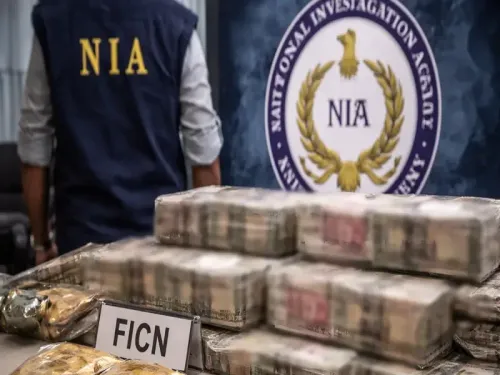
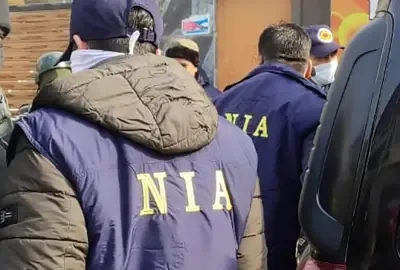
For years, the fake Indian currency note (FICN) trade has been traced to Pakistan-based syndicates, with the Dawood Ibrahim network believed to play a central role. The counterfeit notes have traditionally been smuggled not directly from Pakistan but routed through Bangladesh, before entering India via the border districts of West Bengal. Malda has been identified as the principal hub for this cross-border trade, according to investigations by agencies including the National Investigation Agency (NIA).
The new concern, however, is domestic. Smaller networks and individual operatives are now printing fake notes using equipment that is freely available online and on e-commerce platforms — high-resolution digital printers, scanners, laminators, and paper-cutting tools. Because these are standard commercial items, their purchase raises no immediate red flags with vendors or platforms.
How Solo Operatives and Small Networks Function
According to officials, solo players procure printing materials online and produce counterfeit notes independently. Smaller networks typically operate in groups of 3–4 persons, keeping the operation tightly contained to avoid leaving a traceable trail.
'The solo operatives procure materials online and print the notes. While both solo operatives and smaller networks deploy similar tactics, the only thing that varies is the scale of operation and the manner in which they function,' an official said.
The key technical constraint for these operators is paper. Genuine currency paper with embedded security features — RBI and Bharat watermarks, security threads — cannot be replicated with commercial tools. Smaller networks reportedly get around this by sourcing such paper through contacts linked to major syndicates. Individuals without access to cross-border smuggling networks often use a workaround known as the 'double-sided' or 'sandwich bundle' technique: standard bond paper is cut to the exact size of currency notes and sandwiched between two genuine ₹500 notes, creating bundles that can be passed off as currency in rapid, low-light cash transactions.
Recent Arrests Across India
In the past few months, security agencies have moved against several such operators. Three solo operations were busted in Kerala, Madhya Pradesh, and Mumbai.
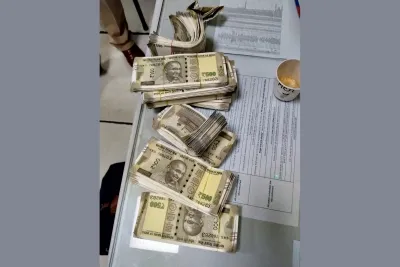
In Kerala, one Sibion, a native of Kallelivayal in Vadi, was arrested after allegedly planning to print fake currency worth ₹2.5 crore. In Bhopal, the police arrested Vivek Yadav and recovered 23 counterfeit notes of the ₹500 denomination. In Mumbai, Omkar Bhoir was apprehended with 240 counterfeit notes of the ₹500 denomination.
Earlier in October 2026, Maharashtra Police busted a counterfeit operation in Nagpur, seizing fake notes worth ₹85 lakh from a rented room. The accused, Pushpak Krishna Bhandarkar alias Bendane, was allegedly printing notes at the rented premises; a raid recovered fake currency worth ₹37 lakh.
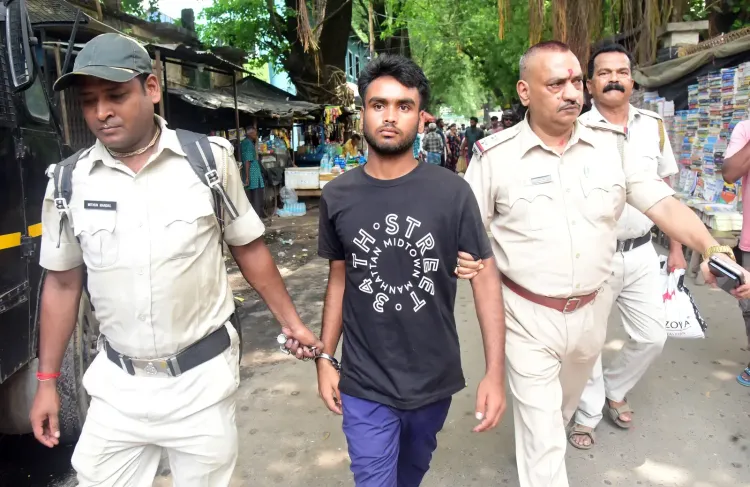
Separately, Kolkata Police raids at Burrabazar led to the arrest of Vijaypal Tanwar. Investigators found that his backpack contained four bundles designed to resemble packets of high-value currency — each bundle had genuine ₹500 notes at the top and bottom with 998 pieces of white paper cut to note size sandwiched between them.
Intent and Scale: Local Networks vs International Syndicates
Intelligence Bureau officials draw a clear distinction between the motives of domestic operators and foreign-backed networks. 'The combination of solo players and smaller networks has made the job of the agencies harder. The intention of such networks and solo players is not aimed at destabilising the economy. They want to make fast bucks, unlike the Inter Services Intelligence-backed international players who look to hit the Indian economy,' an official said.
Fake notes from smaller networks are typically circulated in crowded local markets, with individual transactions restricted to ₹1,000 or below. International syndicates, by contrast, operate at scale and attempt to push counterfeits directly into the banking system.
The Road Ahead: Centre-State Coordination
Officials stress that tackling the dual threat requires structured coordination between central agencies and state police forces. While the NIA and Intelligence Bureau continue to pursue international networks, state police will need to take the lead on local operations and individual operators. Analysts note that the decentralised nature of these new networks — small, digitally equipped, unaffiliated — makes conventional surveillance and syndicate-mapping less effective. Stronger inter-agency information sharing and closer monitoring of commercial-grade printing equipment sales are likely to form the next line of defence.
Point of View
The barriers to counterfeiting collapse — and traditional syndicate-tracking tools become blunt instruments. What's missing is a regulatory framework around commercial-grade printing equipment sales: without purchase-trail monitoring, agencies will always be a step behind. The deeper irony is that demonetisation, which was partly justified as a strike against fake currency, does not appear to have broken the supply chain — it may only have forced operators to scale down and go local, making them harder, not easier, to catch.
NationPress
30 Oct 2026
Frequently Asked Questions
What is the new fake currency threat facing Indian security agencies?
Indian agencies are now dealing with a rise in solo operators and small domestic networks that print counterfeit currency using commercially available digital printers and online-procured materials, in addition to established cross-border syndicates linked to Pakistan. These local operators are harder to track because they are unaffiliated with major networks and operate at a small scale.
How are solo counterfeit currency operators in India producing fake notes?
Solo operators reportedly procure high-resolution digital printers, scanners, and laminators from local shops or e-commerce platforms. They obtain printing paper — sometimes with forged watermarks — either through syndicate contacts or use a 'sandwich bundle' technique, placing cut bond paper between genuine ₹500 notes to deceive victims in quick, low-light transactions.
Where have recent fake currency arrests taken place in India?
Recent busts include arrests in Kerala, Bhopal (Madhya Pradesh), Mumbai, Nagpur (Maharashtra), and Kolkata. In Nagpur, fake notes worth ₹85 lakh were seized; in Kolkata, the accused was found with bundles of 998 paper slips sandwiched between genuine ₹500 notes.
How do domestic fake currency networks differ from international syndicates?
Domestic operators aim primarily to make quick profit and circulate fake notes locally, keeping individual transactions at ₹1,000 or below. International syndicates, reportedly backed by Pakistan's Inter Services Intelligence, operate at a much larger scale and attempt to push counterfeit notes directly into the banking system to destabilise the economy.
What is needed to counter the growing fake currency menace in India?
Officials say effective containment requires stronger Centre-State coordination, with state police taking primary responsibility for local networks and solo operators, while central agencies like the NIA continue to tackle cross-border syndicates. Closer monitoring of commercial printing equipment sales has also been flagged as a necessary step.