Indian Navy's First Training Squadron departs Colombo after Sri Lanka port call
Synopsis
India's First Training Squadron wrapped up a multi-day Colombo port call that went well beyond ceremony — a live sea exercise with Sri Lanka's navy, cross-trainee visits to Trincomalee's Naval Academy, and a beach clean-up. The deployment is a textbook demonstration of New Delhi's MAHASAGAR maritime engagement strategy playing out in its own neighbourhood.
Key Takeaways
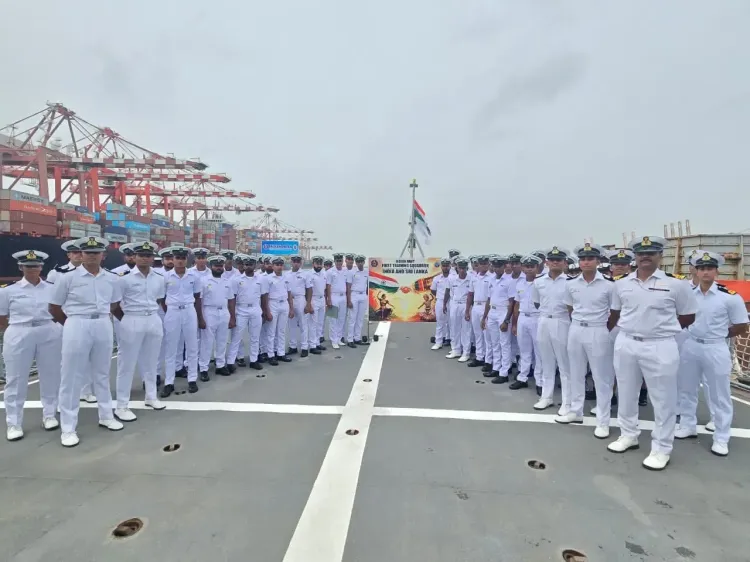
INS Tir , INS Sujata , and ICGS Sarathi of India's First Training Squadron (1TS) departed Colombo on Friday, 31 October 2026 after a successful port call.
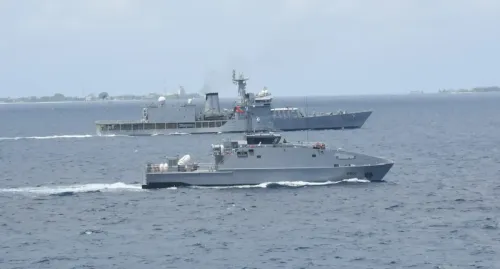
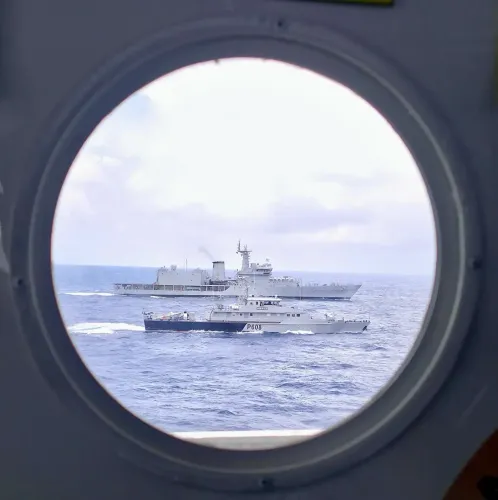
The squadron conducted a Passage Exercise (PASSEX) with Sri Lanka Navy ship Nandimithra before departing.
Sea trainees visited the Naval and Maritime Academy (NMA), Trincomalee ; Sri Lankan cadets made a reciprocal visit to the 1TS ships.
Senior officers called on the Commander, Western Naval Area, Sri Lanka Navy , reaffirming bilateral defence ties.
The visit advances India's MAHASAGAR (Mutual and Holistic Advancement for Security and Growth Across Regions) maritime cooperation framework.
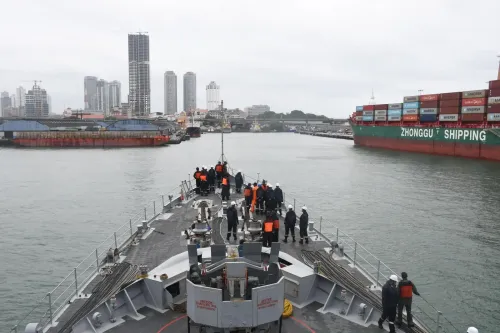
Ships arrived in Colombo on Tuesday and were given a ceremonial welcome by the Sri Lanka Navy.
Ships of the Indian Navy's First Training Squadron (1TS) — INS Tir, INS Sujata, and Indian Coast Guard Ship (ICGS) Sarathi — departed Colombo on Friday, 31 October 2026, concluding a successful port call to Sri Lanka, the Ministry of Defence announced. The visit reinforced the enduring maritime partnership between the two neighbouring nations and advanced operational coordination under India's MAHASAGAR (Mutual and Holistic Advancement for Security and Growth Across Regions) framework.
Passage Exercise with Sri Lanka Navy
Before departing Colombo, the 1TS ships conducted a Passage Exercise (PASSEX) with Sri Lanka Navy ship Nandimithra, enabling coordinated maritime manoeuvres and strengthening operational interoperability between the two forces. Such exercises are a standard feature of bilateral naval engagements in the region and signal a deepening of tactical-level cooperation beyond ceremonial port calls.
High-Level Bilateral Engagements
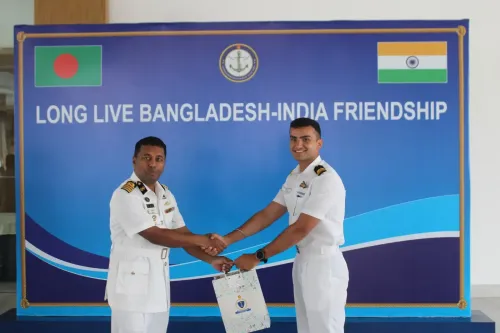
During the port call, the Senior Officer of 1TS, accompanied by the Commanding Officers of the three ships, called on the Commander, Western Naval Area, Sri Lanka Navy. According to the Defence Ministry, the interaction 'reaffirmed the close bilateral ties and the shared commitment of both navies to enhancing maritime cooperation.' Separately, the Director General Naval Training and the Commander, Eastern Naval Area, Sri Lanka Navy, interacted with sea trainees aboard the squadron.
Cross-Training at Trincomalee Naval Academy
As part of professional engagements, sea trainees from 1TS visited the Naval and Maritime Academy (NMA) in Trincomalee and interacted with their Sri Lankan counterparts. In a reciprocal exchange, cadets from the NMA visited the 1TS ships to gain firsthand exposure to the squadron's training facilities. The Ministry noted that these interactions 'provided opportunities for the exchange of experiences and fostered professional camaraderie among the trainees of both navies.'
Community Outreach and Public Engagement
Beyond formal military engagements, Indian Navy personnel participated in a beach clean-up activity in Colombo, underlining a commitment to environmental sustainability. The ships were also opened to members of the local community and the Indian diaspora, offering an opportunity to interact with crew and learn about the Navy's training and operational capabilities. The 1TS ships had arrived in Colombo on Tuesday and were accorded a ceremonial welcome by the Sri Lanka Navy.
Significance for India-Sri Lanka Maritime Ties
The port call forms part of a broader pattern of bilateral maritime engagement between India and Sri Lanka, both of which share the strategic waters of the Indian Ocean Region. The MAHASAGAR framework, under which New Delhi has been advancing maritime partnerships with littoral neighbours, places particular emphasis on capacity building and regional security cooperation. This visit is among the most substantive 1TS deployments to Colombo in recent years, combining operational exercises, trainee exchanges, and community engagement under a single mission.
Point of View
Trainee exchanges, and public diplomacy into a single visit — the kind of layered engagement that builds durable bilateral trust. Coming against a backdrop of China's growing naval presence in the Indian Ocean, New Delhi's consistent use of training deployments to deepen Sri Lanka ties is a low-cost, high-signal move. The MAHASAGAR framework, however, still lacks the institutional depth of a formal maritime partnership agreement, and until it does, these visits risk remaining symbolic rather than structural.
NationPress
30 Oct 2026
Frequently Asked Questions
Which Indian Navy ships visited Colombo?
Three vessels from the Indian Navy's First Training Squadron (1TS) made the Colombo port call: INS Tir, INS Sujata, and Indian Coast Guard Ship (ICGS) Sarathi. They arrived on Tuesday and departed on Friday after a range of bilateral engagements.
What is a Passage Exercise (PASSEX) and why does it matter?
A Passage Exercise (PASSEX) is a coordinated at-sea drill conducted by naval forces of two countries to practise joint manoeuvres and enhance interoperability. The 1TS ships carried out a PASSEX with Sri Lanka Navy ship Nandimithra before leaving Colombo, signalling operational-level cooperation beyond ceremonial port visits.
What is the MAHASAGAR framework mentioned by the Defence Ministry?
MAHASAGAR stands for Mutual and Holistic Advancement for Security and Growth Across Regions — India's policy framework for maritime cooperation with its Indian Ocean neighbours. The Defence Ministry cited it as the guiding vision behind the Colombo port call, which included defence engagements, trainee exchanges, and community outreach.
What training exchanges took place during the port call?
Sea trainees from 1TS visited the Naval and Maritime Academy (NMA) in Trincomalee and interacted with Sri Lankan naval cadets. In a reciprocal arrangement, NMA cadets visited the 1TS ships and observed training facilities, fostering professional ties between the two navies' future officers.
How significant is this visit for India-Sri Lanka defence relations?
The port call forms part of a sustained pattern of bilateral naval engagement between India and Sri Lanka. Combining an operational PASSEX, high-level officer meetings, cross-trainee exchanges, and public diplomacy, it is one of the more comprehensive 1TS deployments to Colombo in recent years and reflects New Delhi's broader Indian Ocean outreach strategy.