Kishan Reddy Hails Bharat Bovine Breeding Centre Launch
Synopsis
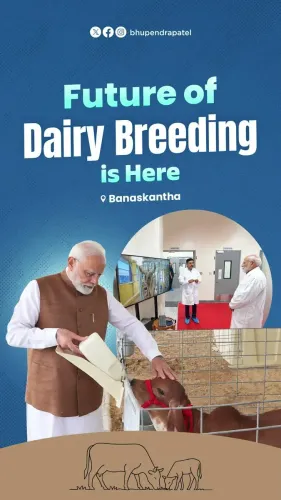
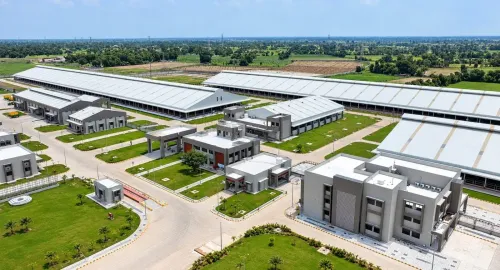
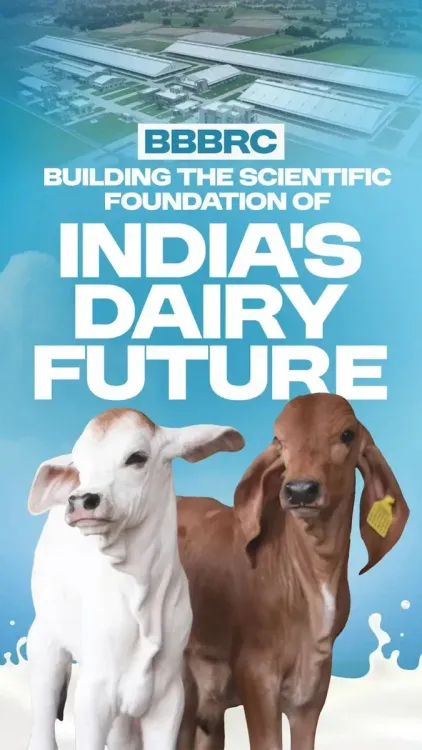
Union Minister G. Kishan Reddy welcomed the launch of the Bharat Bovine Breeding and Research Centre on October 30, 2026, describing it as India's 'next White Revolution' — deploying advanced genetics to improve indigenous cattle breeds, raise milk productivity and increase farmers' incomes under PM Modi's vision.
Key Takeaways
Kishan Reddy hailed the launch of the Bharat Bovine Breeding and Research Centre on October 30, 2026 .
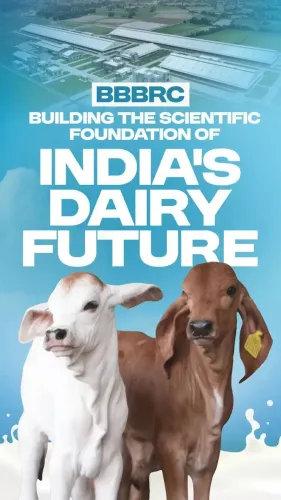
The centre aims to use advanced genetics and scientific innovation to improve indigenous cattle breeds and raise milk productivity.
Reddy framed the launch as India's 'next White Revolution ' — a direct invocation of Operation Flood (1970) that made India the world's largest milk producer.
The initiative is positioned within the broader Atmanirbhar Bharat push for agricultural self-reliance and higher rural farmers' incomes .
Rollout timelines, budget details, and measurable productivity targets for the new centre are yet to be detailed in official ministry communications.
India's dairy ambitions just got a scientific backbone. Union Coal and Mines Minister G. Kishan Reddy on Friday, October 30, 2026, welcomed the launch of the Bharat Bovine Breeding and Research Centre, calling it the dawn of India's 'next White Revolution' — a deliberate echo of the landmark Operation Flood that, half a century ago, turned India into the world's largest milk producer.
What the Bharat Bovine Breeding and Research Centre promises
The new centre is positioned as a science-first intervention in a sector that has historically run on cooperative muscle rather than genetic precision. According to Reddy's post, the facility will deploy advanced genetics and innovation to improve indigenous cattle breeds, lift milk productivity, and — critically — push farmers' incomes higher. The framing is explicit: this is not incremental improvement, it is a structural upgrade to the foundation of Indian dairying.
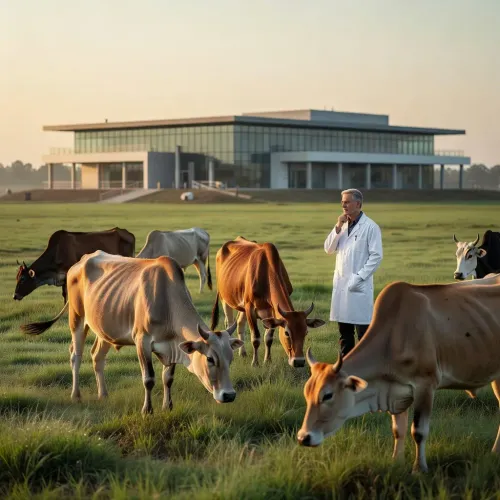
Indigenous breeds have long been prized for disease resistance and adaptability to Indian conditions, but their average milk yields lag behind crossbred and exotic varieties. Scientific breeding infrastructure, if executed at scale, could close that gap without sacrificing the resilience that makes native cattle valuable to smallholder farmers across rain-fed and dryland regions.
The shadow of Operation Flood — and why the comparison matters
Invoking the 'White Revolution' is not rhetorical decoration. Operation Flood, launched in 1970 under the architect Verghese Kurien, wired millions of village dairy farmers into cooperatives, created a cold-chain from farm to city, and within two decades made India the planet's top milk producer. It remains one of independent India's most consequential rural-development stories.
The current push fits a recognisable arc: successive governments have layered scientific breeding and genetic research onto the cooperative base that Kurien built, aligning with the broader Atmanirbhar Bharat self-reliance framework. The new centre signals that the Modi government intends to accelerate that layering — moving from procurement-and-distribution infrastructure to the upstream biology of the animals themselves.
Farmers at the centre of the calculus
For India's dairy farmers — the overwhelming majority of whom are smallholders managing two to five animals — higher per-animal yields translate directly into household income without requiring more land or more cattle. That arithmetic makes genetic improvement programmes politically resonant as well as economically logical.
Reddy specifically linked the initiative to 'stronger, self-reliant and prosperous' outcomes for the dairy sector, attributing the vision to Prime Minister Narendra Modi. The rollout timelines, budget allocations, and measurable productivity targets for the new centre will be the real test of whether the ambition is matched by execution — details that parliamentary sessions and ministry reports in the coming months will need to fill in.
India has earned its place at the top of global milk tables. The question now is whether it can hold that position on the strength of science rather than just scale.
Point of View
' the government draws a deliberate line from Verghese Kurien's mass mobilisation to a science-driven second act, signalling that the next phase of dairy growth will be won in laboratories as much as in milk cooperatives. Politically, linking indigenous breed improvement to farmer income positions the initiative as both economically credible and culturally resonant ahead of rural electoral cycles. The real measure of intent will come when Parliament scrutinises the budget lines and performance benchmarks attached to the new centre.
NationPress
30 Oct 2026
Frequently Asked Questions
What is the Bharat Bovine Breeding and Research Centre?
The Bharat Bovine Breeding and Research Centre is a newly launched facility in India aimed at using advanced genetics and scientific research to improve indigenous cattle breeds, enhance milk productivity, and increase income for dairy farmers.
What was India's original White Revolution?
India's original White Revolution, known as Operation Flood, was launched in 1970 under dairy pioneer Verghese Kurien . It built a nationwide cooperative dairy network that transformed India into the world's largest milk producer.
Why is G. Kishan Reddy commenting on a dairy initiative?
G. Kishan Reddy is the Union Minister of Coal and Mines and BJP Telangana state president . His post reflects the wider BJP political leadership rallying behind significant government-backed agricultural and rural welfare launches.
How does the new bovine research centre benefit farmers?
By improving the genetics of indigenous cattle breeds, the centre aims to raise per-animal milk yields without requiring farmers to acquire more land or more cattle — directly boosting income for smallholder dairy farmers.
What is Atmanirbhar Bharat's role in India's dairy sector?
The Atmanirbhar Bharat (self-reliant India) framework drives the government's push to build domestic capacity in agriculture and allied sectors, including developing homegrown cattle genetics and dairy research infrastructure rather than depending on imported breeds.