Local Production of Fake Currency Linked to Dawood Syndicate Surges Amidst Border Security Enhancements
Synopsis
Indian authorities are witnessing a surge in counterfeit currency operations attributed to a syndicate connected to Dawood Ibrahim. With tightened border security, the group is shifting tactics to produce fake notes locally, posing a significant threat to the Indian economy.
Key Takeaways
Counterfeit currency seizures in India are on the rise.
The Dawood-linked syndicate is shifting to local production.
States like Gujarat and Punjab are becoming key areas for counterfeit operations.
Authorities are enhancing surveillance and enforcement measures.
Drones are being utilized for transporting fake currency.
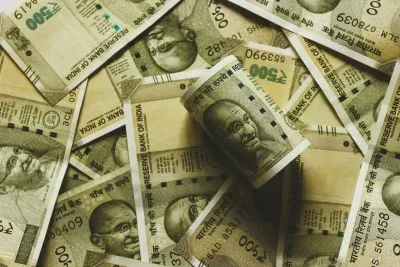
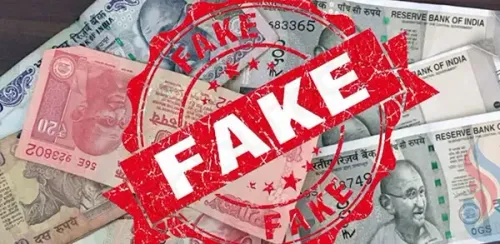
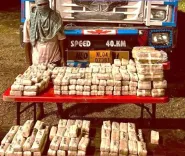
New Delhi, April 14 (NationPress) Indian authorities have observed a significant uptick in the confiscation of counterfeit currency, indicating a revitalized effort by organized crime networks to broaden their operations.
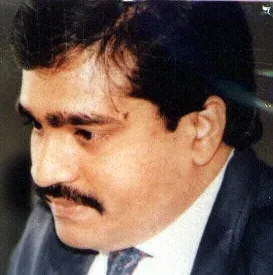
Investigators reveal that the syndicate associated with Dawood Ibrahim, operating out of Pakistan, is increasingly instructing agents within India to produce counterfeit notes domestically rather than depending on cross-border smuggling routes via Pakistan and Bangladesh.
This trend signals a calculated effort to enhance production capabilities, with indications of a coordinated initiative aimed at destabilizing the Indian economy. Recent months have witnessed numerous seizures in border areas due to strengthened security measures. Simultaneously, there has been a rise in the detection and interception of counterfeit currency being transported via drones.
An official from the Intelligence Bureau stated that the syndicate is now directing its operatives in India to manufacture fake notes locally and distribute them within the marketplace. They have been counseled to keep their operations small yet frequent to sustain overall volume while evading detection.
“To minimize the chances of being detected, members are also frequently relocating, complicating efforts for agencies to monitor and identify a consistent location,” the official added.
The route through the Bangladesh border has become increasingly challenging for smugglers. Enhanced security measures have intensified surveillance, making it more difficult for operatives to smuggle counterfeit currency into India.
Another official noted that the current strategy involves expanding printing activities across various states, including Gujarat, Uttar Pradesh, Rajasthan, and Punjab. Historically, the syndicate established a localized unit in Malda, West Bengal, where high-quality counterfeit notes were produced, making them tough to detect.
“However, following the discovery of this unit, intensified actions by agencies led to a dramatic decrease in operations,” remarked the official.
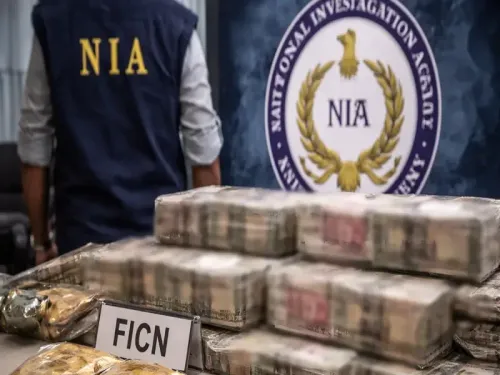
Another source indicated that printing capacity in Malda has fallen by over half after agencies, including the National Investigation Agency (NIA), ramped up investigations and enforcement activities.
Authorities also mentioned that efforts are being made to import raw materials necessary to establish new units for expanding local production. Should these shipments reach operatives in India, output could rise once more. Despite the shift towards domestic printing, attempts to transport counterfeit currency across borders using drones are anticipated to persist.
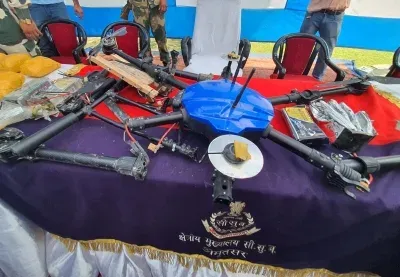
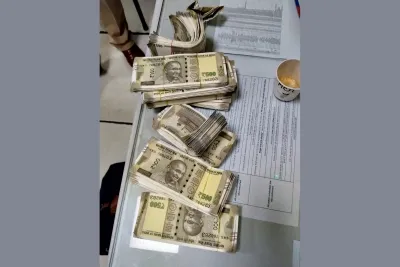
Last month, the Border Security Force (BSF) and Amritsar Police confiscated counterfeit currency worth Rs 2.5 lakh, which officials suspect could have been a trial operation. While drones have been intercepted carrying drugs, firearms, and ammunition on numerous occasions, their utilization for transporting fake currency has become an escalating concern.
Authorities indicated that the syndicate is now relying on smaller shipments that are more challenging to detect via radar and surveillance systems. An official noted that operatives are employing diverse tactics to amplify the circulation of counterfeit notes.
As local production accelerates, the use of drones is expected to continue. The overarching goal, officials stated, is to generate funds for terrorist activities and to inflict economic harm through the persistent circulation of counterfeit currency.
Point of View
It is crucial to highlight the evolving tactics of organized crime, particularly those connected to high-profile figures like Dawood Ibrahim. The shift towards local production of counterfeit currency signifies a strategic maneuver that poses serious risks to the national economy and security. This situation requires vigilant monitoring and robust responses from law enforcement agencies to safeguard economic integrity.
NationPress
16 Sept 2026
Frequently Asked Questions
What is the main issue regarding counterfeit currency in India?
Indian agencies have reported a significant rise in counterfeit currency seizures, indicating organized crime networks, particularly those linked to Dawood Ibrahim, are expanding their operations domestically.
How is the Dawood-linked syndicate adapting its strategies?
The syndicate is increasingly directing operatives in India to produce counterfeit notes locally, minimizing reliance on cross-border smuggling as border security tightens.
What regions are becoming hotspots for counterfeit currency production?
States such as Gujarat, Uttar Pradesh, Rajasthan, and Punjab are emerging as key areas for the syndicate's local printing operations.
What measures are authorities taking against counterfeit operations?
Agencies are intensifying surveillance, conducting seizures, and enhancing security to disrupt the syndicate's operations and reduce the circulation of counterfeit currency.
What role do drones play in counterfeit currency distribution?
Drones are increasingly being used to transport counterfeit currency, presenting new challenges for law enforcement as they attempt to intercept these operations.