ISI eyes deported Bangladesh migrants as terror recruits with India knowledge

Synopsis
As West Bengal's BJP government accelerates deportation of illegal Bangladeshi immigrants, Indian intelligence agencies are warning of a calculated ISI play: intercept the deportees, exploit their grievances, and deploy their knowledge of India for radicalisation and terror recruitment. With Jamaat-e-Islami entrenched along the border, analysts say the infrastructure for such a plan already exists.
Key Takeaways
West Bengal CM Suvendu Adhikari has ordered expedited deportation of illegal immigrants from Bangladesh , with massive gatherings reported at the border.
An Intelligence Bureau official warned that the ISI is seeking to recruit deported individuals, who carry detailed knowledge of India, into terror modules.
Border-area touts previously used for illegal crossings are reportedly being activated by ISI-linked elements to funnel deportees into radicalisation camps.
Jamaat-e-Islami 's strong electoral performance in Bangladesh's border districts is seen as giving Pakistan an organisational advantage, according to officials.
Security expert Dr Abhinav Pandya said the ISI's long-term goal is demographic change in India, drawing a parallel with Kashmir .
Indian agencies have confirmed heightened border surveillance and said radicalised elements will be blocked from re-entering the country.
Indian intelligence agencies are on high alert along the West Bengal-Bangladesh border amid a large-scale deportation drive launched by the newly formed Bharatiya Janata Party (BJP) government in West Bengal, with officials warning that Pakistan's Inter-Services Intelligence (ISI) is actively seeking to recruit deported illegal immigrants as potential assets — leveraging their deep familiarity with Indian geography, communities, and systems.
The Deportation Drive
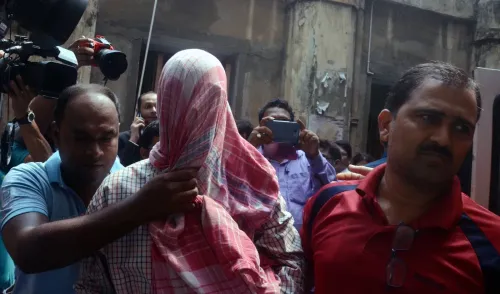
West Bengal Chief Minister Suvendu Adhikari has directed state police and district administrations to detect, detain, and deport illegal immigrants from Bangladesh on a priority basis. Reports indicate massive gatherings at border crossing points as many individuals, fearing detention, have begun self-deporting. Adhikari has explicitly instructed officials to expedite repatriation and, according to reports, has directed state police to bypass traditional judicial proceedings in processing these cases.
An official familiar with the drive said it was overdue, noting that illegal immigration had placed considerable strain on public infrastructure and state systems over an extended period.
ISI's Alleged Recruitment Strategy
According to an Intelligence Bureau official, the ISI is looking to capitalise on the situation by activating its radicalisation networks along the border. The official said that with Jamaat-e-Islami having secured significant electoral wins in border-adjacent areas of Bangladesh, Pakistan now has an organisational advantage to push forward with what agencies describe as a structured radicalisation plan.
The same official noted that scores of touts operating across the border — previously used to facilitate illegal crossings — are now reportedly being contacted by ISI-linked elements to intercept deportees and funnel them into radicalisation camps inside Bangladesh.
Expert Assessment: Why Deportees Are Valuable to the ISI
Dr Abhinav Pandya, Chief Executive Officer of the Usanas Foundation, said Indian agencies had long underestimated the strategic dimension of demographic shifts along the border. He argued that the ISI's broader objective has been to engineer demographic change in India, with the long-term aim of replicating in other parts of the country what occurred in Kashmir.
'Pakistan has realised that it cannot beat India in a conventional war,' Dr Pandya said. 'They want to do in the rest of India what they did in Kashmir.' He added that deported individuals, many of whom have lived in India for years, carry precise local knowledge — making them, in the ISI's calculus, ideal recruits for terror modules.
Lt Col Ujjwal Abhishek Jha (Retd), an intelligence veteran and analyst, said Pakistan would also exploit the deportation issue to construct a narrative portraying India as an oppressor — a propaganda tool to strain India-Bangladesh bilateral ties at a moment when both sides are reportedly working to stabilise relations. He noted that the Jamaat-e-Islami's strong support base along the border corridor gives the ISI a ready-made infrastructure for such operations.
Security Response
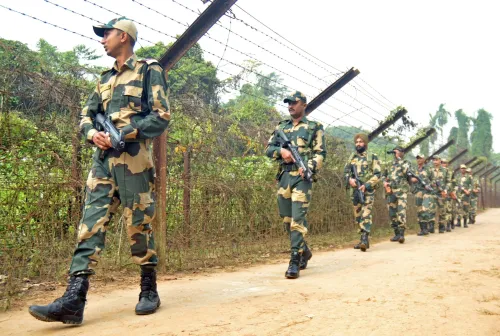
Officials confirmed that borders are on heightened alert and that all ISI-backed activity is under close surveillance. Agencies have stated that radicalised elements will be prevented from re-entering India. The Intelligence Bureau is coordinating with state police to monitor both the deportation process and any counter-radicalisation threats emerging from the Bangladesh side.
Broader Implications
This comes amid already fragile India-Bangladesh diplomatic ties, with both governments navigating a sensitive reset. Security analysts warn that Pakistan's use of the deportation issue as a wedge could complicate that process significantly. The situation is being watched closely at the national level, with the Centre monitoring both the humanitarian dimensions of the deportation drive and the security risks it may generate across the border.
Point of View
But it sits uncomfortably alongside the reported directive to bypass judicial proceedings in deportation cases — a procedural shortcut that could itself hand the ISI a ready-made grievance narrative. India's deportation drive may be strategically necessary, but its legitimacy depends on due process; cutting corners gifts Pakistan exactly the 'oppressor India' framing that Lt Col Jha warns about. The deeper problem is structural: agencies acknowledging they 'long neglected' demographic surveillance along the Bengal border is an admission of institutional failure, not just a current threat assessment. If Jamaat-e-Islami's border entrenchment is now an ISI force-multiplier, the question is how it was allowed to consolidate over years of inaction.
NationPress
13 Oct 2026
Frequently Asked Questions
Why is the ISI interested in deported illegal immigrants from India?
According to intelligence officials, deported individuals who lived in India for extended periods carry detailed knowledge of local geography, communities, and systems — making them valuable recruits for terror modules. The ISI is reportedly seeking to exploit their grievances after deportation to radicalise and deploy them against India.
What is the West Bengal government's deportation drive?
The newly formed BJP government in West Bengal, led by Chief Minister Suvendu Adhikari, has directed police and district administrations to detect, detain, and deport illegal immigrants from Bangladesh. Adhikari has reportedly instructed officials to expedite the process, including by bypassing standard judicial proceedings.
What role does Jamaat-e-Islami play in this security concern?
Intelligence officials say Jamaat-e-Islami's strong electoral performance in Bangladesh's border-adjacent districts gives the ISI an organisational foothold to run radicalisation activities. Analysts describe the party as a ready infrastructure for ISI operations along the West Bengal-Bangladesh border corridor.
How are Indian agencies responding to the ISI threat?
Officials confirmed that borders are on heightened alert and all ISI-backed activity is under close surveillance. The Intelligence Bureau is coordinating with state police, and agencies have stated that radicalised elements will be prevented from re-entering India.
How could this issue affect India-Bangladesh relations?
Analysts warn that Pakistan may use the deportation controversy to strain India-Bangladesh bilateral ties, which are currently in a fragile phase. Lt Col Ujjwal Abhishek Jha (Retd) said the ISI would seek to build a narrative of India as an oppressor to derail ongoing efforts to stabilise relations between the two neighbours.