West Bengal illegal migrant crackdown: Security agencies warn of push to other states
Synopsis
West Bengal's 'detect, detain and deport' crackdown has national security agencies cautiously optimistic — but their bigger worry is what comes next. Officials warn that touts will move undocumented individuals in large numbers to Bihar and South India, turning a state-level operation into a nationwide displacement problem unless other states act in concert.
Key Takeaways
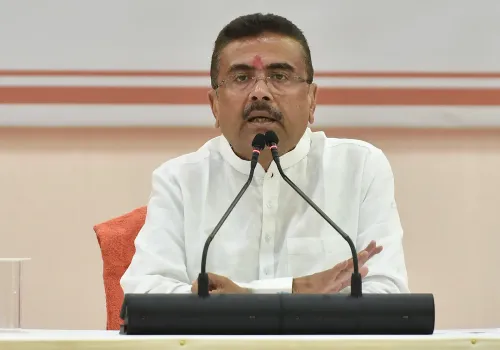
West Bengal under Chief Minister Suvendu Adhikari has launched a 'detect, detain and deport' protocol targeting illegal migrants.
Security officials warn the crackdown may push undocumented individuals into Bihar , South India , and other states.
India's 2,200-km border with Bangladesh has 1,600 km fenced; 75 acres covering 27 km have been handed over for immediate fencing work, targeted for completion in one year .
Officials allege illegal immigrants are embedded in fake currency , narcotics , and cattle smuggling networks, particularly in Malda and Murshidabad .
An Intelligence Bureau official said forged voter ID and Aadhaar documents were used to integrate undocumented individuals into the electoral system.
Security agencies are calling for all states to adopt the 'detect, detain and deport' framework proactively.
West Bengal's newly launched crackdown on illegal migrants under Chief Minister Suvendu Adhikari has drawn broad endorsement from India's national security establishment — but officials are simultaneously sounding the alarm that the operation could drive a large-scale displacement of undocumented individuals into other states. The Bharatiya Janata Party (BJP) government's formal adoption of a 'detect, detain and deport' protocol marks one of the most assertive state-level responses to illegal immigration in recent years.
The 'Detect, Detain and Deport' Directive
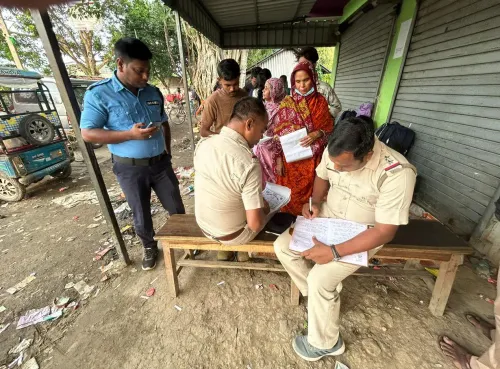
The West Bengal government has directed the Director General of Police (DGP) and the Chief Secretary to ensure full compliance with the new protocol. Officials describe it as a structured, three-stage response to a problem that has, according to security planners, been festering for over five decades. The immediate focus is on identification and detention of undocumented individuals, followed by deportation through established legal channels.
Roots of the Problem: A Security Perspective
According to security officials, what began as a systematic cross-border influx in the 1970s — allegedly facilitated by Pakistan's Inter-Services Intelligence (ISI) and the Jamaat-e-Islami — has evolved into what they describe as a nationwide security challenge. Officials say the strategy, conceived in the aftermath of the Bangladesh Liberation War of 1971, was designed to alter demographic balances in Indian border states.
Over decades, according to officials, illegal immigrants were reportedly absorbed into crime networks. They are alleged to be involved in the fake currency racket, narcotics trade, and cattle smuggling, particularly in districts such as Malda and Murshidabad. An Intelligence Bureau official said that forged documents — including voter identification cards and Aadhaar cards — were systematically created to integrate these individuals into the electoral process, with touts allegedly directing them to vote for specific parties under threat of deportation.
The Nationwide Spread: Bihar and South India in Focus
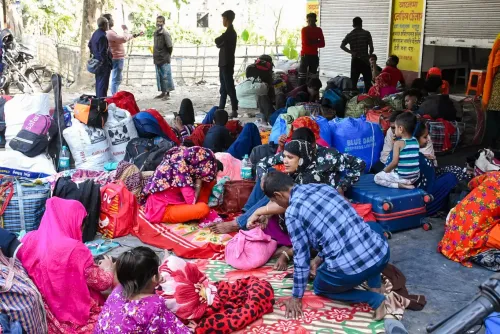
Security officials warn that the problem is no longer confined to West Bengal and the northeastern states. Assam has historically borne the heaviest burden in the northeast, but officials say the spread is now nationwide. Bihar and states in South India are increasingly cited as areas where illegal migrants are being absorbed into plantation and construction labour markets at below-market wages. Officials warn that touts operating across multiple states are actively placing undocumented workers with employers who, over time, become dependent on the low-cost labour.
Notably, officials caution that the launch of the West Bengal crackdown may accelerate this migration to other states, as touts seek to relocate individuals before they are detained. Security agencies are urging all state governments to proactively apply the 'detect, detain and deport' framework.
Border Fencing: The Infrastructure Gap
India and Bangladesh share a 2,200-km border, of which approximately 1,600 km has been fenced, leaving a significant stretch vulnerable. The government has announced the immediate handover of 75 acres covering 27 km of unfenced territory. Of this, 9 km will be allocated for Border Security Force (BSF) outposts, with the remainder earmarked for fencing. Officials say the project is targeted for completion within one year.
What Security Agencies Are Saying
Officials are unambiguous in their assessment: the West Bengal move is a necessary first step, but insufficient on its own. 'National security cannot be compromised for the sake of votes,' one official said. They stress that many undocumented individuals are not economic migrants but are allegedly embedded in criminal and terror networks linked to the ISI and Jamaat-e-Islami. Some have reportedly been apprehended in connection with terror cells, narcotics distribution, and the circulation of fake Indian currency.
With the crackdown now under way, the coming months will test whether other state governments move in concert — or whether the displacement of illegal migrants simply shifts the problem rather than resolves it.
Point of View
But security officials are right to flag the displacement risk — a state-level operation without coordinated national action is likely to move the problem rather than solve it. The claim that the ISI and Jamaat-e-Islami engineered demographic change since the 1970s is a long-standing intelligence assessment, but one that has rarely been subjected to independent scrutiny. The more immediate accountability question is the border fencing gap: with 600 km of a 2,200-km frontier still unfenced after decades, the infrastructure failure is as much a policy failure as a security one. Unless the Centre mandates parallel action across Bihar and South India, West Bengal's crackdown risks being a pressure valve rather than a solution.
NationPress
22 Sept 2026
Frequently Asked Questions
What is West Bengal's 'detect, detain and deport' policy for illegal migrants?
It is a three-stage protocol announced by the BJP government in West Bengal under Chief Minister Suvendu Adhikari, directing the DGP and Chief Secretary to identify, detain, and deport illegal migrants and infiltrators. Security officials describe it as one of the most structured state-level responses to illegal immigration in recent years.
Why are security agencies warning about illegal migrants being pushed to other states?
Officials say that once the West Bengal crackdown intensifies, touts who facilitate the movement of undocumented individuals will relocate them in larger numbers to states like Bihar and those in South India to avoid detection. Security agencies are urging all state governments to proactively adopt the same 'detect, detain and deport' framework.
What is the current status of India-Bangladesh border fencing?
India and Bangladesh share a 2,200-km border, of which approximately 1,600 km has been fenced. The government has announced the immediate handover of 75 acres covering 27 km for new fencing and BSF outposts, with a one-year completion target.
What criminal activities are illegal migrants allegedly involved in, according to officials?
According to security officials, undocumented individuals in states like West Bengal and Assam are allegedly embedded in fake currency rackets, narcotics trade, and cattle smuggling networks. Some have reportedly been apprehended in connection with terror cells and the distribution of counterfeit Indian currency.
How long has illegal immigration into India been a security concern?
Security officials trace the organised influx to the 1970s, alleging it was facilitated by Pakistan's ISI and Jamaat-e-Islami following the Bangladesh Liberation War of 1971. What began as a border-state issue in West Bengal has, according to officials, spread nationwide over five decades.