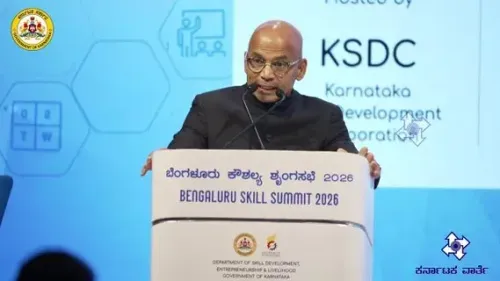
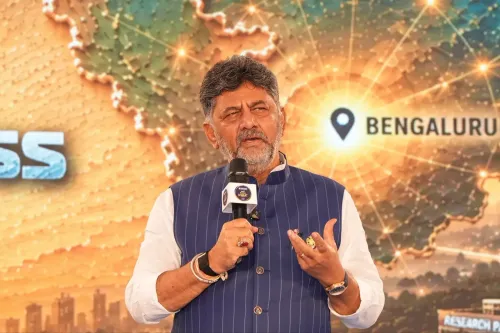
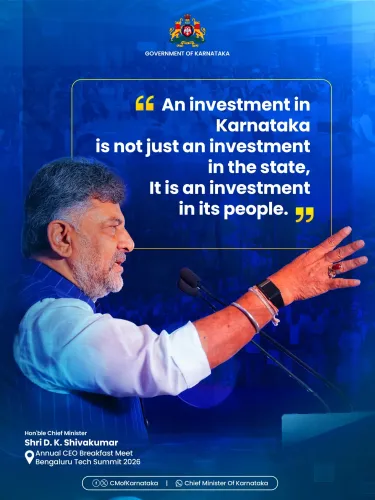
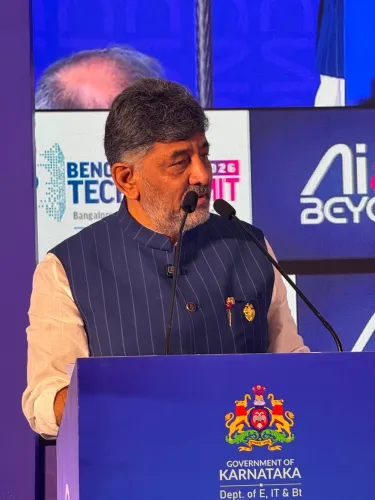
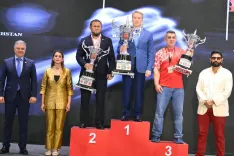
CM Shivakumar addresses Bengaluru Skills Summit 2026

Synopsis
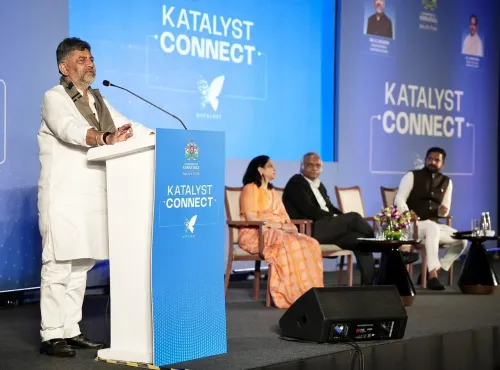
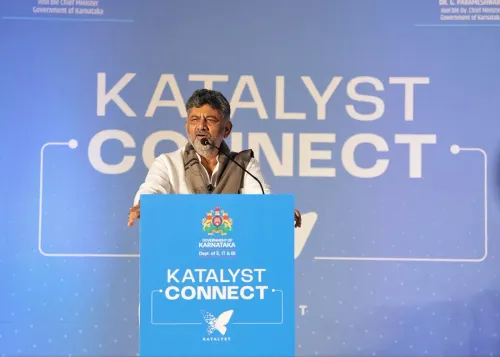
Karnataka Chief Minister D.K. Shivakumar addressed the second edition of the Bengaluru Skills Summit 2026 at a private hotel in Bengaluru on 6 November, as the state government continued its push to align workforce training with industry demand.
Key Takeaways
Shivakumar participated in and addressed the Bengaluru Skills Summit 2026 on 6 November 2026 .
This was the second edition of the Bengaluru Skills Summit, reflecting an institutionalised state commitment to the skills agenda.
The summit was held at a private hotel in Bengaluru and brought together industry and government stakeholders.
Key focus areas included workforce training, employability, and youth employment in Karnataka.
Subsequent state announcements on skill programmes and budget allocations are expected to follow the summit.
Workforce readiness took centre stage in Bengaluru on Friday, 6 November 2026, as Karnataka Chief Minister D.K. Shivakumar addressed the second edition of the 'Bengaluru Skills Summit 2026', held at a private hotel in the city — signalling the state government's continued push to bridge the gap between education and employment.
The Chief Minister's Office of Karnataka shared moments from the summit on X, noting that CM Shivakumar participated in and addressed the gathering. The event, held under the banner of the Bengaluru Skills Summit series, brought together stakeholders from industry and government to deliberate on workforce training and employability — themes that have grown increasingly urgent as Karnataka's tech-heavy economy demands a constantly upgrading talent pipeline.
A summit series rooted in Karnataka's skills agenda
The Bengaluru Skills Summit is now in its second edition, reflecting an institutionalised state-level commitment to skills discourse rather than a one-off event. Karnataka governments have periodically hosted such summits to align industry expectations with training outputs, bringing together employers, educators, and policymakers under one roof. The format allows the state to signal policy priorities to private-sector partners while generating momentum for on-ground programme delivery.
D.K. Shivakumar, a senior Congress leader who heads the Karnataka government, has used high-visibility platforms like this to communicate the administration's economic and human-capital agenda. His presence at the summit underscores how skill development has moved from a welfare-adjacent conversation to a core economic-competitiveness argument — particularly for a state that hosts one of Asia's most prominent technology corridors.
Youth employment at the heart of the conversation
The summit's core audience — youth and job seekers — reflects a demographic reality Karnataka cannot afford to ignore. With a large share of its population under 30 and employer demand for specialised skills rising sharply, the pressure on state governments to deliver credentialled, job-ready graduates has never been higher. Events like this summit serve as both a policy signal and a convening mechanism, drawing private-sector commitments that can translate into apprenticeships, certification programmes, and placement pipelines.
Specific announcements, budget allocations, or programme partnerships emerging from this edition of the summit are expected to follow in subsequent state communications — the clearest indicator of whether summit-stage intent converts into ground-level delivery.
Karnataka has set the stage; the numbers that follow will tell the real story.
Point of View
The Siddaramaiah-Shivakumar administration is signalling that skill development is a durable pillar of its governance narrative — not a one-cycle headline. For CM Shivakumar personally, high-profile economic forums serve a dual function: they reinforce his identity as a development-oriented leader ahead of the next electoral cycle. The real test, however, lies downstream — whether summit commitments translate into measurable placement numbers or new state scheme allocations, which will define whether Karnataka's skills push is policy substance or platform optics.
NationPress
7 Nov 2026
Frequently Asked Questions
What is the Bengaluru Skills Summit 2026?
The Bengaluru Skills Summit 2026 is a state-level conclave held in Bengaluru that brings together government officials, industry leaders, and educators to discuss workforce training and employability. The 2026 event was its second edition.
What did CM D.K. Shivakumar say at the Bengaluru Skills Summit 2026?
The Chief Minister's Office confirmed that CM D.K. Shivakumar participated in and addressed the summit. Specific details of his speech have not been released beyond the official post.
Where was the Bengaluru Skills Summit 2026 held?
The second edition of the Bengaluru Skills Summit 2026 was held at a private hotel in Bengaluru, Karnataka, on 6 November 2026.
Who is D.K. Shivakumar?
D.K. Shivakumar is a senior Congress politician and the Chief Minister of Karnataka. He has held multiple state-level ministerial roles over his long political career.
What is Karnataka's focus on skill development?
Karnataka governments have periodically hosted skills-focused summits and programmes to align workforce training with industry needs, particularly given the state's prominent technology and manufacturing sectors.