CM Shivakumar Chairs GCC Summit to Cement Karnataka's Global Lead
Synopsis
Chief Minister D.K. Shivakumar on 8 July 2026 chaired a strategic interaction with leaders of over 150 Global Capability Centres in Bengaluru, reiterating Karnataka's targets of 500 new GCCs, 3.5 lakh jobs and US$50 billion in economic output by 2029.
Key Takeaways
Shivakumar chaired a strategic interaction with leaders of over 150 GCCs on 8 July 2026 in Bengaluru.
Karnataka currently hosts more than 1,100 GCCs and holds 30.6 per cent of India's retail GCC AI talent.
The government targets 500 new GCCs , 3.5 lakh high-quality jobs and US$50 billion in economic output by 2029 .
Agenda items included talent strengthening, innovation acceleration, ease of doing business and high-value investment expansion.
Karnataka competes with Maharashtra , Tamil Nadu and Telangana for GCC investments, but retains the largest share of India's GCC base.
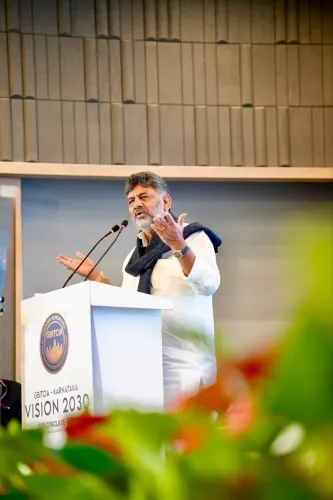
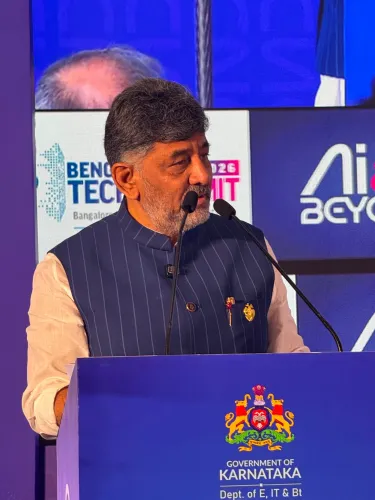
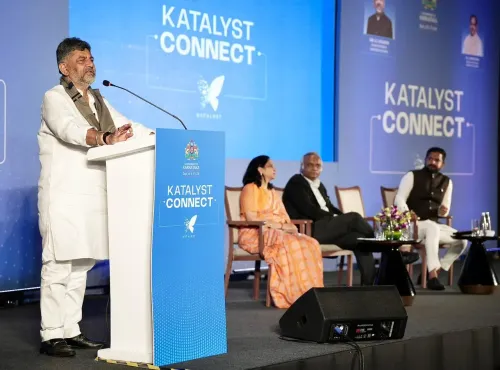
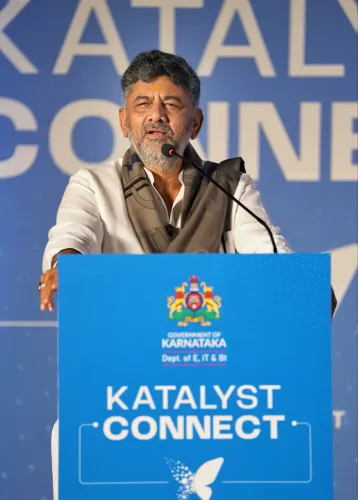
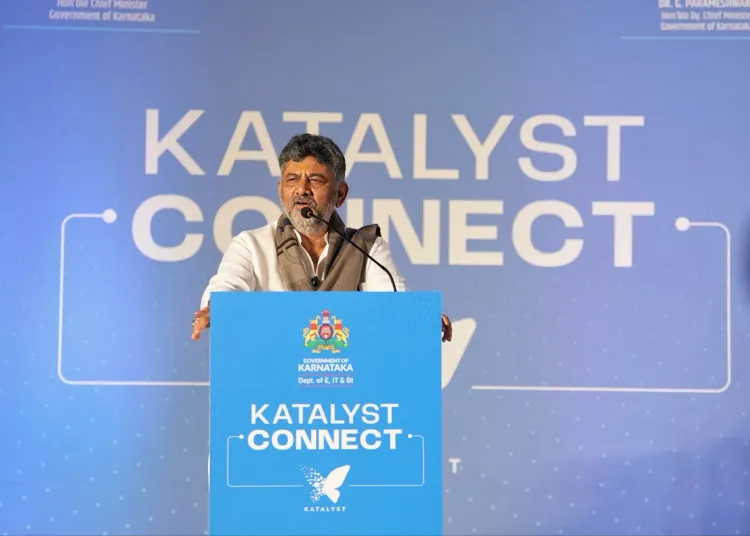
The Chief Minister's Office of Karnataka announced on Wednesday, 8 July 2026 that Chief Minister Shri D.K. Shivakumar chaired a high-level strategic interaction with leaders of over 150 Global Capability Centres (GCCs) in Bengaluru, reaffirming the state's ambition to consolidate its standing as the GCC Capital of the World.
Context
The meeting brought together executives from more than 150 GCCs operating across the state to deliberate on talent development, innovation acceleration, ease of doing business and high-value investment expansion. Karnataka currently hosts over 1,100 GCCs and accounts for 30.6 per cent of India's retail GCC artificial intelligence talent, according to figures cited by the Chief Minister's Office. The government described the state as already leading the nation in technology and AI capability.
Discussions spanned a broad agenda: deepening the talent pipeline, cutting regulatory friction for global firms, and identifying sectors where Karnataka can attract the next tier of multinational investment. The Chief Minister's participation at the chair signals the political weight the state government is placing on the GCC sector as a driver of premium employment and export income.
Policy Backdrop
Karnataka's engagement with multinational technology operations stretches back to the early 2000s, when successive state IT policy frameworks were crafted to attract offshore R&D and engineering centres to Bengaluru. Those foundations allowed the state to capitalise on a global wave of GCC expansion that gathered pace through the 2010s, as multinationals shifted high-value functions — analytics, AI, product engineering — to India.
The broader national GCC count crossed 1,000 by the mid-2020s, with Karnataka consistently holding the largest share of that base. Rival states including Maharashtra, Tamil Nadu and Telangana have aggressively pursued the same multinationals, making Wednesday's summit a signal that the Shivakumar administration intends to stay ahead of that competition through direct, leadership-level engagement with GCC decision-makers.
Targets and Stakeholder Impact
The government has set three headline targets to be achieved by 2029: attracting 500 new GCCs to the state, creating 3.5 lakh high-quality jobs, and generating US$50 billion in economic output. If realised, the job-creation figure alone would represent one of the largest single-state employment commitments in India's technology sector.
For AI professionals, engineers and management graduates across India, the targets signal continued demand for skilled talent in Karnataka. For multinational firms evaluating their India footprint, the direct access to the Chief Minister and the government's stated commitment to ease of doing business are intended as concrete differentiators over competing destinations.
What's Next
The government has not yet announced a formal policy document or incentive package stemming from Wednesday's interaction, and the Chief Minister's Office indicated the discussions were strategic in nature. Watchers will track whether follow-up announcements — on land allocation, tax incentives, talent skilling programmes or single-window clearances — emerge in the weeks ahead. Progress against the 500-GCC and 3.5 lakh jobs benchmarks through 2029 will serve as the primary measure of whether the summit translates into durable economic outcomes for Karnataka.
Point of View
Streamlined approvals and skilling investments that rival states cannot easily replicate. Karnataka's structural advantage in talent density is real, but it is not permanent.
NationPress
7 Oct 2026
Frequently Asked Questions
What is a Global Capability Centre (GCC)?
A Global Capability Centre is an offshore unit set up by a multinational company to handle high-value functions such as R&D, artificial intelligence, product engineering and corporate operations. India has become the world's largest destination for GCCs, with Karnataka hosting the highest concentration.
How many GCCs does Karnataka have in 2026?
According to the Chief Minister's Office of Karnataka, the state hosts more than 1,100 GCCs as of July 2026, accounting for 30.6 per cent of India's retail GCC AI talent.
What are Karnataka's GCC targets for 2029?
The Karnataka government has committed to attracting 500 new GCCs, creating 3.5 lakh high-quality jobs and generating US$50 billion in economic output by 2029.
Why is Bengaluru called the GCC Capital of the World?
Bengaluru holds this informal title because it hosts the largest concentration of Global Capability Centres of any city globally, underpinned by a deep pool of engineering and AI talent, mature technology infrastructure and long-standing state IT policy support.
Which Indian states compete with Karnataka for GCC investments?
Maharashtra, Tamil Nadu and Telangana are Karnataka's primary competitors for GCC investments, each offering their own talent pools, infrastructure and policy incentives to attract multinational firms.