Karnataka CM Shivakumar at NITI Aayog: RRTS, ₹1 lakh crore infra push, cooperative federalism
Synopsis
At the NITI Aayog Governing Council, Karnataka CM D.K. Shivakumar made a data-backed pitch: the state contributes 9.19% of India's GDP and over 40% of services exports with just 5% of the population — and wants the Centre to fund the RRTS, upgrade Bengaluru's infrastructure, and treat states as genuine partners, not just policy recipients.
Key Takeaways
Shivakumar addressed the NITI Aayog Governing Council on 11 June , calling for stronger cooperative federalism.
Karnataka contributed 9.19% of India's GDP in 2025-26 and accounts for over 40% of India's services exports, despite holding just 5% of the population.
Shivakumar renewed the request for RRTS corridors connecting Bengaluru with Mysuru , Tumakuru , Kolar , and Chikkaballapura .
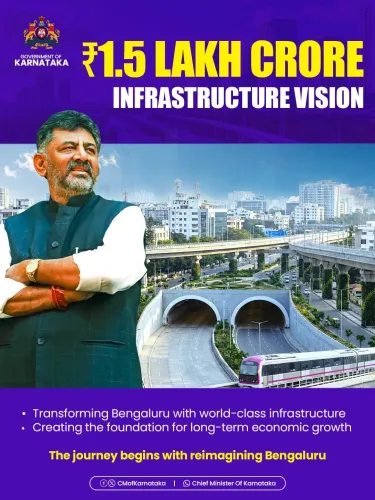
Karnataka has identified ₹1 lakh crore worth of infrastructure projects in Bengaluru focused on mobility and climate resilience.
The state's Skill Development Policy 2025-2032 has a ₹4,432 crore outlay targeting 3 million youths to support a $1 trillion economy target by 2032 .
24% of Karnataka's state budget is allocated for Scheduled Castes and Scheduled Tribes — the highest-ever in the state's history.
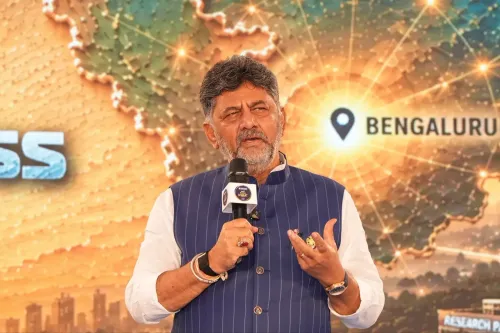
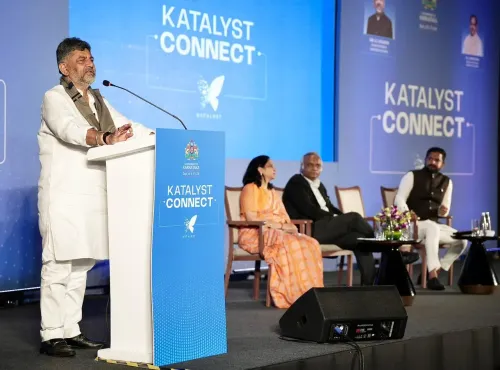
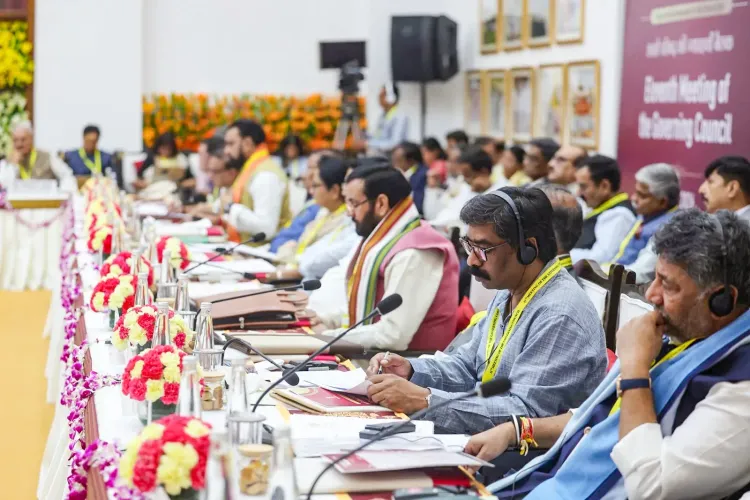
Karnataka Chief Minister D.K. Shivakumar on Thursday, 11 June used the NITI Aayog Governing Council meeting in New Delhi to press the Union Government for greater financial support, urging cooperative federalism as the cornerstone of India's development agenda. Addressing the session on 'Inclusive Human Development', Shivakumar positioned Karnataka as one of India's most productive states while flagging infrastructure deficits that he argued require Central partnership to resolve.
Karnataka's Economic Case to the Centre
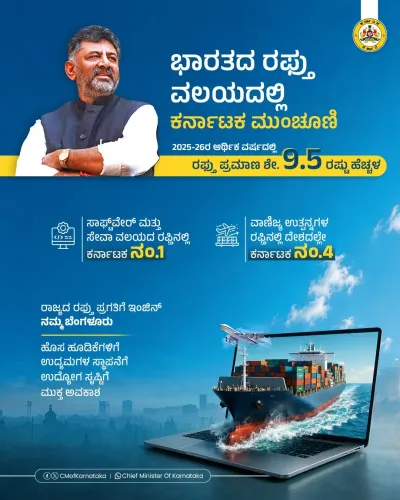
Shivakumar cited data to underline the state's fiscal weight: Karnataka, home to roughly 5 per cent of India's population, contributed 9.19 per cent of the country's Gross Domestic Product in 2025-26 and accounts for more than 40 per cent of India's services exports. Bengaluru, he noted, has emerged as South Asia's fastest-growing city, with nearly 40 per cent of its residents migrating from other states — a demographic reality he argued justifies enhanced Central funding for urban infrastructure.
'Karnataka is one of the strongest engines of India's growth story and will continue to remain a key innovation hub, human capital powerhouse and epicentre of economic growth,' Shivakumar said.
Key Demands: RRTS, Infrastructure Grants, Urban Expansion
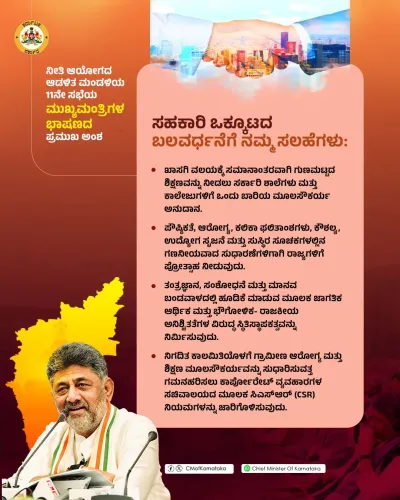
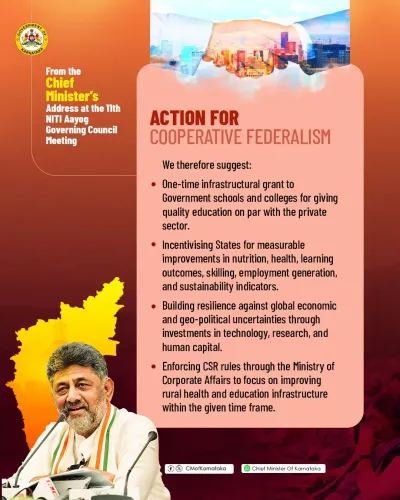
The Chief Minister renewed Karnataka's longstanding request for the sanction of Rapid Rail Transit System (RRTS) corridors linking Bengaluru with satellite towns including Mysuru, Tumakuru, Kolar, and Chikkaballapura. He also called on the Centre to provide one-time infrastructure grants for government schools and colleges, create incentive mechanisms tied to improvements in human development indicators, and strengthen urban growth centres beyond Bengaluru. The state has identified infrastructure projects worth ₹1 lakh crore in Bengaluru focused on mobility and climate resilience.
Shivakumar stressed that states must be treated as equal partners in policymaking. 'The vision of inclusive human development can only be realised through cooperative federalism, collaborative governance and collective national effort,' he said.
Welfare Schemes and Social Equity
Highlighting the Congress government's guarantee programmes, Shivakumar detailed a suite of welfare initiatives: the Shakti scheme providing free bus travel for women; Gruha Jyothi offering free electricity up to 200 units; Gruha Lakshmi delivering monthly financial assistance of ₹2,000 to women; Anna Bhagya for food security; and Yuva Nidhi supporting unemployed graduates and diploma holders. The state has also extended free bus passes to school and college students.
On social justice, he noted that 24 per cent of Karnataka's state budget has been allocated for Scheduled Castes and Scheduled Tribes — described as the highest-ever such allocation in the state's history. The government is also launching 10,000 Bharat Jodo Yuva Sanghas across rural and urban areas to promote youth participation in social and economic development.
Education, AI Platforms and Skill Development
On education, Shivakumar outlined the Karnataka Public School (KPS) model — integrated schooling from LKG to Class 12 with modern infrastructure, digital learning and bilingual instruction — with a target of 2,000 such schools by 2028. He also announced two AI-powered education platforms, Karnataka AI Vidhye and Karnataka AI Prabodha, developed in collaboration with IIT Dharwad, expected to benefit nearly 2.5 million students through digital lessons, AI-assisted assessments and intelligent tutoring.
Karnataka's Skill Development Policy 2025-2032, with an outlay of ₹4,432 crore, targets skilling three million youths to support the state's ambition of becoming a $1 trillion economy by 2032.
Innovation, Startups and KWIN City
Shivakumar flagged Karnataka's focus on emerging sectors including artificial intelligence, semiconductors, quantum technologies, biotechnology, green energy and climate technologies. The state's Startup Policy 2025-2030 aims to foster 25,000 new startups, while its Global Capability Centre (GCC) Policy targets 500 new GCCs and 3.5 lakh jobs by 2029.
He also highlighted the planned KWIN City (Knowledge, Wellbeing and Innovation City) — envisioned as a world-class economic and innovation hub covering advanced manufacturing, research and development, education, healthcare and high-quality urban infrastructure. Whether the Centre responds to Karnataka's funding demands with matching commitment remains the key question heading into the next round of Centre-state fiscal negotiations.
Point of View
Framed in the language of cooperative federalism to make refusal politically costly. Karnataka's GDP contribution numbers are genuine leverage, but the RRTS demand has been pending for years, raising the question of whether Governing Council meetings produce commitments or just optics. The state's $1 trillion economy target by 2032 is ambitious against a backdrop of fiscal stress from its own guarantee schemes, which consume significant revenue. The real test is whether the Centre responds with project sanctions or another round of committee referrals.
NationPress
19 Sept 2026
Frequently Asked Questions
What did Karnataka CM D.K. Shivakumar demand at the NITI Aayog meeting?
Shivakumar called for greater Central support including one-time infrastructure grants for government schools and colleges, sanction of RRTS corridors connecting Bengaluru with satellite towns, and financial support for ₹1 lakh crore worth of Bengaluru infrastructure projects. He also urged the Centre to treat states as equal partners in policymaking under cooperative federalism.
What is Karnataka's economic contribution to India?
Karnataka contributed 9.19% of India's GDP in 2025-26 despite accounting for only about 5% of the country's population. The state also accounts for more than 40% of India's services exports, making it one of the country's most productive economies.
What is the RRTS project Karnataka has requested?
Karnataka has sought Central sanction for Rapid Rail Transit System (RRTS) corridors linking Bengaluru with satellite towns including Mysuru, Tumakuru, Kolar, and Chikkaballapura. The request has been reiterated at the NITI Aayog Governing Council meeting on 11 June.
What are Karnataka's key welfare schemes highlighted at the meeting?
Shivakumar cited the Shakti scheme (free bus travel for women), Gruha Jyothi (free electricity up to 200 units), Gruha Lakshmi (₹2,000 monthly assistance to women), Anna Bhagya (food security), and Yuva Nidhi (support for unemployed graduates and diploma holders) as flagship Congress government guarantee programmes.
What is Karnataka's target for becoming a trillion-dollar economy?
Karnataka aims to become a $1 trillion economy by 2032. To support this, the state's Skill Development Policy 2025-2032 has an outlay of ₹4,432 crore targeting the skilling of three million youths, alongside policies to attract 500 new Global Capability Centres and foster 25,000 startups.