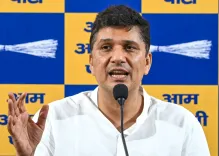
CM Shivakumar: Karnataka's growth must earn its rightful share

Synopsis
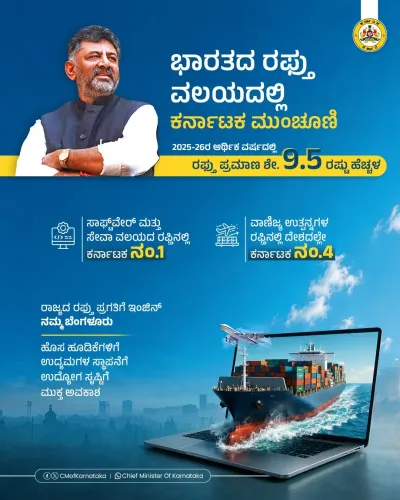
The Chief Minister's Office of Karnataka posted on 20 August 2026 highlighting CM D.K. Shivakumar's demand that Karnataka's outsized contribution to India's economic growth be matched by a proportional share of central resources, political representation, and influence in national policymaking — renewing a long-running southern states' fiscal federalism argument.
Key Takeaways
The Chief Minister's Office of Karnataka posted on 20 August 2026 reiterating CM D.K.
Shivakumar's demand for a fair share of central resources.
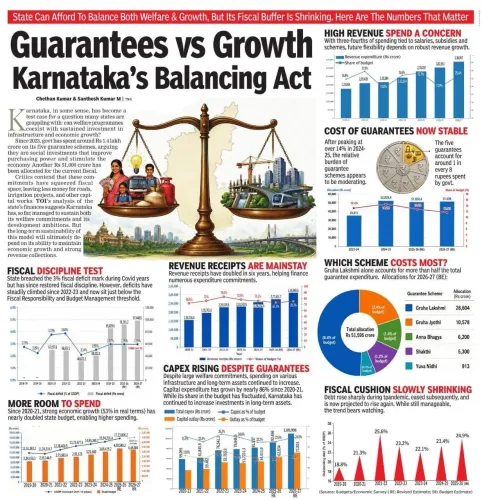
Karnataka argues its disproportionate contribution to national growth — anchored by Bengaluru's IT and services economy — must be reflected in fiscal devolution and political voice.
The 15th Finance Commission (2021) adjusted devolution criteria but southern states contend the formula still disadvantages high-performing, low-population-growth states.
Shivakumar's three-part demand covers fiscal share, political voice, and a place in shaping India's future — framing it as an engine's right, not a grievance.
Southern states have raised this argument consistently since the early 2010s ; Karnataka's renewed push signals intent to sharpen it ahead of upcoming budgetary discussions.
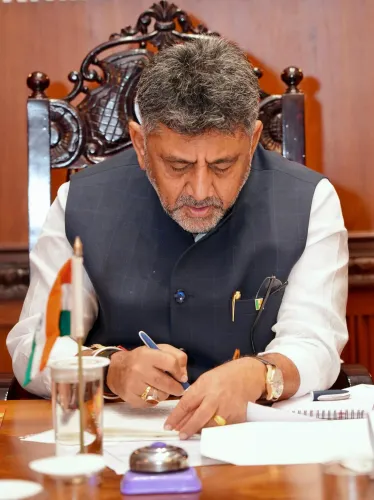
Karnataka generates outsized wealth for India — and its Chief Minister wants the nation to reckon with that arithmetic. The Chief Minister's Office of Karnataka posted on Thursday, 20 August 2026, amplifying Chief Minister Shri D.K. Shivakumar's demand that the state's economic contribution be matched by a proportional share of resources, political voice, and influence in shaping India's future.
The southern states' long-running fiscal argument
The post frames the issue in terms that resonate across the Deccan: 'India's growth story runs through the South, and Karnataka stands at the heart of that growth.' It is not a new claim — but it is one that has grown sharper with each Finance Commission cycle. Southern states, including Karnataka, have consistently argued that their success in controlling population growth and building high-productivity economies should translate into larger central transfers, not smaller ones.
The 15th Finance Commission's 2021 recommendations adjusted devolution criteria to include demographic performance and fiscal management — yet southern governments argued the formula still penalised states that had done the right things for decades. Karnataka, home to one of India's largest IT and services clusters centred on Bengaluru, sits at the sharper end of that grievance: it contributes disproportionately to national GST receipts and direct tax collections while receiving a share of central funds calibrated partly to population — a metric where it trails larger northern states.
Shivakumar's demand: voice, share, and a seat at the table
Shivakumar is reiterating a three-part ask — rightful share, voice, and place in the nation's future — that goes beyond fiscal transfers alone. It signals Karnataka's intent to be a principal actor in national economic policymaking, not merely a contributor whose surpluses are redistributed elsewhere. The framing is deliberate: 'growth story' rather than 'grievance', positioning the state as an engine demanding fair maintenance rather than a complainant seeking charity.
This posture has surfaced repeatedly in inter-state meetings and Finance Commission consultations since the early 2010s, and other southern chief ministers have echoed similar positions. Karnataka's renewed emphasis suggests the argument is being sharpened ahead of any upcoming budgetary or devolution discussions at the Centre.
The next move belongs to New Delhi — whether the Union Finance Ministry responds to Karnataka's push, and whether other southern states align publicly, will determine if this is a policy moment or a political signal that fades without follow-through.
Point of View
He is staking out a position that is harder for New Delhi to dismiss as regional parochialism. The timing matters: Finance Commission cycles and annual budget negotiations are the pressure points where such rhetoric either converts into policy gains or dissipates. If other southern chief ministers coalesce around this language, it could harden into a coordinated bloc demand — a dynamic the Centre will need to address structurally, not just rhetorically.
NationPress
5 Oct 2026
Frequently Asked Questions
Why is Karnataka demanding a larger share of central funds?
Karnataka argues that its high economic output — driven by Bengaluru's IT sector and strong GST contributions — entitles it to a larger share of central tax devolution, which is currently weighted partly by population, a metric that disadvantages states with controlled population growth.
What did the 15th Finance Commission decide about southern states?
The 15th Finance Commission's 2021 recommendations included demographic performance and fiscal management in devolution criteria, but southern states argued the formula still penalised them relative to larger-population northern states.
What is D.K. Shivakumar's demand regarding Karnataka's role in India's growth?
Chief Minister D.K. Shivakumar is demanding that Karnataka's contribution to India's growth be matched by a rightful share of central resources, a stronger political voice, and greater influence in national policymaking decisions.
Which southern states have raised the fiscal federalism issue with the Centre?
Karnataka, along with other southern states, has repeatedly raised concerns about resource-sharing formulas in Finance Commission consultations and inter-state meetings since the early 2010s, arguing that economic contribution should be a stronger basis for devolution.
What happens next after Karnataka's demand for a fair share?
The key development to watch is whether the Union Finance Ministry responds to Karnataka's position and whether other southern chief ministers publicly align with the demand, which could turn it into a coordinated regional bloc stance ahead of budgetary discussions.