Karnataka CM at Southern Zonal Council: Give South Its Due
Synopsis
At the 31st Southern Zonal Council in Mahabalipuram, Karnataka CM D.K. Shivakumar demanded equitable central fund allocation and a stronger voice for southern states, framing the region's growth as inseparable from India's own progress.
Key Takeaways
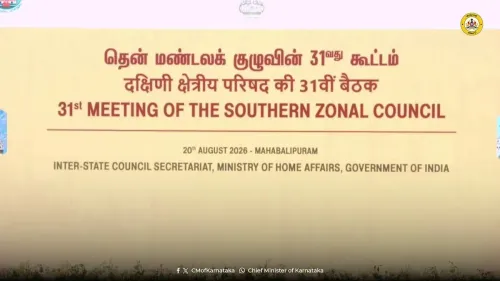
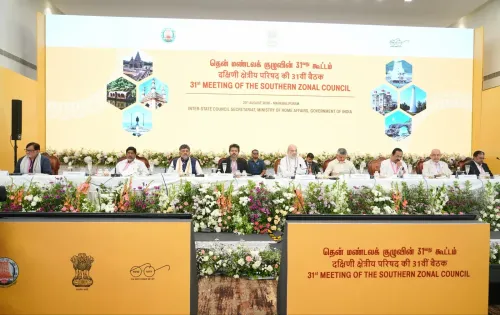
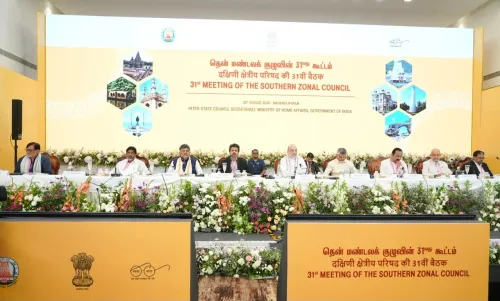
Shivakumar addressed the 31st Southern Zonal Council meeting held in Mahabalipuram, Tamil Nadu on 20 August 2026 .
He demanded equitable grant allocation and a stronger political voice for Karnataka and southern states in national decision-making.
The Southern Zonal Council was established under the States Reorganisation Act, 1956 and includes Karnataka, Tamil Nadu, Kerala, Andhra Pradesh, and Telangana .
Southern states have long argued their high tax contributions are not proportionally returned through central devolution formulas.
The meeting's significance hinges on whether a joint communiqué emerges to carry southern demands into the next Finance Commission cycle.
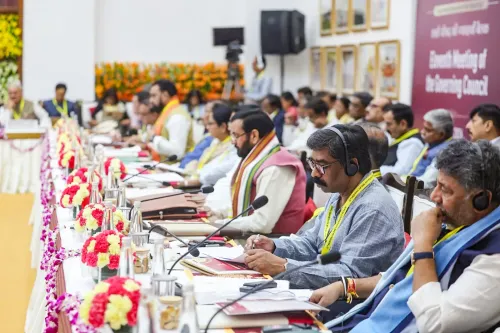
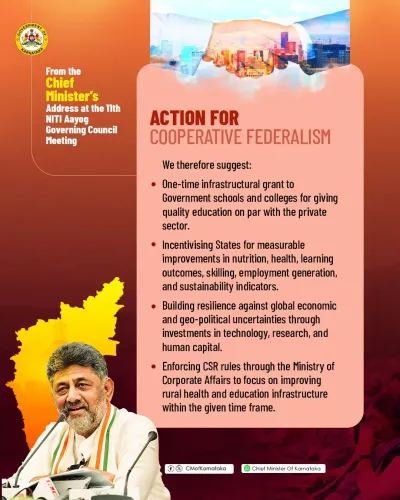
A single sentence from Mahabalipuram, Tamil Nadu, on 20 August 2026, cut through the diplomatic fog of cooperative federalism: 'When Karnataka grows stronger, South India grows stronger. When South India grows stronger, India grows stronger.' The Chief Minister's Office of Karnataka shared the highlights of Chief Minister D.K. Shivakumar's address at the 31st Southern Zonal Council meeting — and the message was pointed, collective, and unmistakably urgent.
The demand on the table at Mahabalipuram
Speaking at the coastal Tamil Nadu town that hosted the 31st Southern Zonal Council session, CM Shivakumar framed Karnataka's case not as a state grievance but as a regional claim. 'We are partners in India's development,' he said. 'We need justice in our funds, in our voice. Give us grants equitably.' The framing — funds and voice together — signals that Karnataka's concern spans both the fiscal devolution formula and political representation in national bodies.
Why southern states keep returning to this fight
The Southern Zonal Council, a statutory body created under the States Reorganisation Act, 1956, brings together Karnataka, Tamil Nadu, Kerala, Andhra Pradesh, and Telangana to resolve regional disputes and coordinate on shared concerns. For more than a decade, these five states have collectively argued that their higher per-capita income and disproportionately large tax contributions to the central pool are not adequately reflected in the devolution shares they receive back. The argument has a structural logic: states that generate more revenue and have slower population growth are penalised by formulas that weight population heavily.
Karnataka has been among the most vocal on this front, pressing its case through successive Finance Commission cycles and now amplifying it at the Zonal Council platform. Shivakumar's explicit linkage — Karnataka's strength feeding South India's strength, which in turn feeds the nation — is a deliberate reframing: not a separatist claim, but a patriotic one.
What the Zonal Council platform can and cannot deliver
Zonal Councils are consultative, not legislative — they can build consensus and forward joint positions, but the real levers sit with the Finance Commission and NITI Aayog. The significance of the Mahabalipuram meeting lies in whether the five southern states leave with a unified communiqué strong enough to shape the next devolution debate. A collective southern voice carries far more political weight in New Delhi than any single state's memorandum.
The watch-point now is whether the 31st Southern Zonal Council produces a joint resolution on tax devolution that the southern chief ministers can carry into Finance Commission consultations — turning a platform speech into a policy pressure point.
Point of View
Low-population states. By anchoring the demand in national development rather than regional grievance, Karnataka is attempting to neutralise the political cost of appearing to challenge New Delhi. The 'funds and voice' pairing is notable: it signals that Karnataka is not only seeking fiscal correction but also pushing back against the dilution of southern parliamentary representation tied to delimitation. Whether this translates into a unified southern bloc position will determine whether Mahabalipuram is remembered as a speech or a turning point.
NationPress
5 Oct 2026
Frequently Asked Questions
What is the Southern Zonal Council and who are its members?
The Southern Zonal Council is a statutory advisory body created under the States Reorganisation Act, 1956. Its members are Karnataka, Tamil Nadu, Kerala, Andhra Pradesh, and Telangana, convened to coordinate on regional issues and inter-state disputes.
What did Karnataka CM DK Shivakumar demand at the Mahabalipuram meeting?
CM D.K. Shivakumar demanded equitable central grant allocation for Karnataka and southern states, and a stronger voice in national decision-making, arguing that the region's growth is integral to India's overall development.
Why do southern states say they are not getting their fair share of central funds?
Southern states contribute a disproportionately high share of central tax revenues but have slower population growth. Finance Commission devolution formulas that weight population heavily result in these states receiving a smaller share back relative to their contributions.
Where was the 31st Southern Zonal Council meeting held?
The 31st Southern Zonal Council meeting was held in Mahabalipuram, a coastal town in Tamil Nadu, on 20 August 2026.
What happens after a Southern Zonal Council meeting — can it change central fund allocation?
Zonal Councils are consultative bodies and cannot directly alter devolution formulas. Their decisions carry weight as joint state positions that can be formally submitted to the Finance Commission or NITI Aayog, where the actual fiscal decisions are made.