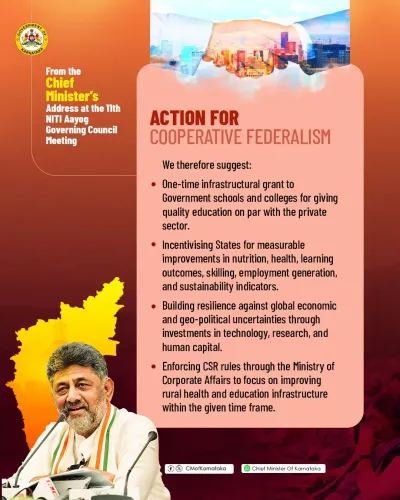
CM Shivakumar Presents Karnataka's Vision at NITI Aayog Meet
Synopsis
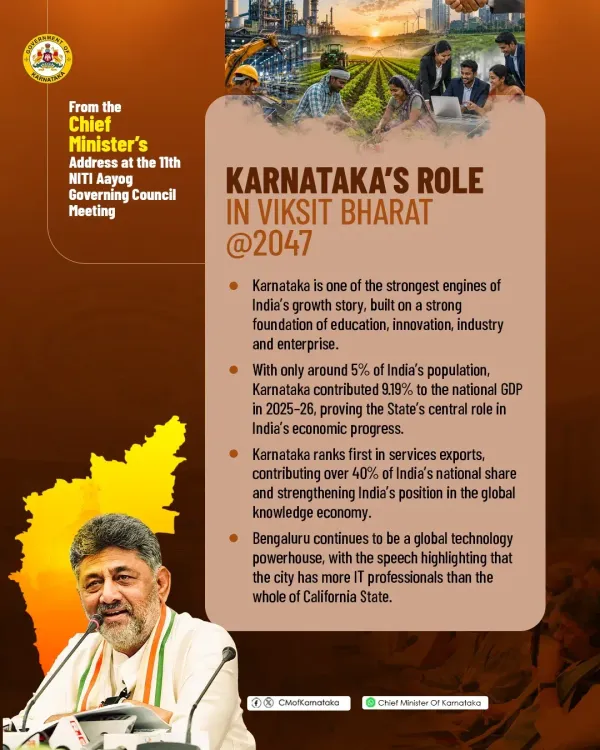
Chief Minister D.K. Shivakumar presented Karnataka's vision for inclusive human development and Viksit Bharat @ 2047 at the 11th NITI Aayog Governing Council Meeting on 11 June 2026, highlighting the state's Guarantee Model alongside education, skilling, innovation, and industry as pillars of growth.
Key Takeaways
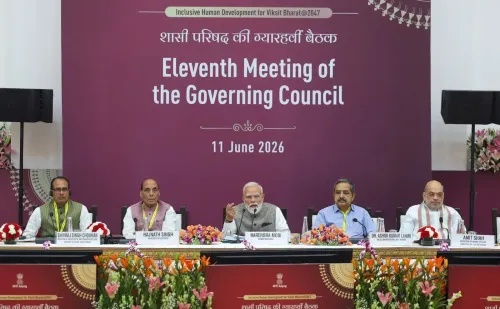
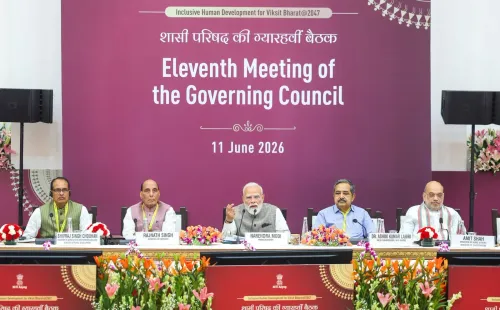
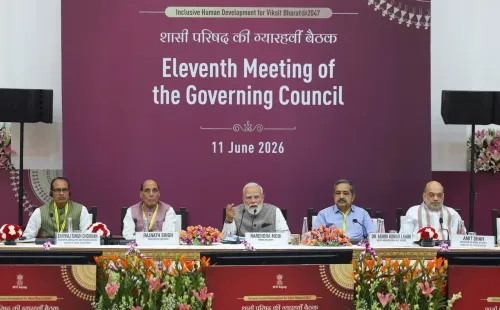
Shivakumar represented Karnataka at the 11th Governing Council Meeting of NITI Aayog on 11 June 2026 .
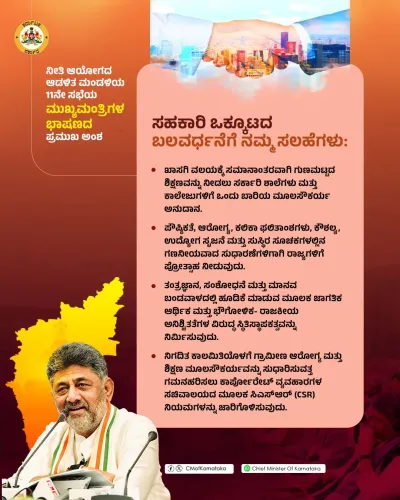
The presentation covered Karnataka's Guarantee Model , education, skilling, innovation, industry, and human capital development.
Karnataka's five welfare guarantees — launched in 2023 — formed a central pillar of the state's inclusive development argument.
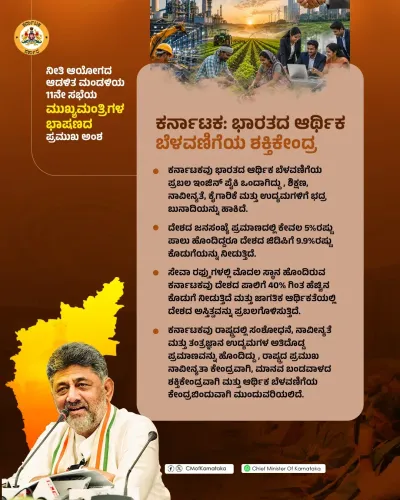
The state positioned itself as 'one of India's leading engines of growth' contributing to the Viksit Bharat @ 2047 national vision.
NITI Aayog's Governing Council , established in 2015 , is the primary cooperative federalism platform for state-centre development dialogue.
Follow-up budget allocations and skilling agreements are expected to operationalise the vision outlined at the meeting.
The Chief Minister's Office of Karnataka announced on Thursday, 11 June 2026 that Chief Minister D.K. Shivakumar presented Karnataka's vision for 'Inclusive Human Development and Viksit Bharat @ 2047' at the 11th Governing Council Meeting of NITI Aayog in New Delhi. The presentation spanned the state's Guarantee Model, education, skilling, innovation, industry, and human capital development.
Context
NITI Aayog's Governing Council was constituted in 2015 to replace the National Development Council and serves as the primary platform for structured dialogue between the Union government and Chief Ministers on national development priorities. The 11th meeting brought together state governments to align their development roadmaps with the central government's overarching Viksit Bharat @ 2047 framework. Prime Minister Narendra Modi had articulated the Viksit Bharat goal in 2022, targeting developed-economy status for India by the centenary of independence.
Policy Backdrop
Karnataka's presentation centred on what the state government calls its 'Guarantee Model' — a set of five welfare guarantees formally launched in 2023 following the Congress government's election victory, covering electricity, cooking gas cylinders, food grains, bus travel for women, and an unemployment allowance. CM Shivakumar framed these direct-welfare transfers alongside investments in education, skilling, and industrial growth, positioning them as complementary rather than competing priorities. The official post stated: 'From the Guarantee Model to education, skilling, innovation, industry and human capital development, Karnataka continues to strengthen its role as one of India's leading engines of growth.'
Karnataka has historically positioned itself as a high-growth services and manufacturing hub, anchored by the Bengaluru technology ecosystem. The state government's argument at the Governing Council was that inclusive welfare and economic productivity can be pursued simultaneously, with the state serving as a replicable model at the national level.
Stakeholders and Impact
The primary beneficiaries of the vision outlined by CM Shivakumar are Karnataka's citizens — particularly youth, students, and the industrial workforce — who stand to gain from expanded skilling programmes and welfare guarantees. By presenting these initiatives at a national forum, the state government is also signalling to investors and policymakers that Karnataka intends to remain a leading destination for industry and innovation. The broader cooperative federalism dimension means that policy frameworks demonstrated at the state level could inform central government strategy under the Viksit Bharat roadmap.
The emphasis on human capital development reflects a recurring pattern across Indian states, which are increasingly competing to attract skilled talent and manufacturing investment. Karnataka's dual focus on redistribution through guarantees and productivity through skilling and innovation represents a policy balancing act that other Congress-governed states have also attempted to replicate.
What's Next
Observers will watch for follow-up state budget allocations and new agreements on skilling and innovation that would operationalise the vision CM Shivakumar presented at the 11th Governing Council Meeting. Any convergence between Karnataka's Guarantee Model and centrally sponsored welfare schemes could emerge as a point of negotiation between the state and the Union government in the months ahead. As the official post concluded: 'A developed Karnataka will accelerate the realisation of a developed India' — a formulation that positions state-level progress as integral to, rather than separate from, the national Viksit Bharat ambition.
Point of View
Framing redistribution and growth as mutually reinforcing rather than contradictory. By anchoring the presentation to the BJP-led Centre's own Viksit Bharat @ 2047 vocabulary, the state government sidesteps ideological friction and claims space within a consensus framework. This mirrors a broader pattern among opposition-governed states that use NITI Aayog forums to demonstrate administrative credibility and compete for central resources. The emphasis on Karnataka as a 'leading engine of growth' also serves an economic diplomacy function, reinforcing the state's brand among investors and skilled workers ahead of future budget cycles.
NationPress
13 Sept 2026
Frequently Asked Questions
What did CM Shivakumar present at the NITI Aayog meeting?
CM D.K. Shivakumar presented Karnataka's vision for Inclusive Human Development and Viksit Bharat @ 2047, covering the state's Guarantee Model, education, skilling, innovation, industry, and human capital development at the 11th Governing Council Meeting of NITI Aayog on 11 June 2026.
What is the NITI Aayog Governing Council?
The NITI Aayog Governing Council is India's primary cooperative federalism platform, constituted in 2015 to replace the National Development Council. It brings together the Prime Minister and all Chief Ministers to align state development plans with national priorities.
What is Karnataka's Guarantee Model?
Karnataka's Guarantee Model is a set of five direct welfare guarantees launched in 2023 by the state's Congress government, covering free electricity up to a limit, cooking gas cylinders, food grains, free bus travel for women, and an unemployment allowance.
What is Viksit Bharat 2047?
Viksit Bharat @ 2047 is a national vision articulated by Prime Minister Narendra Modi in 2022, targeting developed-economy status for India by the centenary of its independence. NITI Aayog coordinates state-level alignment with this goal through its Governing Council meetings.
Why is Karnataka's presentation at NITI Aayog significant?
Karnataka's presentation is significant because it positions the state's welfare and growth model as a potential template for national policy, while also reinforcing the state's identity as a leading economic hub contributing directly to India's Viksit Bharat ambitions.