Gadkari attends 11th NITI Aayog Governing Council meet
Synopsis
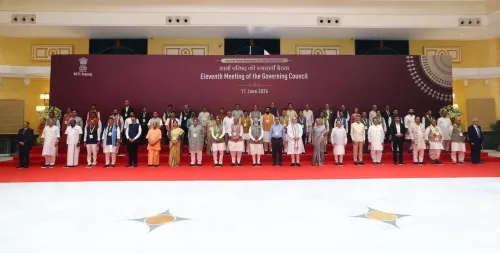
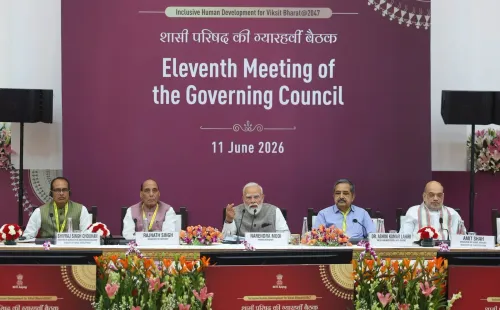
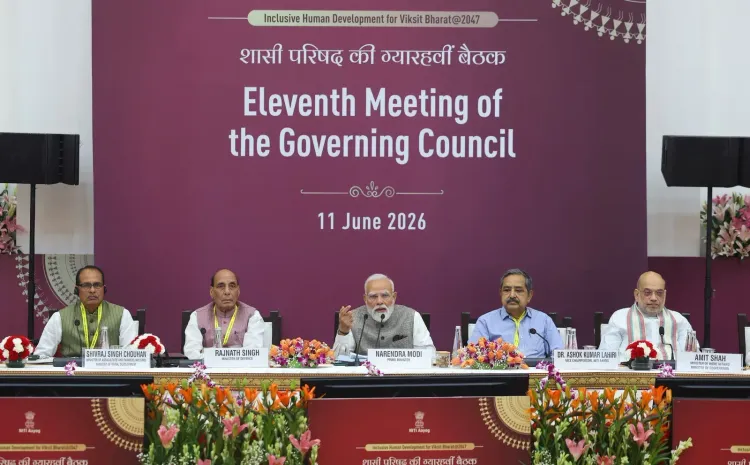
Union Minister Nitin Gadkari attended the 11th NITI Aayog Governing Council meeting chaired by PM Modi on June 11, 2026. He highlighted the body's role in outcome-driven governance, Centre-state coordination, and India's march toward the Viksit Bharat 2047 vision of becoming a fully developed nation.
Key Takeaways
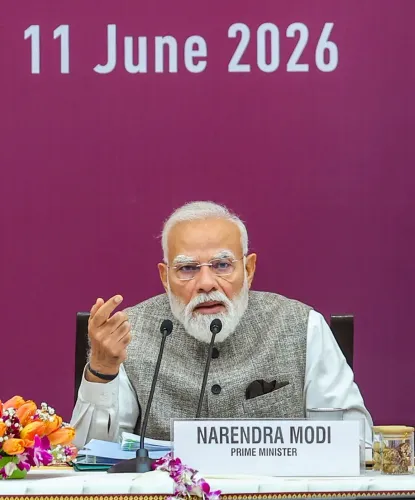
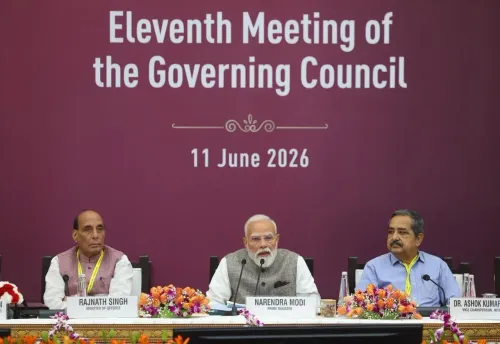
Nitin Gadkari attended the 11th NITI Aayog Governing Council meeting on June 11, 2026 , chaired by PM Narendra Modi .
NITI Aayog , established on 1 January 2015 , replaced the Planning Commission to promote cooperative federalism and outcome-driven governance.
The meeting reinforced the principle of cooperative federalism , with states and the Centre working in close coordination.
Gadkari affirmed India's trajectory as a 'leading growth engine' competing at the global level.
All deliberations are framed within the Viksit Bharat 2047 vision of transforming India into a developed nation by the centenary of independence.
State governments and central ministries are expected to align implementation plans with priorities emerging from the council session.
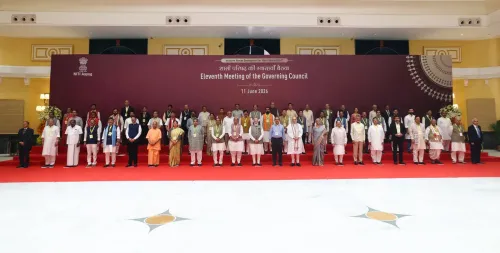
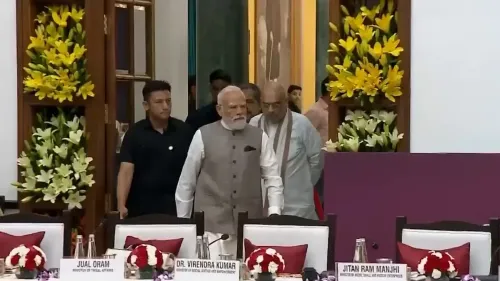
Union Road Transport and Highways Minister Nitin Gadkari attended the 11th Meeting of the Governing Council of NITI Aayog on Thursday, June 11, 2026, chaired by Prime Minister Narendra Modi. Gadkari underscored the body's role in strengthening India's development architecture through policy innovation, outcome-driven governance, and cooperative federalism. He noted that states and the Centre are working in close coordination to accelerate inclusive growth as India moves toward the Viksit Bharat 2047 vision.
Context
NITI Aayog was constituted on 1 January 2015, replacing the erstwhile Planning Commission with a mandate to foster cooperative federalism and serve as a forward-looking policy think tank. Its Governing Council comprises the Prime Minister as chairperson, Chief Ministers of all states, and Lieutenant Governors of Union Territories, making it the broadest formal platform for Centre-state policy dialogue. The first Governing Council meeting was held in February 2015, and subsequent sessions have addressed national development priorities ranging from agriculture and infrastructure to health and education.
The 11th meeting marks a continued institutionalisation of this platform under the Modi government. Gadkari's post describes the council as reinforcing a 'spirit of cooperative federalism' — the principle that the Centre and states function as equal partners rather than in a hierarchical relationship.
Policy Backdrop
The Viksit Bharat 2047 framework — India's stated ambition to become a fully developed nation by the centenary of its independence — has served as the overarching policy lens for central government planning since it was articulated. Ministries and state governments have been aligning sectoral programmes with this long-term vision, and NITI Aayog has been positioned as the nodal institution for tracking and coordinating these efforts.
Gadkari, whose ministry oversees one of the government's largest infrastructure expenditure heads, noted that India is 'not only competing globally but steadily emerging as a leading growth engine.' This framing situates domestic governance reform within the context of India's rising position in the global economic order — a recurring theme in official communications since 2014. The shift from the Planning Commission model to NITI Aayog was itself a structural signal of this orientation: away from top-down resource allocation and toward outcome-driven, incentive-linked governance.
Stakeholders and Impact
State governments are the primary stakeholders in Governing Council deliberations, as the forum is designed to give Chief Ministers a direct seat at the table alongside central ministers. The emphasis on 'empowering every region' in Gadkari's post points to a concern with balanced regional development — ensuring that growth is not concentrated in a handful of states or urban centres.
Central ministries, including Road Transport and Highways, are expected to align their flagship schemes with the priorities emerging from such council meetings. For road infrastructure specifically, this translates into state-level implementation of national highway projects, expressway corridors, and rural connectivity programmes that require active state cooperation on land acquisition and regulatory clearances.
What's Next
Follow-up action typically involves states preparing implementation roadmaps based on the agenda discussed at Governing Council meetings, with NITI Aayog tracking progress through its monitoring frameworks. Any specific directives or thematic focus areas that emerged from the 11th meeting are expected to shape inter-ministerial and Centre-state coordination in the months ahead.
As India approaches the final decades before 2047, the cadence and outcomes of NITI Aayog Governing Council meetings will be closely watched as a barometer of how effectively the cooperative federalism model translates into on-ground development gains across diverse states and regions.
Point of View
Participation in Governing Council meetings also underscores the infrastructure sector's centrality to India's development narrative. The 11th meeting's convening in 2026 suggests the forum has maintained its cadence, though the real test remains whether state-level implementation keeps pace with the ambition articulated at the council table.
NationPress
19 Sept 2026
Frequently Asked Questions
What is the NITI Aayog Governing Council?
The NITI Aayog Governing Council is the apex body of NITI Aayog, chaired by the Prime Minister and comprising Chief Ministers of all states and Lieutenant Governors of Union Territories. It serves as the principal forum for Centre-state policy dialogue on national development priorities.
When was NITI Aayog established and why?
NITI Aayog was established on 1 January 2015 to replace the Planning Commission. It was created to promote cooperative federalism, shift from top-down resource allocation to outcome-driven governance, and serve as a forward-looking policy think tank.
What is Viksit Bharat 2047?
Viksit Bharat 2047 is the Indian government's vision to transform India into a fully developed nation by 2047, the centenary of its independence. It serves as the overarching framework for long-term national planning across ministries and state governments.
What was discussed at the 11th NITI Aayog Governing Council meeting?
The specific agenda items of the 11th Governing Council meeting have not been officially detailed in the available information. Minister Gadkari's post highlighted themes of policy innovation, outcome-driven governance, cooperative federalism, and India's progress toward the Viksit Bharat 2047 vision.
How many NITI Aayog Governing Council meetings have been held?
The meeting attended by Gadkari on June 11, 2026 was the 11th such meeting. The first Governing Council meeting was held in February 2015 , shortly after NITI Aayog was constituted.