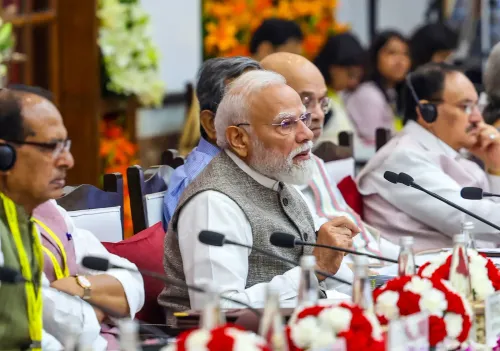
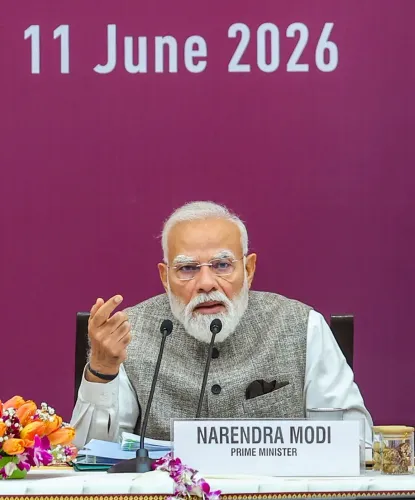
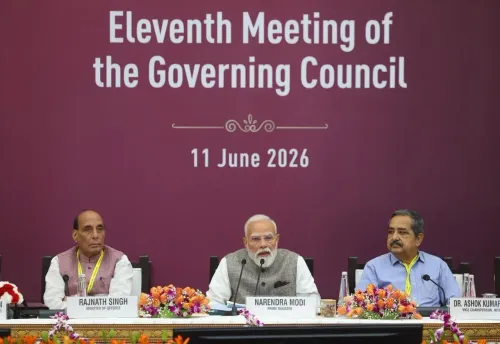
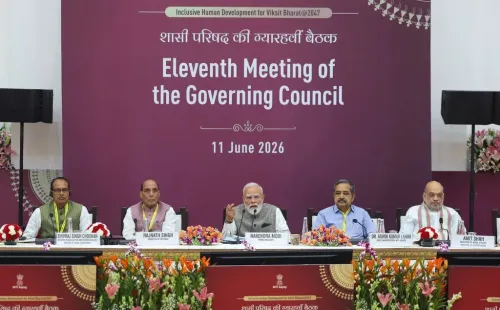
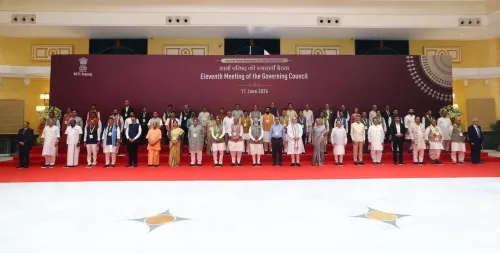
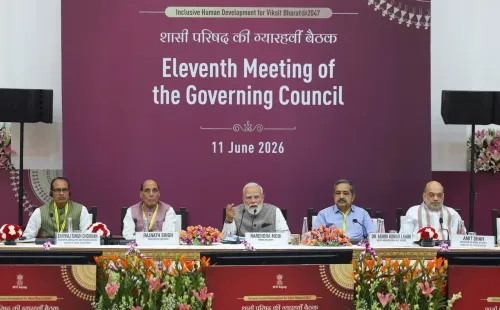
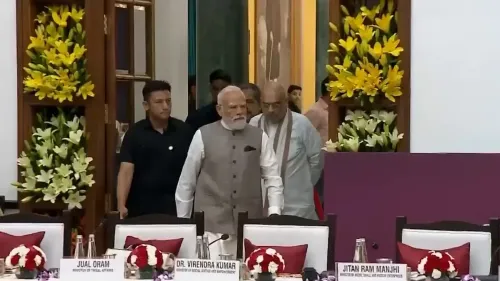
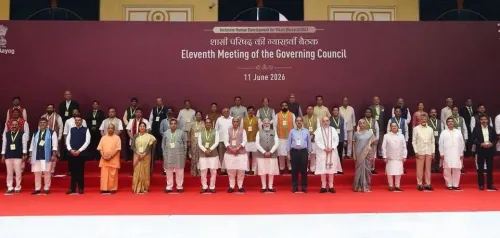
Amit Shah attends 11th NITI Aayog Governing Council meet
Synopsis
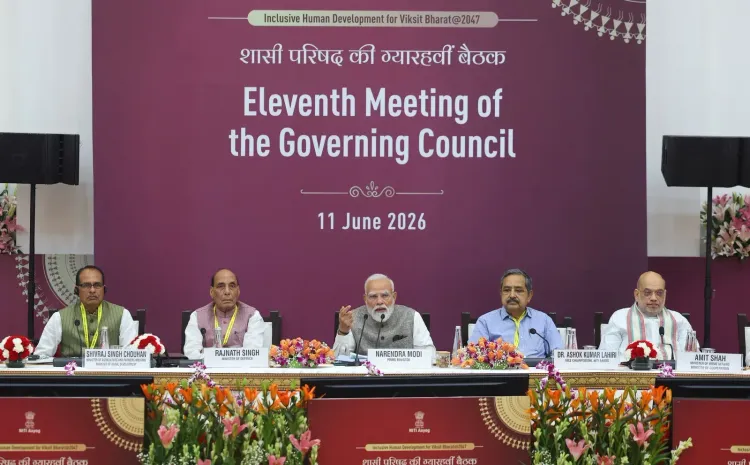
Union Home Minister Amit Shah attended the 11th NITI Aayog Governing Council meeting chaired by PM Modi on 11 June 2026. Shah hailed NITI Aayog as India's core policy engine and said India now outpaces major economies on its path to becoming a developed nation by 2047.
Key Takeaways
Amit Shah attended the 11th Governing Council meeting of NITI Aayog on 11 June 2026 .
The meeting was chaired by Prime Minister Narendra Modi , as is customary for all Governing Council sessions.
Shah described NITI Aayog as the 'prime agency strengthening India from its core' and the executor of the government's development vision.
The Viksit Bharat 2047 goal — transforming India into a developed nation by the centenary of independence — was reaffirmed as the overarching framework.
NITI Aayog was established on 1 January 2015 to replace the Planning Commission and promote cooperative federalism between the Centre and states.
State governments and central ministries are the key stakeholders whose policies are aligned through Governing Council decisions.
Union Home Minister Amit Shah on Thursday, 11 June 2026 attended the 11th meeting of the Governing Council of NITI Aayog, chaired by Prime Minister Narendra Modi. Shah described the body as the 'prime agency strengthening India from its core' and reaffirmed the government's commitment to the Viksit Bharat 2047 vision.
Context
NITI Aayog was constituted on 1 January 2015 to replace the erstwhile Planning Commission, marking a decisive shift from centralised top-down planning toward cooperative federalism. The Governing Council — its apex body — brings together the Prime Minister, Union Cabinet ministers, and Chief Ministers of all states and Union Territories to align national development priorities with ground-level implementation.
Shah, posting on X after the meeting, stated that India 'not just competes but outpaces every major economy and is propelling itself towards the goal of Viksit Bharat @ 2047.' The remark underscores the government's framing of NITI Aayog as both a strategic planner and a scorecard for India's global economic standing.
Policy Backdrop
Viksit Bharat 2047 — the official goal of transforming India into a fully developed nation by the centenary of independence — has become the organising framework for successive Governing Council meetings since it was articulated by Prime Minister Modi. The target encompasses economic growth, social equity, and technological self-reliance, with each ministry and state government expected to align its roadmap accordingly.
Since 2015, Governing Council meetings have served as the principal forum for translating long-term national goals into state-level action plans, replacing the Planning Commission's five-year plan architecture with a more dynamic, outcome-oriented approach. Central ministries and state governments are the primary stakeholders in this process, making the meetings a critical node for centre-state coordination.
Stakeholders and Impact
The Governing Council's decisions have direct implications for state governments across India, which depend on NITI Aayog's policy guidance to structure their own development expenditure and reform agendas. For central ministries, the meetings provide a unified platform to present flagship scheme progress and receive feedback from Chief Ministers on implementation bottlenecks.
Shah's characterisation of India as an economy that 'outpaces every major economy' signals the government's intent to use NITI Aayog's platform to project confidence in India's macroeconomic trajectory ahead of the 2047 milestone. The presence of senior cabinet members like the Home Minister at such meetings also reflects the whole-of-government approach the administration has sought to institutionalise.
What's Next
Subsequent Governing Council meetings are expected to drill deeper into sector-specific Viksit Bharat indicators, with NITI Aayog likely to release progress reports and state rankings on key development metrics. Parliamentary and state assembly discussions on the resulting policy recommendations are anticipated as the 2047 deadline draws closer on the political calendar.
The 11th meeting's outcomes — including any specific directives to states or new policy frameworks endorsed by the Council — are expected to be formalised in the coming weeks, setting the agenda for India's development governance through the next phase of the national plan.
Point of View
The government continues to use NITI Aayog not merely as a planning body but as a political-communication vehicle, linking technocratic governance to a nationalist developmental narrative. The Home Minister's visible participation signals cabinet-wide ownership of the development agenda, countering opposition narratives that economic governance is concentrated in a narrow circle. As the 2047 deadline becomes an increasingly prominent electoral and policy reference point, such high-profile Governing Council meetings are likely to grow in symbolic and substantive weight.
NationPress
26 Oct 2026
Frequently Asked Questions
What is the NITI Aayog Governing Council?
The NITI Aayog Governing Council is the apex body of NITI Aayog, chaired by the Prime Minister and comprising all state Chief Ministers and Union Territory Lieutenant Governors, along with Union Cabinet ministers. It meets periodically to align national development priorities with state-level implementation.
What is Viksit Bharat 2047?
Viksit Bharat 2047 is the Indian government's official goal to transform India into a fully developed nation by 2047, the centenary of independence. It covers economic growth, social equity, and technological advancement as its core pillars.
When was NITI Aayog established and why?
NITI Aayog was established on 1 January 2015 to replace the Planning Commission. The change was aimed at shifting from top-down centralised planning to a model of cooperative federalism, giving states a greater role in shaping national policy.
Why did Amit Shah attend the NITI Aayog Governing Council meeting?
As Union Home Minister and a senior Cabinet member, Amit Shah participates in Governing Council meetings as part of the whole-of-government approach to national development planning. His attendance on 11 June 2026 was for the 11th such meeting chaired by PM Modi.
What did Amit Shah say about India's economy at the NITI Aayog meeting?
Shah stated that India 'not just competes but outpaces every major economy' and is on track toward the Viksit Bharat 2047 goal, crediting NITI Aayog as the prime agency executing the government's development vision.