CM Rekha Gupta at NITI Aayog's 11th Governing Council Meet
Synopsis
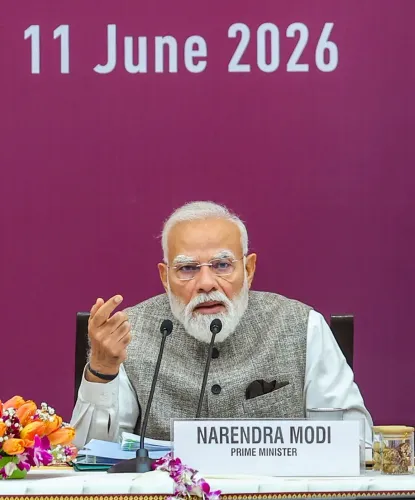
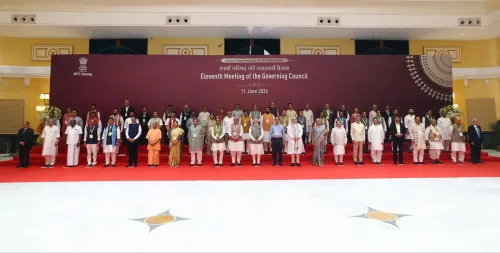
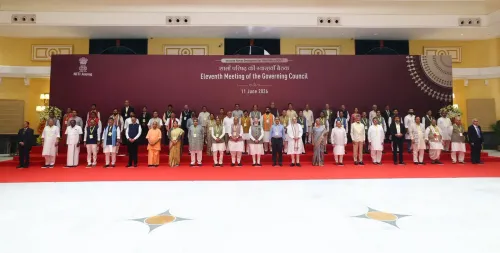
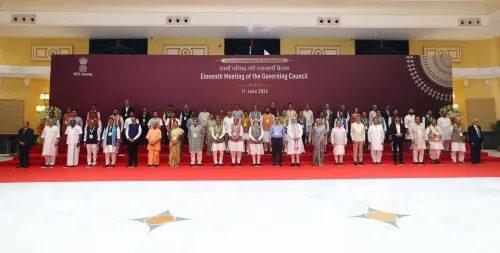
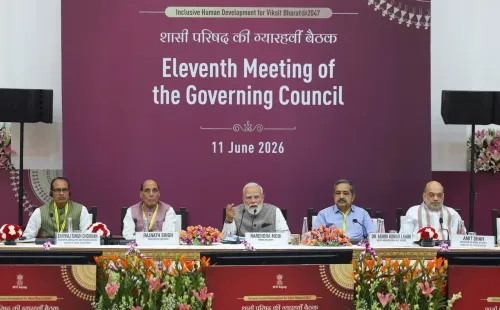
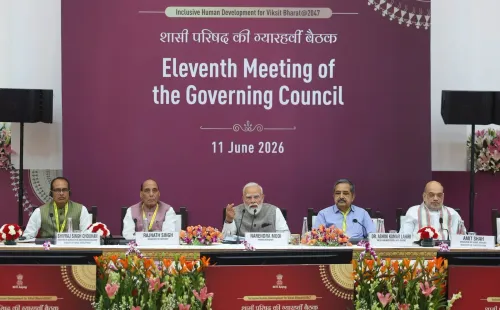
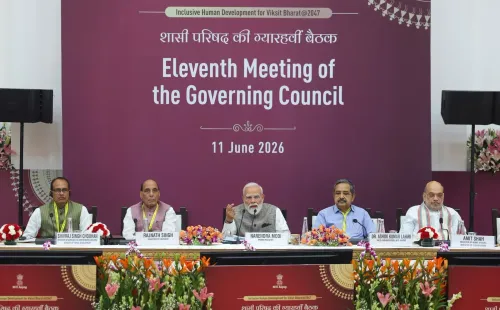
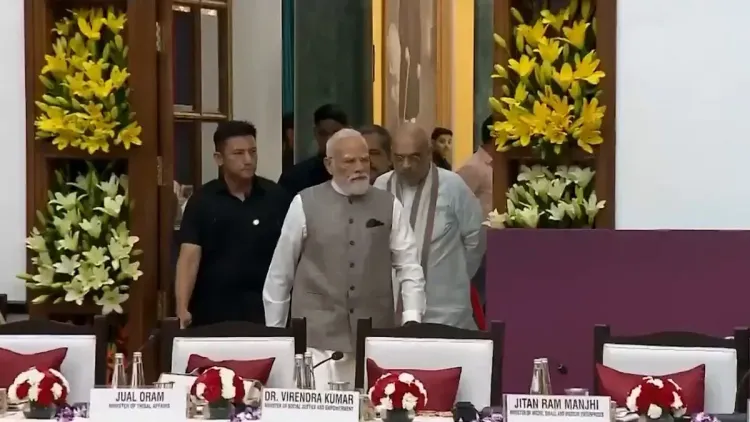
Delhi Chief Minister Rekha Gupta joined PM Narendra Modi-chaired NITI Aayog's 11th Governing Council meeting on June 11, 2026. The session brought together Union ministers and state Chief Ministers to deliberate on advancing the Viksit Bharat@2047 vision and share state-level policy experiences.
Key Takeaways
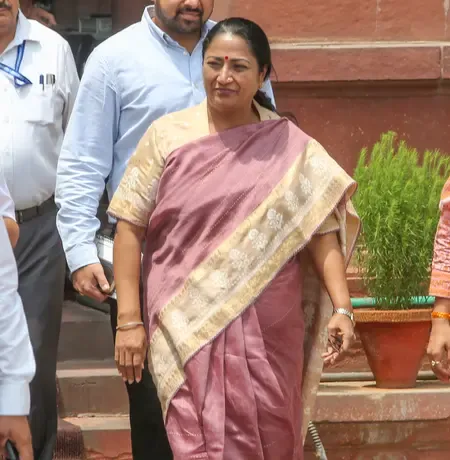
Delhi CM Rekha Gupta participated in the 11th Governing Council meeting of NITI Aayog on June 11, 2026 .
The meeting was chaired by Prime Minister Narendra Modi and attended by Union ministers and Chief Ministers from multiple states.
Core agenda centred on the Viksit Bharat@2047 goal — making India a developed nation by its centenary of independence.
The Governing Council is NITI Aayog's apex body , established in January 2015 to promote cooperative federalism.
The format enables states to exchange implementation experiences and co-shape national policy, replacing the older top-down Planning Commission model.
State-level follow-up on the meeting's deliberations is expected to reflect in upcoming budgets and central scheme guidelines.
Delhi Chief Minister Rekha Gupta on Thursday, June 11, 2026, participated in the 11th Governing Council meeting of NITI Aayog, chaired by Prime Minister Narendra Modi, alongside Union ministers and Chief Ministers from across India. The meeting served as a platform for deliberation on advancing the Viksit Bharat (Developed India) vision and for states to exchange policy experiences.
Context
Gupta, posting in Hindi on X, said she was participating in the session 'aadarniya Pradhan Mantri ji ke margdarshan mein Viksit Bharat ke sankalp ko gati dene se jude vishyon par vichar-vimarsh' — deliberating on subjects that advance the resolve of a Developed India under the Prime Minister's guidance. She described the Governing Council as 'an important platform for the exchange of experiences among states.'
The post tagged @NITIAayog and carried the hashtag #NITIAayogMeeting, confirming her physical or virtual presence at the meeting.
Policy Backdrop
NITI Aayog was established in January 2015 to replace the Planning Commission and institutionalise cooperative federalism. Its Governing Council — the body's apex tier — comprises all state Chief Ministers, Lieutenant Governors of Union Territories, and senior Union ministers, with the Prime Minister as chairperson.
The Council has met periodically since 2015 to align national development priorities with state-level execution. The 11th edition continues that tradition, with Viksit Bharat@2047 — the government's overarching goal of making India a developed nation by its centenary of independence — forming the thematic core of recent sessions.
Stakeholders and Impact
The Governing Council format is designed to move India away from top-down, Commission-era planning toward a model where states co-author national policy. Chief Ministers bring ground-level data on scheme implementation, which informs central guidelines and resource allocation decisions.
For Delhi, participation signals the Gupta administration's engagement with centrally sponsored programmes and federal planning processes. State-level follow-through on commitments made in such meetings typically surfaces in subsequent budget allocations and scheme roll-outs.
What's Next
Outcomes of the 11th Governing Council meeting are expected to shape the next cycle of Centre-state coordination on flagship development schemes. Observers will watch for any new central guidelines, revised fund-sharing formulas, or joint initiatives that emerge in the weeks following the session.
Gupta's participation also sets the stage for Delhi-specific follow-up actions, particularly as the capital's administration navigates its unique governance structure under both elected and central oversight.
Point of View
Signalling the Delhi BJP government's alignment with the Centre's Viksit Bharat development framework. For a Chief Minister whose administration operates under the capital's unique dual-authority structure, visibility at such high-level federal forums carries political as well as administrative weight. The Governing Council format itself represents a deliberate institutional choice — one that privileges collaborative federalism over centralised planning, giving state governments a formal voice in national policy design. How Delhi translates the meeting's deliberations into on-ground scheme implementation will be the more consequential test.
NationPress
21 Sept 2026
Frequently Asked Questions
What is the NITI Aayog Governing Council?
The NITI Aayog Governing Council is the apex body of NITI Aayog, comprising all state Chief Ministers, Lieutenant Governors of Union Territories, and senior Union ministers, chaired by the Prime Minister. It meets periodically to align national development priorities with state-level action.
What was discussed at the 11th NITI Aayog Governing Council meeting?
The 11th Governing Council meeting, held on June 11, 2026, focused on advancing the Viksit Bharat@2047 agenda and enabling states to share their policy implementation experiences. Specific agenda outcomes have not been officially detailed.
Who chaired the 11th NITI Aayog Governing Council meeting?
Prime Minister Narendra Modi chaired the 11th Governing Council meeting of NITI Aayog, as is standard practice since the body's establishment in 2015.
What is Viksit Bharat@2047?
Viksit Bharat@2047 is the Indian government's long-term development goal of transforming India into a fully developed nation by 2047, the centenary of its independence. It serves as the thematic anchor for recent NITI Aayog Governing Council sessions.
Why did Delhi CM Rekha Gupta attend the NITI Aayog meeting?
As Chief Minister of Delhi, Rekha Gupta is a member of the NITI Aayog Governing Council. Her attendance on June 11, 2026 was part of the standard participation of state Chief Ministers in this federal policy coordination forum.