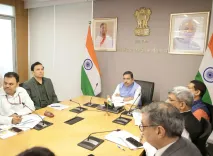
CM Dhami joins NITI Aayog meet chaired by PM Modi
Synopsis
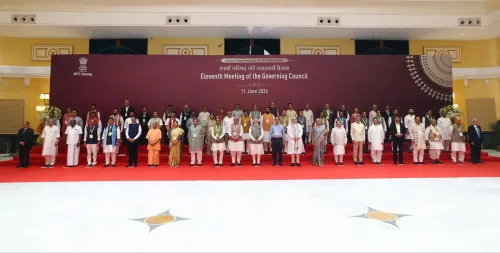
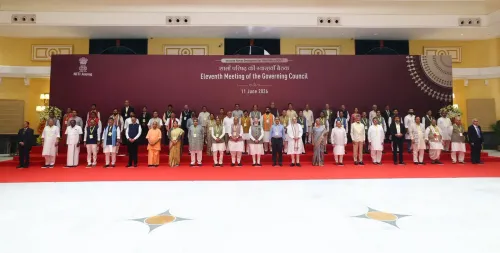
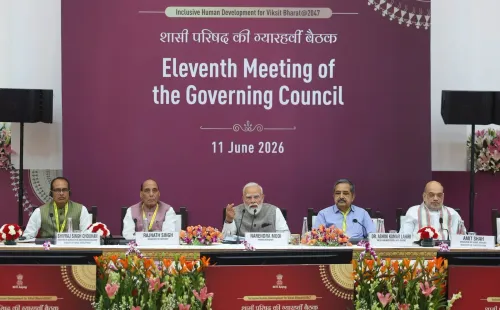
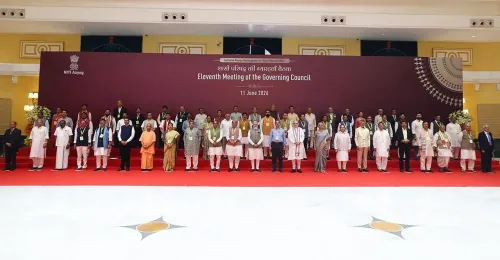
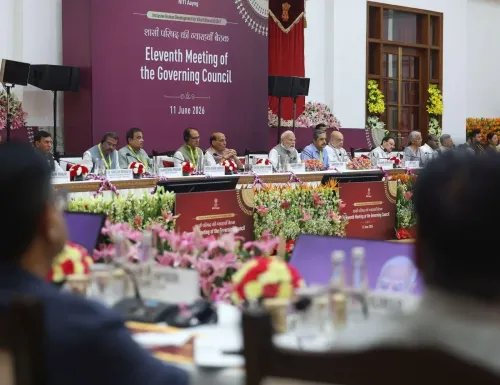
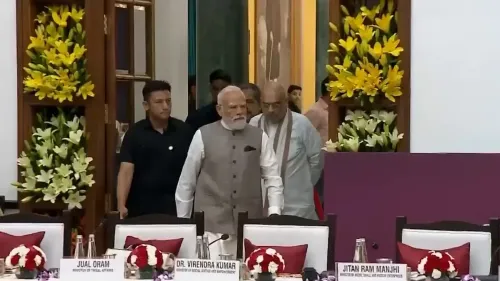
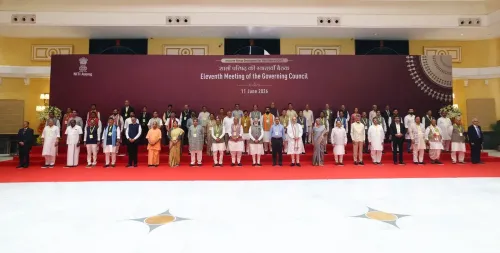
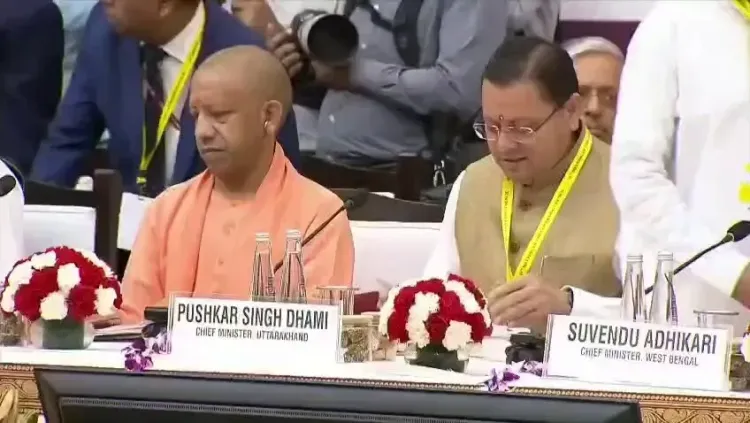
Uttarakhand Chief Minister Pushkar Singh Dhami is participating in the NITI Aayog Governing Council meeting in New Delhi on 11 June 2026, chaired by Prime Minister Narendra Modi and attended by Union Ministers and Chief Ministers from across India.
Key Takeaways
Uttarakhand Chief Minister Pushkar Singh Dhami is attending the NITI Aayog Governing Council meeting in New Delhi on 11 June 2026 .
The meeting is chaired by Prime Minister Narendra Modi and includes Union Ministers and Chief Ministers from across India.
Union Home Minister Amit Shah is among the senior central government figures present, as tagged by Dhami in his post.
NITI Aayog was established in January 2015 to replace the Planning Commission and institutionalise Centre-state policy dialogue.
The Governing Council is the principal formal venue for aligning state governments with national development priorities and flagship schemes.
Outcome documents and follow-up action points from the meeting are expected to influence state-level policy and resource allocation.
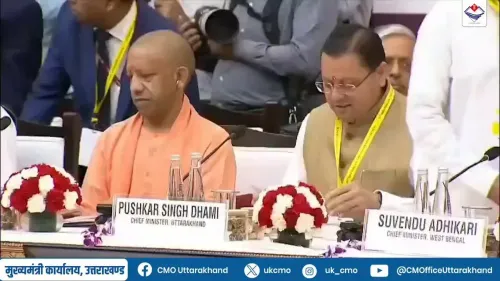
Uttarakhand Chief Minister Pushkar Singh Dhami is attending the NITI Aayog Governing Council meeting in New Delhi on Thursday, 11 June 2026, chaired by Prime Minister Narendra Modi and attended by Union Ministers and Chief Ministers from across the country.
Dhami posted on X confirming his participation, writing in Hindi: 'नई दिल्ली में आदरणीय प्रधानमंत्री श्री नरेंद्र मोदी जी की अध्यक्षता में आयोजित नीति आयोग की बैठक में माननीय केंद्रीय मंत्रीगणों एवं विभिन्न राज्यों के माननीय मुख्यमंत्रीगणों के साथ सहभागिता कर रहा हूं।' ('I am participating in the NITI Aayog meeting organised in New Delhi under the chairmanship of respected Prime Minister Shri Narendra Modi Ji, along with the honourable Union Ministers and Chief Ministers of various states.')
Context
NITI Aayog — the National Institution for Transforming India — was established by a Cabinet resolution in January 2015 to replace the Planning Commission and serve as the principal platform for Centre-state policy coordination. Its Governing Council, chaired by the Prime Minister, includes all state Chief Ministers and Lieutenant Governors of Union Territories. Union Home Minister Amit Shah is among the senior central government figures tagged in Dhami's post, indicating his presence at the meeting.
The Governing Council format was designed to institutionalise regular dialogue between the Union government and states on national development priorities, flagship schemes, and fiscal planning. It represents the current dispensation's stated model of cooperative federalism.
Policy Backdrop
Periodic Governing Council meetings have become the primary formal venue for the Prime Minister to align state governments with centrally sponsored schemes and long-term development goals. These sessions typically bring together the country's top political and administrative leadership to review progress on national targets and discuss state-level implementation challenges.
For a hill state like Uttarakhand, such meetings carry particular significance given the state's dependence on central transfers and its focus on infrastructure, tourism, and disaster resilience — sectors that frequently feature in national policy discussions.
Stakeholders and Impact
The meeting draws Chief Ministers from states governed by parties across the political spectrum, making it one of the few formal arenas where the Centre and opposition-ruled states sit at the same table. The outcomes of such sessions can shape resource allocation, inter-ministerial coordination, and the pace of scheme rollout at the state level.
For Uttarakhand, any decisions or directives emerging from the meeting could influence priorities in infrastructure development, the Char Dham pilgrimage corridor, and ongoing urban and rural welfare programmes that the state government has been pursuing under Chief Minister Dhami.
What's Next
Outcome documents, communiqués, or state-specific action points from the meeting will be closely watched by state governments and policy observers. Any follow-up announcements by the Prime Minister's Office or individual Chief Ministers in the coming days will indicate the direction of Centre-state priorities for the period ahead.
The Uttarakhand government is expected to use the platform to press its case for enhanced central support on key development and disaster-management fronts, with Chief Minister Dhami's direct participation underscoring the state's engagement with the national policy process.
Point of View
And a hill state like Uttarakhand — heavily reliant on central transfers — has strong institutional incentives to maintain visible engagement. Dhami's tagging of Amit Shah alongside the NITI Aayog handle also reflects the dual track of political and administrative coordination that characterises Centre-state relations in the current era. The meeting's outcomes will be a barometer of how national development targets are being recalibrated heading into the latter half of the decade.
NationPress
26 Oct 2026
Frequently Asked Questions
What is the NITI Aayog Governing Council meeting?
The NITI Aayog Governing Council meeting is a high-level forum chaired by the Prime Minister that brings together all state Chief Ministers and Union Territory Lieutenant Governors to align national development priorities with state-level implementation. It was instituted after NITI Aayog replaced the Planning Commission in January 2015.
Why is CM Pushkar Singh Dhami in New Delhi on 11 June 2026?
Uttarakhand Chief Minister Pushkar Singh Dhami is in New Delhi to attend the NITI Aayog Governing Council meeting chaired by Prime Minister Narendra Modi, alongside Union Ministers and Chief Ministers from across the country.
Who chairs the NITI Aayog Governing Council?
The Prime Minister of India chairs the NITI Aayog Governing Council. Prime Minister Narendra Modi has chaired all Governing Council meetings since NITI Aayog was established in 2015.
What replaced the Planning Commission in India?
NITI Aayog — the National Institution for Transforming India — replaced the Planning Commission following a Cabinet resolution in January 2015, with a mandate to promote cooperative federalism and serve as a policy think tank for the Union and state governments.
What is the significance of NITI Aayog meetings for states like Uttarakhand?
For states like Uttarakhand, which depend significantly on central fiscal transfers and support for infrastructure and disaster management, NITI Aayog Governing Council meetings are important opportunities to engage directly with the Prime Minister and Union Ministers on development priorities and resource allocation.