Pralhad Joshi previews India's mega Renewable Energy Summit 2026
Synopsis
Union Minister Pralhad Joshi reviewed preparations for the Bharat Renewable Energy Summit & Expo 2026, scheduled 2-5 November in New Delhi, promising 100+ sessions, 75,000 participants, and a global platform to accelerate India's clean energy and AatmaNirbhar ambitions.
Key Takeaways
Bharat Renewable Energy Summit & Expo 2026 is scheduled from 2 to 5 November 2026 in New Delhi.
The event is expected to host over 75,000 participants and more than 100 sessions , making it one of the world's largest renewable energy gatherings.
Union Minister Pralhad Joshi chaired a preparations review at Atal Akshay Urja Bhawan on 26 October 2026 .
The summit is explicitly linked to India's AatmaNirbhar Bharat clean-energy self-reliance goal and the 500 GW non-fossil fuel target by 2030 .
Participants will include global leaders, investors, innovators, and young professionals focused on the future of clean energy.
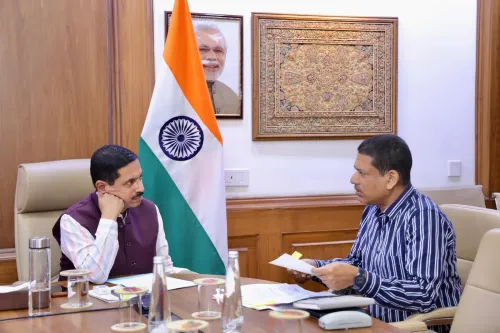
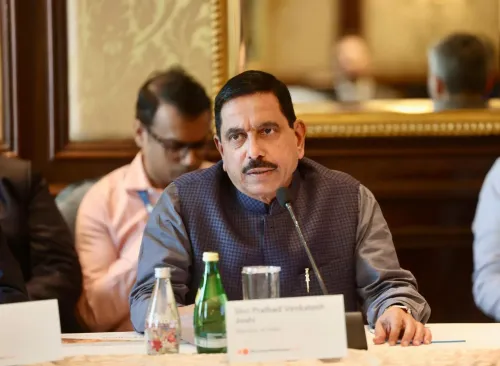
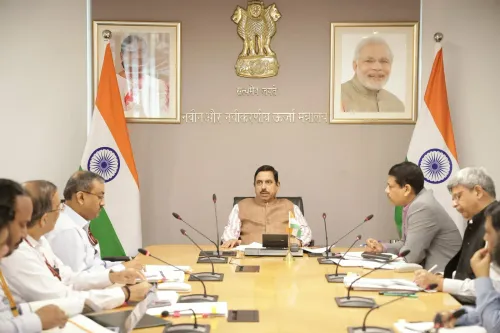
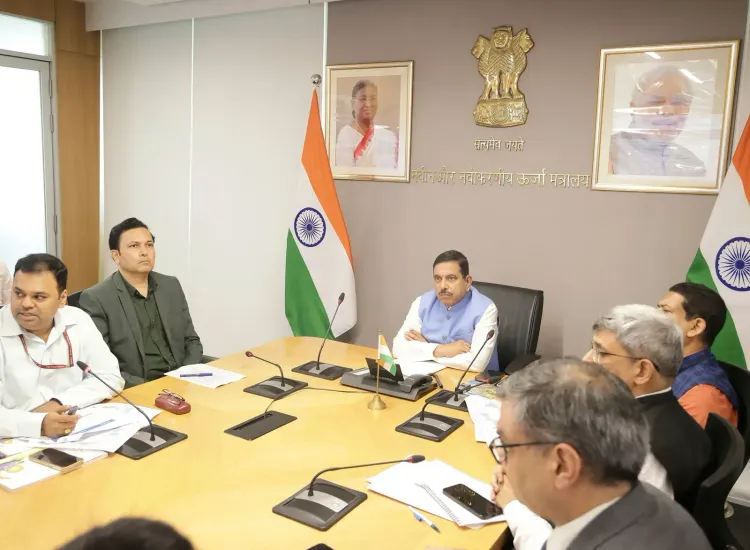
New Delhi is counting down to what could be one of the biggest clean-energy gatherings on the planet. Union Minister for New and Renewable Energy Pralhad Joshi chaired a preparations review meeting at Atal Akshay Urja Bhawan, the Ministry's New Delhi headquarters, on Monday, 26 October 2026, signalling that the government is moving the Bharat Renewable Energy Summit & Expo 2026 into final-stage readiness.
Four days, 100+ sessions, 75,000 expected voices
The summit is scheduled from 2 to 5 November 2026 in New Delhi. Joshi's post puts the scale in sharp relief: more than 100 sessions and upward of 75,000 expected participants — global leaders, industry players, investors, innovators, and young professionals all under one roof to map the future of clean energy. That is not a conference. That is a mobilisation.
Joshi called on 'all stakeholders to participate and be part of this landmark gathering as India advances towards a cleaner and AatmaNirbhar energy future' — threading the summit directly into the government's signature self-reliance doctrine.
Why New Delhi, why now
India's renewable energy ambitions are not new, but the urgency has sharpened. At COP26 in 2021, the government committed to 500 GW of non-fossil fuel capacity by 2030 and net-zero emissions by 2070 — targets that require a sustained flood of domestic investment and international technology partnerships, not a trickle. India has also been a co-anchor of the International Solar Alliance, launched with France in 2015, precisely to pull global capital toward solar-rich developing nations.
High-profile summits are a proven accelerator in this playbook. They create a compressed window for bilateral commitments, investment pledges, and policy signals that would otherwise take months to negotiate. The Ministry of New and Renewable Energy (@mnreindia), operating out of Atal Akshay Urja Bhawan, has steadily used such platforms to benchmark India's capacity additions against global peers and attract technology tie-ups.
AatmaNirbhar energy: the frame behind the summit
The phrase Joshi chose — 'AatmaNirbhar energy future' — is deliberate. The AatmaNirbhar Bharat initiative, launched in 2020, placed domestic clean-energy manufacturing at the centre of India's industrial sovereignty argument. Every solar panel produced locally, every green-hydrogen electrolyser assembled in an Indian factory, chips away at the import dependency that has long made energy security a vulnerability rather than a strength. The summit is, in that sense, as much a domestic industrial pitch as it is an international investment forum.
What to watch as November 2 approaches
The immediate calendar is dense. Between now and the opening session, the government is expected to release capacity-addition milestones and potentially unveil bilateral clean-energy commitments with participating nations. Watch for announcements on green hydrogen corridors, offshore wind policy, and solar manufacturing incentives — the three areas where India's 2030 targets still carry the widest execution gap. The summit's investor-facing sessions will be the test of whether global capital translates pledges on stage into signed term sheets.
India has positioned itself as the indispensable emerging-market partner in the global energy transition. New Delhi in early November will be the room where that positioning is either reinforced or questioned.
Point of View
Curated forums to compress investment cycles and signal policy continuity to global capital. Joshi's invocation of 'AatmaNirbhar energy' is a calculated dual message — reassuring domestic industry of continued localisation incentives while telling international investors that India's supply chain is maturing and reducing off-take risk. With the 2030 capacity targets now roughly four years away, this summit functions as a mid-course accountability moment: can India demonstrate the manufacturing depth, grid infrastructure, and regulatory clarity to justify the scale of commitments it has already made on the world stage?
NationPress
26 Oct 2026
Frequently Asked Questions
What is the Bharat Renewable Energy Summit and Expo 2026?
The Bharat Renewable Energy Summit and Expo 2026 is a major international clean-energy conference organised by India's Ministry of New and Renewable Energy, scheduled from 2 to 5 November 2026 in New Delhi, expecting over 75,000 participants and more than 100 sessions.
Where will the Bharat Renewable Energy Summit 2026 be held?
The summit will be held in New Delhi from 2 to 5 November 2026.
What is India's renewable energy target by 2030?
India committed at COP26 in 2021 to achieving 500 GW of non-fossil fuel energy capacity by 2030 and reaching net-zero emissions by 2070.
What is Atal Akshay Urja Bhawan?
Atal Akshay Urja Bhawan is the New Delhi headquarters of India's Ministry of New and Renewable Energy, where Minister Pralhad Joshi reviewed summit preparations on 26 October 2026.
What is AatmaNirbhar Bharat in the context of renewable energy?
AatmaNirbhar Bharat, launched in 2020, is India's self-reliance initiative; in the energy sector it emphasises domestic manufacturing of solar panels, green hydrogen equipment, and other clean-energy technologies to reduce import dependency and strengthen energy security.