Owaisi Slams SP Over Muslim MLAs' Silence in 2013 Muzaffarnagar Riots
Synopsis
AIMIM president Asaduddin Owaisi questioned the Samajwadi Party on 26 October 2026, asking why its 47 Muslim MLAs could not protect Muslim daughters during the devastating Muzaffarnagar communal riots of September 2013, sharpening his critique of vote-bank politics without minority protection.
Key Takeaways
AIMIM president Asaduddin Owaisi posted a sharp attack on the Samajwadi Party on 26 October 2026 .
He questioned why the party's 47 Muslim MLAs failed to protect Muslim communities during the Muzaffarnagar riots of September 2013 .
The Muzaffarnagar riots caused dozens of deaths, hundreds of injuries, and mass displacement under an SP-governed Uttar Pradesh .
The SP formed the UP government after winning the 2012 assembly elections , with significant Muslim voter support.
Owaisi's critique forms part of AIMIM's broader political argument that 'secular' parties extract Muslim votes without delivering minority security.
No public response from the Samajwadi Party had emerged at the time of publication.
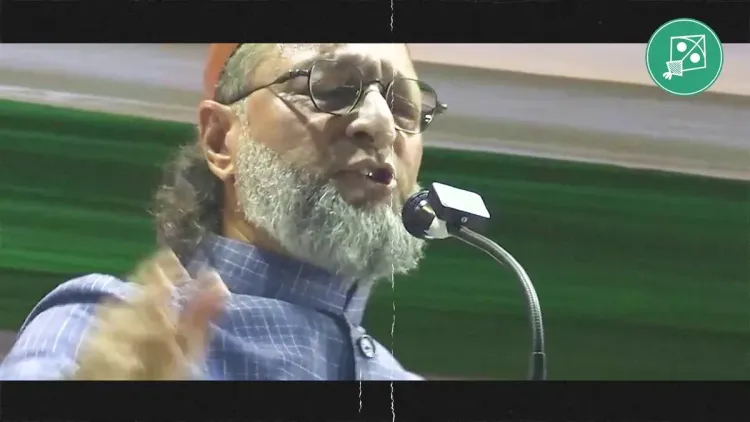
When communal fires swept through Muzaffarnagar in September 2013, daughters were at risk and a government with dozens of Muslim legislators was in power — yet, AIMIM president Asaduddin Owaisi asks, where were those legislators? In a pointed post on Monday, 26 October 2026, Owaisi trained his sharpest criticism on the Samajwadi Party, questioning what 47 Muslim MLAs in the SP fold actually delivered for the community when it needed them most.
Owaisi's post in Hindi cuts straight to the charge: 'सपा के 47 मुस्लिम विधायक होने के बावजूद मुज़फ़्फ़रनगर फसाद में हम अपनी बेटियों की हिफ़ाज़त नहीं कर सके, कहाँ थे विधायक?' — 'Despite the SP having 47 Muslim MLAs, we could not protect our daughters during the Muzaffarnagar riots. Where were the MLAs?'
What the 2013 Muzaffarnagar Riots Revealed About Power Without Protection
The Muzaffarnagar riots of September 2013 remain one of the most devastating episodes of communal violence in Uttar Pradesh in recent decades. Dozens were killed, hundreds injured, and tens of thousands displaced — all while the Samajwadi Party, which had swept to power in the 2012 UP assembly elections on a platform that drew heavily on Muslim votes, sat in government in Lucknow. The violence exposed a brutal gap between electoral arithmetic and on-the-ground protection.
Owaisi's framing is deliberate and surgical. The number — 47 Muslim MLAs — is deployed not as a point of pride but as an indictment. Representation without accountability, he implies, is worse than uselessness; it is a false promise that left communities defenceless at the worst possible moment.
AIMIM's Consistent Challenge to 'Secular' Vote-Bank Politics
This is not a one-off volley. Owaisi and AIMIM have built a sustained political argument across Uttar Pradesh, Bihar, and beyond: that parties claiming secular credentials routinely mobilise Muslim votes without delivering minority security. The Muzaffarnagar riots under an SP government are the sharpest exhibit in that argument. Every time SP courts Muslim voters ahead of an UP election, Owaisi returns to 2013 — and the question of where those dozens of Muslim legislators were when their constituents needed them.
The Hyderabad MP's intervention also lands at a politically sensitive moment. With Uttar Pradesh always on the political horizon and AIMIM working to expand its footprint in the state, the post functions simultaneously as historical accountability and forward-looking positioning — a reminder to Muslim voters that numbers on a party roster mean nothing without the will to act.
The SP has yet to publicly respond to the post. But Owaisi has ensured the question is, once again, on the table: in Indian democracy, does community representation translate into community protection — or is the vote simply the transaction, with safety an afterthought?
Point of View
Which unfolded under SP governance despite a large contingent of Muslim legislators in the party. By anchoring the critique in the visceral image of 'our daughters' left unprotected, Owaisi shifts the frame from electoral arithmetic to moral accountability. The intervention reflects a broader pattern in which AIMIM attempts to fracture the SP's traditional Muslim-Yadav coalition by asking Muslim voters whether representation without protection is worth anything. With UP politics perpetually in motion, the timing suggests Owaisi is keeping this wound open well ahead of the next electoral cycle.
NationPress
26 Oct 2026
Frequently Asked Questions
What did Asaduddin Owaisi say about the Samajwadi Party and Muzaffarnagar riots?
Owaisi questioned why the Samajwadi Party's 47 Muslim MLAs could not protect Muslim communities, especially women and girls, during the Muzaffarnagar communal riots of September 2013, when SP was in government in Uttar Pradesh.
When did the Muzaffarnagar riots happen and which government was in power?
The Muzaffarnagar riots took place in September 2013, during the tenure of the Samajwadi Party government in Uttar Pradesh, which had come to power after winning the 2012 state assembly elections.
Why does Owaisi keep raising the Muzaffarnagar riots against the SP?
Owaisi uses the Muzaffarnagar riots as the central exhibit in AIMIM's argument that parties like SP mobilise Muslim votes by claiming secular credentials but fail to protect Muslim communities when communal violence actually occurs.
What is AIMIM's political position in Uttar Pradesh?
AIMIM, led by Owaisi, is working to expand its presence in Uttar Pradesh by positioning itself as a party that genuinely prioritises Muslim minority security, directly challenging the SP's traditional hold over Muslim voters in the state.
Did the Samajwadi Party respond to Owaisi's post about the Muzaffarnagar riots?
No public response from the Samajwadi Party to Owaisi's 26 October 2026 post had emerged at the time of publication.