Owaisi flags falling Muslim representation in legislatures post-2014
Synopsis
AIMIM president Asaduddin Owaisi on 18 June 2026 flagged a continuous post-2014 decline in Muslim representation in Parliament and state assemblies, invoking Article 38 of the Constitution to argue that political justice — a fair share in decision-making for all communities — is the foundation of social and economic justice.
Key Takeaways
AIMIM president Asaduddin Owaisi posted on 18 June 2026 highlighting falling Muslim representation in legislatures since 2014 .
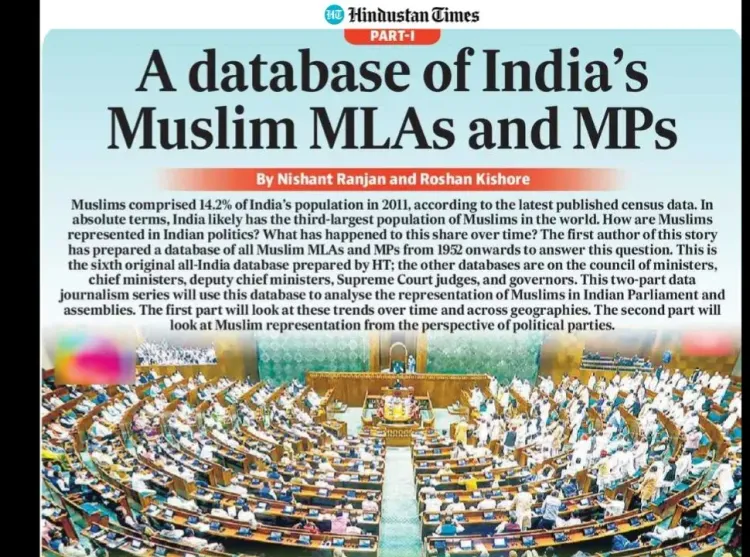
Muslims constitute approximately 14 per cent of India's population, a share Owaisi argues is not reflected in elected bodies.
Owaisi invoked Article 38 of the Constitution, which directs the state to promote social, economic, and political justice.
The Sachar Committee (2006) had previously documented Muslim under-representation in elected institutions as part of a broader socio-economic study.
Owaisi argued that without political justice — meaning a fair share in decision-making — social and economic justice cannot be achieved.
The 2029 Lok Sabha elections and upcoming state polls will be the next test of whether Muslim candidate nominations increase.
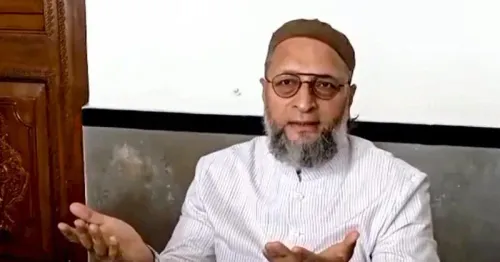
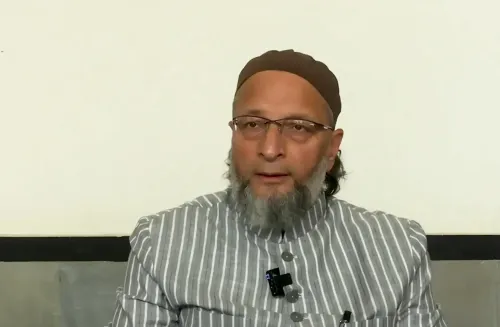
AIMIM president Asaduddin Owaisi on Thursday, 18 June 2026, highlighted what he described as a continuous decline in Muslim representation in Parliament and state legislative assemblies since 2014, invoking Article 38 of the Constitution to argue that political justice is a prerequisite for social and economic justice.
Context
Owaisi shared what he called 'a very important piece' on Muslim legislative representation, stating plainly: 'Post-2014, Muslim representation has continuously fallen.' He framed the issue in constitutional terms, arguing that 'no democracy can progress if 14% of its population is invisibilised from the nation's decision-making.'
The 14 per cent figure refers to the approximate share of Muslims in India's population, a demographic weight that critics of the current electoral landscape argue is not reflected in the composition of elected bodies at the national and state levels.
Policy Backdrop
Article 38 of the Constitution of India, adopted in 1950, is part of the Directive Principles of State Policy and requires the state to promote a social order in which social, economic, and political justice informs all institutions of national life. Owaisi's invocation of this article places his argument on constitutional ground rather than purely partisan terrain.
The question of Muslim under-representation in elected bodies has a documented policy history. The Sachar Committee, constituted in 2005 and reporting in 2006, examined the socio-economic and political status of Muslims in detail, including their presence in legislatures. Its findings became a reference point in subsequent debates on minority political inclusion.
Independent analyses of Lok Sabha and state assembly results have noted that the share of Muslim legislators has been a subject of sustained discussion, particularly in the context of candidate selection by major national parties and the structural effects of India's first-past-the-post electoral system, which can under-represent geographically dispersed minority communities.
Stakeholders and Impact
The issue directly concerns India's Muslim community, which numbers well over 20 crore citizens. Owaisi, as president of the All India Majlis-e-Ittehadul Muslimeen (AIMIM) and Lok Sabha MP from Hyderabad, has consistently raised questions of Muslim political visibility in Parliament and in public discourse.
Minority voters across states such as Uttar Pradesh, Bihar, West Bengal, Maharashtra, and Telangana — where Muslim populations are significant — watch candidate nomination trends closely. The argument that political exclusion compounds social and economic disadvantage resonates with civil society groups that have cited the Sachar Committee report in advocacy for greater inclusion.
Owaisi's post draws a direct causal chain: 'Without political justice, there cannot be social or economic justice.' This framing challenges parties across the spectrum to account for their candidate selection choices in constituencies with substantial Muslim electorates.
What's Next
The upcoming round of state assembly elections and the 2029 Lok Sabha polls will serve as the next measurable test of whether nomination trends for Muslim candidates shift. Any parliamentary deliberation on electoral reforms or the delimitation of constituencies could also alter the arithmetic of minority representation in legislatures.
With this post, Owaisi signals that Muslim political representation will remain a central plank of AIMIM's public advocacy — and a metric by which the party intends to hold both ruling and opposition formations accountable ahead of future electoral cycles.
Point of View
Anchoring a politically charged grievance in the Directive Principles rather than identity politics alone — a framing designed to broaden its appeal beyond the AIMIM base. By citing Article 38, he shifts the burden of response onto all parties, not just the ruling dispensation, implicitly questioning opposition formations that have also reduced Muslim candidacies. The post fits a longer arc in which AIMIM positions itself as the primary institutional voice for Muslim political interests at a time when larger secular parties have moved away from explicit minority outreach. With delimitation and the 2029 election cycle on the horizon, this argument is likely to intensify as a mobilising frame.
NationPress
18 Sept 2026
Frequently Asked Questions
Why has Muslim representation in Parliament declined after 2014?
Independent analyses point to reduced Muslim candidate nominations by major national parties and the structural effects of India's first-past-the-post system, which can under-represent geographically dispersed minority communities. No single verified seat-by-seat figure is available, but the trend has been widely discussed in policy and academic circles.
What does Article 38 of the Indian Constitution say?
Article 38, part of the Directive Principles of State Policy, requires the state to promote a social order in which social, economic, and political justice inform all institutions of national life. It is not judicially enforceable but serves as a guiding principle for legislation and governance.
What did the Sachar Committee report say about Muslim political representation?
The Sachar Committee, which submitted its report in 2006, documented that Muslims were under-represented in elected bodies relative to their population share, alongside findings of socio-economic disadvantage in education, employment, and income.
What is AIMIM and what does it stand for?
The All India Majlis-e-Ittehadul Muslimeen (AIMIM) is a political party headquartered in Hyderabad with its primary base in Telangana, Maharashtra, and Bihar. It focuses on Muslim political and civil rights and is led by Lok Sabha MP Asaduddin Owaisi.
How does Muslim population share compare to their legislative representation in India?
Muslims constitute approximately 14 per cent of India's population. Critics and researchers have noted that their share of seats in the Lok Sabha and state assemblies has historically been lower than this proportion, a gap that has been the subject of policy debate since at least the Sachar Committee report of 2006.