Owaisi urges Indian Muslims to build independent political leadership
Synopsis
Asaduddin Owaisi has delivered his sharpest critique yet of India's secular opposition, accusing parties like TMC, AAP, and NCP of using Muslims as vote banks while failing to stop the BJP. His call for independent Muslim political leadership — backed by data on West Bengal's Muslim-majority constituencies — marks a significant escalation in AIMIM's national positioning.
Key Takeaways
AIMIM President Asaduddin Owaisi called on Indian Muslims to build independent political leadership on Tuesday in Hyderabad .
He accused "so-called secular parties" of failing to stop the BJP despite Muslim voter support in Maharashtra , Bihar , Delhi , and West Bengal .
Owaisi alleged Mamata Banerjee treated Muslims as a vote bank over 15 years in power without improving their socioeconomic conditions.
West Bengal has Muslims as a majority in 60 Assembly constituencies and 30–40% presence in 20 more, yet BJP won there.
None of AIMIM's 11 candidates won in West Bengal, though Owaisi cited Kandi as a bright spot and flagged Malda and Murshidabad for future growth.
He warned Telangana CM Revanth Reddy to be cautious about SIR and urged voters to verify registration against the 2002 voter list .
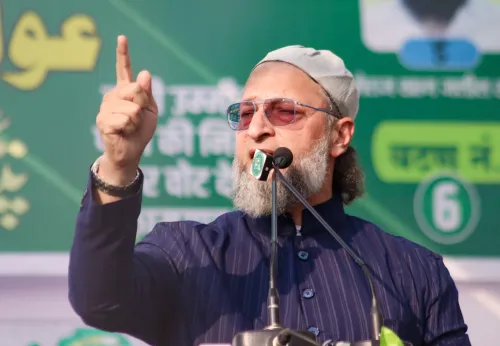
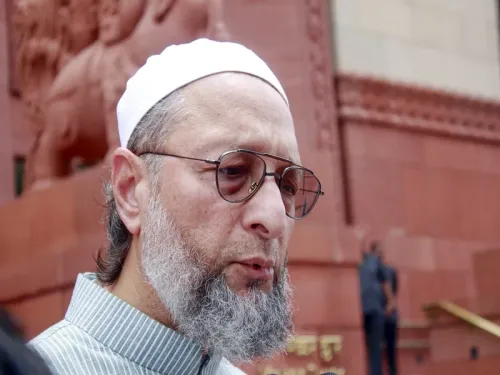
All India Majlis-e-Ittehadul Muslimeen (AIMIM) President Asaduddin Owaisi on Tuesday called on Muslims in India to develop their own independent political leadership, arguing that decades of loyalty to what he termed "so-called secular parties" had delivered neither development nor protection from marginalisation. Speaking to media persons in Hyderabad, the Hyderabad Member of Parliament made his remarks in the context of recent Assembly election results, particularly in West Bengal and Assam.
The Core Argument
Owaisi argued that Muslim voters had repeatedly backed parties that failed to halt the Bharatiya Janata Party (BJP), and that this pattern demanded a fundamental rethink. "I want to reiterate that Muslims should try to create their own independent political leadership. Your vote is getting wasted because you are casting your vote in favour of so-called secular parties that are not secular. They failed to stop the BJP," he said.
He contended that reposing faith in such parties for years had produced no tangible improvement. "Reposing faith for so many years in so-called secular parties has not given them any development nor eradicated injustice and discrimination," Owaisi said, citing BJP victories in Maharashtra, Bihar, Delhi, and West Bengal despite Muslim support for opposition parties.
Sharp Criticism of Mamata Banerjee and TMC
Owaisi was particularly pointed in his criticism of West Bengal Chief Minister Mamata Banerjee and the All India Trinamool Congress (TMC), accusing her of treating Muslims solely as a vote bank over her 15 years in power without meaningfully improving their socioeconomic conditions. "She has exploited the Muslims only as a vote bank. She has not treated them as citizens," he remarked.
He noted that West Bengal is the only state where Muslims hold a majority in 60 Assembly constituencies, with an additional 20 segments where they constitute 30–40 per cent of voters — yet the BJP still prevailed. He attributed the TMC's losses to a combination of anti-incumbency, alleged corruption, and what he described as exploitation of the Muslim community. He also recalled that in 1998, the first BJP MP to win in West Bengal, Tapan Sikdar, was reportedly supported by the Trinamool, and won again in 1999.
Owaisi also levelled criticism at Arvind Kejriwal of the Aam Aadmi Party (AAP) for practising what he called "soft Hindutva" in Delhi, and at Uddhav Thackeray's party and the erstwhile Nationalist Congress Party (NCP) for similar behaviour in Maharashtra.
On Assam and the AIUDF
Commenting on Assam, Owaisi said Chief Minister Himanta Biswa Sarma had displaced nearly 50,000 Muslims yet still won the election. He argued that had Badruddin Ajmal's All India United Democratic Front (AIUDF) secured more seats, it would have given Muslims a stronger legislative voice. He noted that Muslim voters in Assam had been urged to back Congress leader Gaurav Gogoi, but the BJP still won.
AIMIM's West Bengal Performance and Future Plans
Despite none of the party's 11 candidates winning in West Bengal, Owaisi thanked voters for supporting the AIMIM, highlighting the performance in Kandi. He expressed confidence in the party's prospects in Malda and Murshidabad, saying the party would work to rectify its mistakes.
Concerns Over Special Intensive Revision (SIR)
Owaisi also raised concerns over the Special Intensive Revision (SIR) of electoral rolls, questioning why Banerjee had not done more to assist voters whose names were deleted in West Bengal. He described her approach to the Supreme Court on the issue as "mere symbolism." He noted that SIR had affected constituencies of both Banerjee and Dravida Munnetra Kazhagam (DMK) leader M. K. Stalin, and both lost their respective elections. Owaisi advised Telangana Chief Minister Revanth Reddy to remain cautious about SIR, while strongly opposing any attempt to link it with citizenship. He urged voters to remain alert and cross-check their registration against the 2002 voter list.
Owaisi's remarks signal a hardening of the AIMIM's political pitch ahead of future state elections, framing independent Muslim political representation not as identity politics but as a prerequisite for civic equality.
Point of View
The problem may be less about which party Muslims back and more about structural factors like SIR, economic anxiety, and candidate quality. The AIMIM's own zero-win record in West Bengal this cycle also raises questions about whether independent Muslim political representation, as currently constituted, is a viable alternative or a vote-splitter that inadvertently aids the BJP — a charge Owaisi's critics consistently level and which this speech does not directly address.
NationPress
26 Sept 2026
Frequently Asked Questions
What did Asaduddin Owaisi say about Muslim political leadership in India?
Owaisi urged Indian Muslims to develop their own independent political leadership rather than continuing to vote for what he called 'so-called secular parties' that have failed to stop the BJP or deliver development. He made these remarks in Hyderabad on Tuesday in response to Assembly election results in West Bengal and Assam.
Why did Owaisi criticise Mamata Banerjee and the TMC?
Owaisi accused Mamata Banerjee of treating Muslims purely as a vote bank over her 15 years in power in West Bengal without improving their socioeconomic conditions. He argued that despite Muslims forming a majority in 60 Assembly constituencies in the state, the BJP still won, which he blamed partly on TMC's failure to genuinely represent Muslim interests.
How did AIMIM perform in the West Bengal elections?
All 11 AIMIM candidates in West Bengal lost, though Owaisi thanked voters for their support and highlighted a strong showing in Kandi. He said the party has a bright future in areas like Malda and Murshidabad and pledged to rectify mistakes.
What is SIR and why is Owaisi concerned about it?
SIR refers to the Special Intensive Revision of electoral rolls. Owaisi raised concerns that it led to voter deletions in West Bengal and noted it also affected constituencies of Mamata Banerjee and DMK's M. K. Stalin, both of whom lost their elections. He urged Telangana CM Revanth Reddy to be cautious and advised voters to verify their registration against the 2002 voter list.
What did Owaisi say about the Assam election results?
Owaisi noted that Assam Chief Minister Himanta Biswa Sarma had displaced nearly 50,000 Muslims yet still won the election. He argued that had Badruddin Ajmal's AIUDF won more seats, Muslims in Assam would have had a stronger political voice, and criticised the strategy of directing Muslim votes toward Congress.