How Will Polarisation vs Fragmentation Shape West Bengal's Electoral Politics?
Synopsis
As the 2026 Assembly elections approach, the dynamics of identity politics in West Bengal are evolving. With rising leaders like Humayun Kabir, will AIMIM's Asaduddin Owaisi find common ground? Discover how these shifts could redefine the electoral landscape and the implications for minority voters.
Key Takeaways
AIMIM is focusing on Muslim-majority constituencies in West Bengal.
Humayun Kabir aims to become a significant minority leader with a new political party.
Electoral fragmentation may benefit the BJP due to divided anti-BJP votes.
Identity politics is set to dominate the upcoming 2026 Assembly elections .
Potential alliances may shape the electoral landscape in West Bengal.
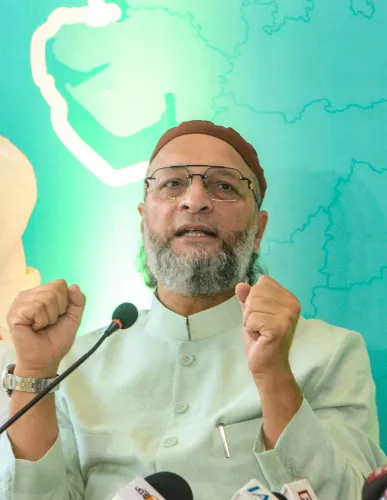
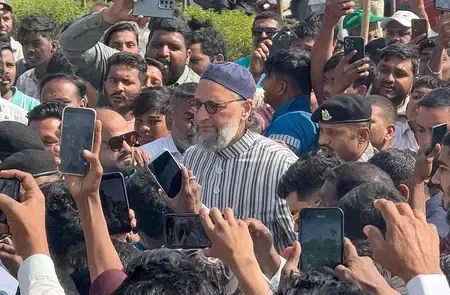
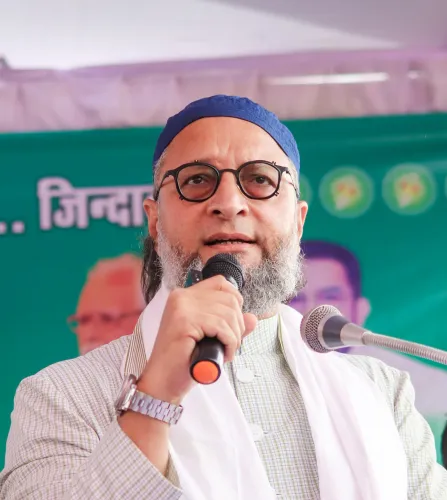
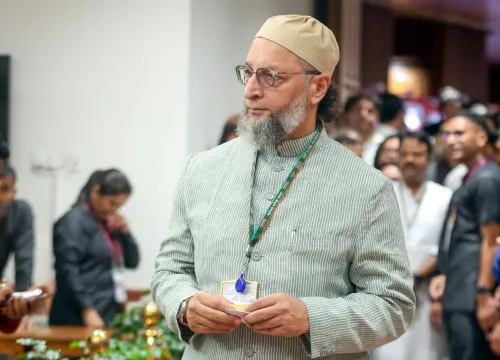
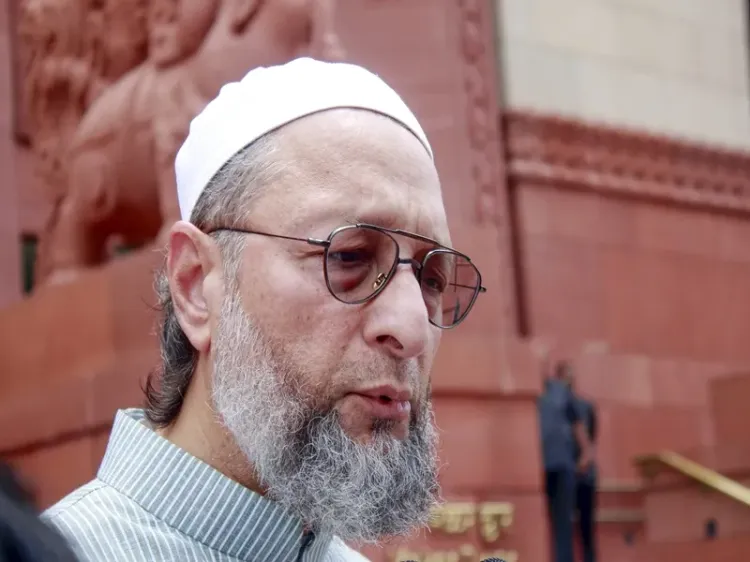
New Delhi, Dec 13 (NationPress) The All India Majlis-e-Ittehadul Muslimeen (AIMIM), spearheaded by the five-time Lok Sabha MP from Hyderabad, Asaduddin Owaisi, has refocused its attention on the Muslim-majority constituencies in West Bengal following the Bihar electoral outcome.
In 2020-21, after securing a foothold with five seats in the 243-member Bihar Assembly, Owaisi shifted his gaze towards the West Bengal elections.
However, he soon discovered that the beloved Hyderabadi Biriyani, a specialty from his party's home region, could not compete with the Avadhi variety favored in West Bengal.
To cater to local tastes, he sought the expertise of a local chef to adapt the dish. The AIMIM leadership then engaged with Pirzada Abbas Siddiqui, the founder of the newly established India Secular Front (ISF).
The discussions were promising, yet Siddiqui was keen on forming an alliance with the Congress and the Left Front to counter the ruling Trinamool Congress in West Bengal.
This coalition expressed skepticism about AIMIM's acceptance among Bengali Muslims, who possess distinct linguistic and cultural identities.
As a result, Owaisi opted to withdraw; in the ensuing period, his party experienced a decline in both Bihar and West Bengal.
However, with recent developments in Bihar, Owaisi may be eyeing a new partnership in the neighboring state.
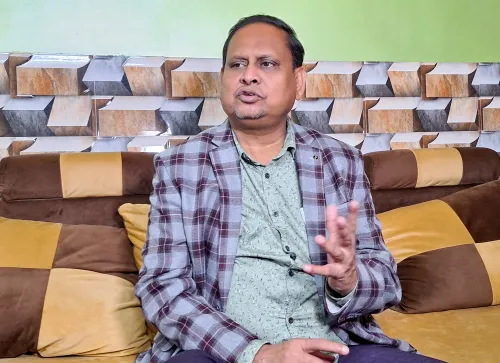
The recently ousted Trinamool MLA Humayun Kabir has emerged as a potential new minority leader in West Bengal.
His controversial “Babri Masjid” initiative has brought him into the national spotlight.
Claiming to have robust grassroots backing, he has publicly declared his political intentions and plans to establish a political party to contest 135 out of West Bengal's 294 seats in the upcoming Assembly elections.
His approach revolves around assertive minority mobilization and symbolic projects, such as the mosque foundation-laying ceremony, to solidify a unique constituency base.
Reports suggest substantial financial contributions amounting to crores, and outreach efforts extending beyond the state, which Kabir may leverage through AIMIM.
Both parties engage in identity-driven minority politics, influenced by prominent personalities and religious themes. Yet, they may face compatibility challenges concerning strategy and local concerns.
Kabir is positioning himself as a significant regional player with aspirations to become a “kingmaker,” suggesting that no party is likely to achieve a majority in the Assembly.
Presently, a tactical seat-sharing arrangement with AIMIM could be feasible in select constituencies, though a comprehensive statewide alliance remains uncertain.
Kabir appears to be actively seeking partnerships, and reports indicate that the AIMIM state unit is receptive, though the central leadership remains cautious.
Meanwhile, AIMIM, buoyed by another successful mandate in Bihar, is expanding its presence in Murshidabad, where Muslims constitute approximately 70% of the population.
In the adjacent district of Malda, which boasts over 50% Muslim residents, Owaisi's party is on the lookout for new offices and local leaders. In a scenario of electoral fragmentation, with at least three Muslim-centered factions—led by Owaisi, Siddiqui, and Kabir—competing alongside the Trinamool, Congress, and the Left coalition, the anti-BJP vote could be significantly divided across various constituencies.
Anticipating this, as per certain ground reports, Kabir may seek to negotiate a seat-sharing arrangement with the ISF, Congress, and the Left leadership, particularly in critical constituencies, to fulfill his ambition of becoming the “kingmaker.”
However, he must recognize that the leaders he intends to engage with possess more experience and political acumen than he might assume.
One certainty remains: the 2026 West Bengal Assembly elections will showcase identity politics and polarization to a degree that the diverse Bengali 'bhadralok' may not have foreseen, potentially casting a shadow of animosity and communal discord, which could invite legal and administrative repercussions and further chaos within the state.
Point of View
The unfolding political scene in West Bengal illustrates a significant shift in identity politics. The emergence of new leaders and alliances may reshape the electoral dynamics, impacting both local governance and communal harmony. As we approach the elections, it will be crucial to observe how these developments influence voter sentiment and political strategies.
NationPress
10 Oct 2026
Frequently Asked Questions
What is the significance of AIMIM's focus on West Bengal?
AIMIM's focus on West Bengal highlights the growing importance of minority politics in the state. Asaduddin Owaisi aims to consolidate Muslim votes, which could significantly impact the electoral outcomes.
Who is Humayun Kabir and what are his political ambitions?
Humayun Kabir is a recently suspended Trinamool MLA who is positioning himself as a minority leader. He plans to launch his own political party to contest a significant number of seats in the upcoming Assembly elections.
How might the electoral fragmentation affect the anti-BJP vote?
With multiple Muslim-centered parties competing, the anti-BJP vote may become fragmented, potentially allowing the BJP to gain an advantage in various constituencies.
What challenges does AIMIM face in West Bengal?
AIMIM faces challenges in connecting with Bengali Muslims due to cultural and linguistic differences, along with competition from established parties like Congress and the Left Front.
What role does identity politics play in the upcoming elections?
Identity politics is expected to play a crucial role in the 2026 elections, as various groups seek to mobilize specific voter bases, leading to potential polarization in the political landscape.