India-Japan summit signals new era of strategic trust and co-development
Synopsis
The 16th India–Japan Annual Summit is being read not as a transactional milestone but as a philosophical turning point — the arrival of 'Strategic Trust'. With defence co-development, tech supply chains, and aligned Indo-Pacific visions now on the table, the relationship has shifted from project-by-project cooperation to shared strategic capabilities, a transition with direct implications for Beijing and the broader regional order.
Key Takeaways
The 16th India–Japan Annual Summit in New Delhi marked a shift from project-based cooperation to shared strategic capabilities , according to former diplomat Sanjay Kumar Verma .
Former diplomat Verma describes the new phase as an era of 'Strategic Trust' , with both nations relying on each other in areas of national resilience , technological strength , and economic security .
The summit signalled a push towards defence industrial collaboration and co-development of sensitive technologies.
India's Indo-Pacific vision and Japan's Free and Open Indo-Pacific framework now align more closely than before.
Deeper India–Japan cooperation is likely to draw strategic attention in Beijing , according to the report.
Prime Minister Modi's more than a decade of sustained engagement is credited with giving the partnership its continuity and direction.
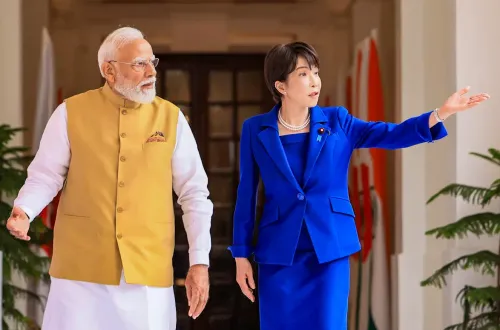
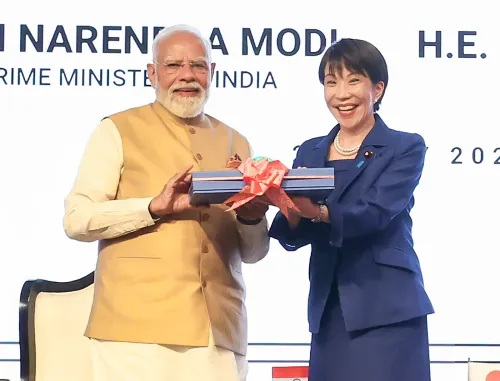
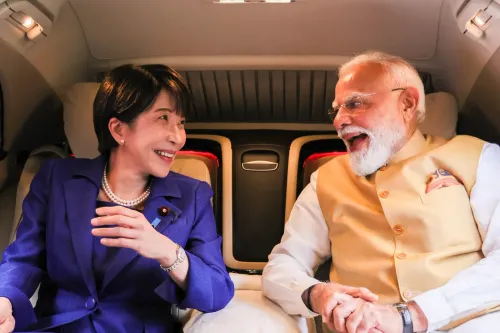
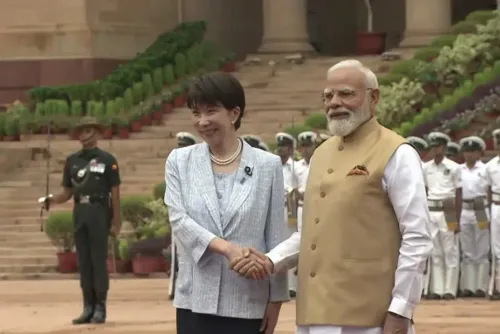
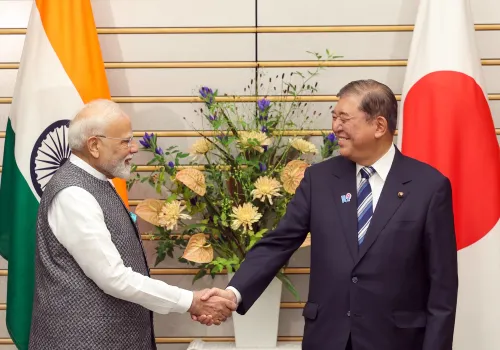
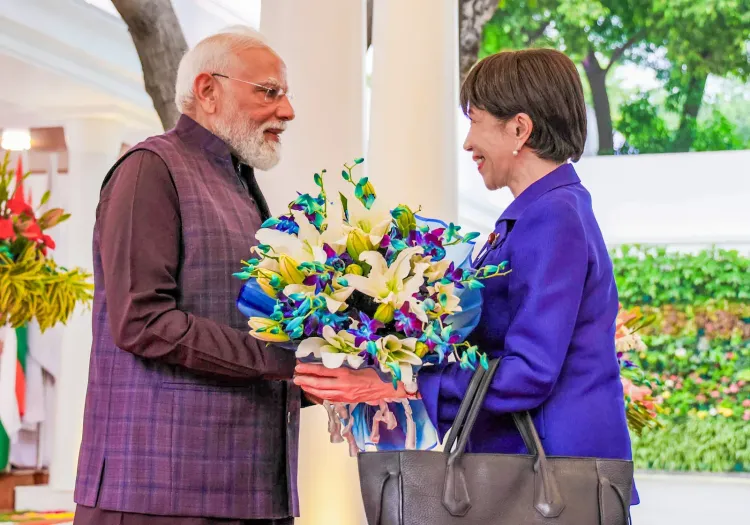
The 16th India–Japan Annual Summit, held recently in New Delhi, has marked a qualitative shift in bilateral ties — moving the relationship well beyond development assistance, infrastructure, and trade into what analysts are calling an era of 'Strategic Trust', according to a report by former Indian diplomat Sanjay Kumar Verma published in India Narrative. The summit, which brought together Prime Minister Narendra Modi and Japanese Prime Minister Sanae Takaichi, produced a Joint Statement widely seen as signalling a new phase of engagement between the two nations.
Beyond Agreements: A Shift in Strategic Logic
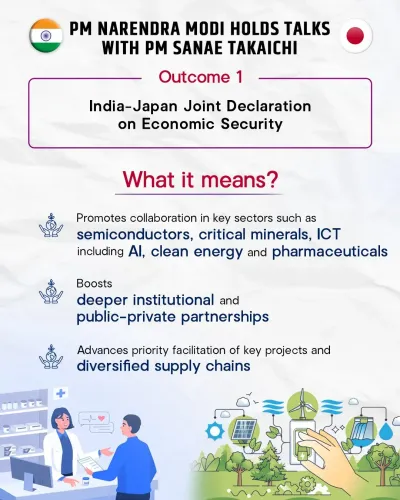
Verma argues that the summit's significance lies not in any single agreement but in how it has altered the way the two countries perceive one another. New Delhi and Tokyo, he writes, are no longer confining themselves to broad cooperation pledges — they are beginning to rely on each other in areas central to national resilience, technological strength, and economic security.
'Diplomatic summits are often judged by the agreements they produce. But their deeper significance lies in whether they alter how two countries see each other,' Verma wrote, adding that the Joint Statement 'suggests that India and Japan are entering a new phase of engagement — one that may best be described as the era of Strategic Trust.'
Defence, Maritime Security, and Co-Development
Defence and maritime security remain a cornerstone of the partnership, with cooperation deepening steadily through joint exercises, dialogue, and enhanced interoperability. According to Verma, the summit signalled a further push towards defence industrial collaboration and co-development — a milestone he regards as significant precisely because it requires deep mutual trust.
'Countries do not co-develop sensitive technologies unless they trust each other deeply and believe the partnership will endure,' he noted. Both nations' Indo-Pacific frameworks — India's Indo-Pacific vision and Japan's Free and Open Indo-Pacific advocacy — now align more closely than at any previous point, reinforcing a shared commitment to a rules-based regional order.
Geopolitical Implications and Beijing's Attention
Verma contends that the strategic implications of deeper India–Japan cooperation in technology, supply chains, and defence extend well beyond the bilateral relationship. He suggests such coordination is likely to draw attention in Beijing, where it may be read as part of a broader pattern of strategic alignment among major Indo-Pacific democracies.
This comes amid intensifying geopolitical competition across the Indo-Pacific, where major powers are actively reassessing the architecture of their partnerships. Notably, the India–Japan relationship has been shaped by more than a decade of sustained political attention from Prime Minister Modi, whose consistent engagement is credited with translating broad goodwill into strategic continuity.
From Projects to Shared Capabilities
'India–Japan ties are no longer organised mainly around individual projects, however significant those projects may be. They are increasingly organised around shared capabilities. Infrastructure changed India's physical landscape. Shared capabilities are likely to shape its strategic landscape,' Verma observed.
He argued that the era of hyper-globalisation — which rewarded efficiency, scale, and low cost — is giving way to one that places greater weight on resilience, technological sovereignty, and trusted collaboration. India and Japan, he said, now have a framework that allows them to navigate that transition without abandoning open markets or regional stability commitments.
As both governments move to operationalise the summit's outcomes, the depth of implementation — particularly on defence co-development and technology supply chains — will determine whether this era of Strategic Trust translates into durable strategic architecture.
Point of View
But the harder question is whether it survives the test of implementation — particularly on defence co-development, where India's track record with partners has been uneven. The alignment of Indo-Pacific visions is real, but alignment on paper and alignment in crisis response are different things. What is genuinely new here is the explicit move from project-level cooperation to capability-sharing, which carries higher political stakes for both sides. Beijing will be watching, but so will Washington — and how India manages the geometry of these triangular pressures will define whether this era of Strategic Trust becomes a durable architecture or another well-phrased aspiration.
NationPress
10 Oct 2026
Frequently Asked Questions
What was the outcome of the 16th India–Japan Annual Summit?
The 16th India–Japan Annual Summit, held in New Delhi, produced a Joint Statement signalling a new era of 'Strategic Trust' between the two nations, with emphasis on defence co-development, technology cooperation, and aligned Indo-Pacific frameworks. According to former diplomat Sanjay Kumar Verma, the summit's significance lies in how it has shifted the relationship's logic from individual projects to shared strategic capabilities.
What does 'Strategic Trust' mean in the context of India–Japan ties?
'Strategic Trust' refers to a phase where India and Japan are beginning to rely on each other in areas central to national resilience, technological sovereignty, and economic security — including co-development of sensitive defence technologies. Verma argues this goes beyond the earlier framework of development assistance and infrastructure cooperation.
How does the India–Japan partnership affect the broader Indo-Pacific?
Deeper India–Japan cooperation in technology, supply chains, and defence is likely to draw attention in Beijing, where it may be viewed as part of a broader pattern of strategic coordination among major Indo-Pacific democracies. Both countries' Indo-Pacific frameworks now align more closely than at any previous point.
What role has PM Modi played in the India–Japan relationship?
According to Verma, Prime Minister Narendra Modi has provided more than a decade of sustained political attention to the partnership, consistently translating broad goodwill into strategic continuity and momentum. His engagement is credited with giving the relationship its current depth and direction.
What is the significance of India–Japan defence co-development?
Defence co-development of sensitive technologies signals a high level of mutual trust, as countries typically pursue such collaboration only when they are confident the partnership will endure. The summit's push towards defence industrial collaboration marks an important milestone in moving the relationship from cooperation to shared capability-building.